01 June 2025
On June 1, 2025, at the Age of 89, Aishe Seitmuratova, a Prominent Crimean Tatar Human Rights Defender and Dissident, Passed Away
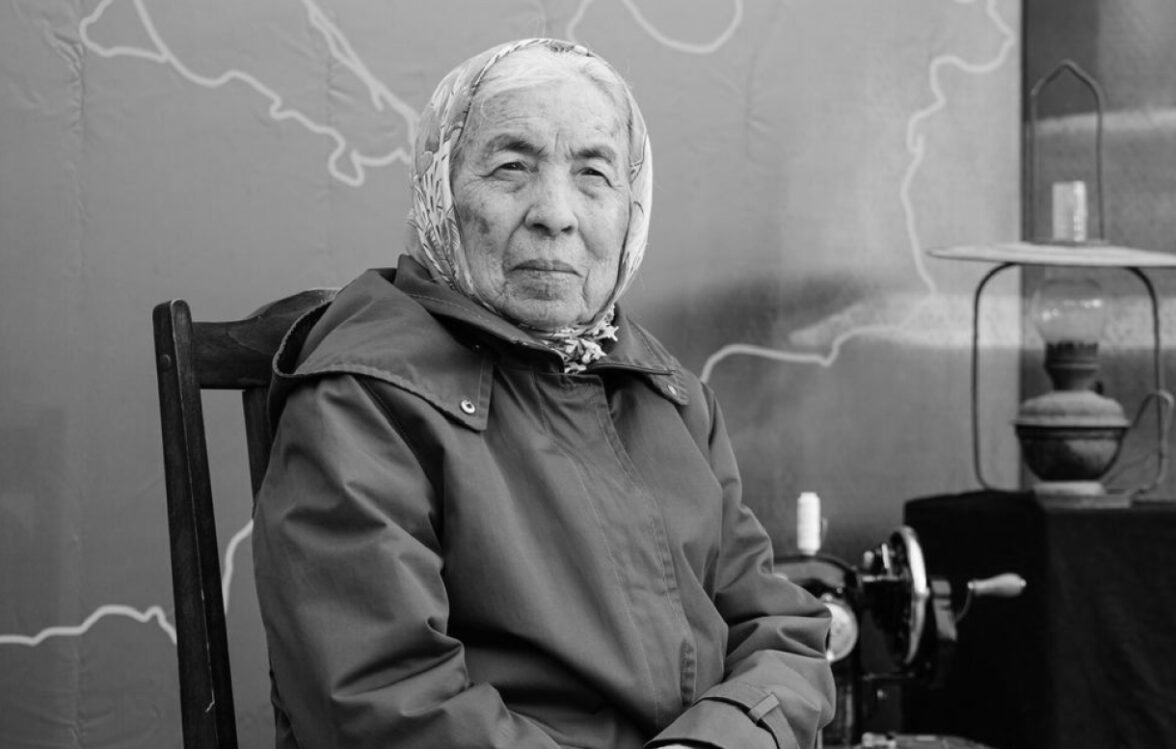
She was born on February 11, 1937, in the village of Acı Eli. In 1944, together with the entire Crimean Tatar people, she was deported to Uzbekistan.
In 1957, Aishe enrolled in the Faculty of History at Samarkand University, where she graduated with honors. She worked as a schoolteacher and as an assistant at the university’s Faculty of History. She successfully passed the entrance exams for postgraduate studies at the Institute of History of the USSR Academy of Sciences, but she was not accepted there or at the Institute of History of the Uzbek SSR Academy of Sciences. She returned to Samarkand, where she taught history at an evening school and worked part-time at the university.
In 1964, Aishe joined the Crimean Tatar national movement, becoming a member of the initiative group in the Samarkand Region. She participated in meetings with Soviet authorities, including a meeting with representatives of the Central Committee of the Communist Party of the Soviet Union in 1965. In October 1966, she was arrested for her involvement in the national movement and held in Lefortovo Prison in Moscow. She continued to actively participate in the collection and dissemination of Crimean Tatar samizdat materials, drafting texts of protests and appeals to the highest state authorities of the Soviet regime, and writing and distributing information about the Crimean Tatar national movement through Soviet human rights organizations. In 1971, she was arrested again and sentenced to three years of imprisonment. She served her sentence in the Mordovian camps of Barashevo and Yavas.
After her release in 1974, Aishe continued her active human rights work. In 1978, the Soviet authorities attempted to forcibly commit her to a psychiatric hospital. At that time, she declared: “I do not intend to wither away and slowly die there; I will burn like a flame in Red Square. I have nothing to lose, but before I do it, I will appeal to the entire Muslim world and describe the life of a Muslim woman in the USSR.” In her letter to Andropov, she wrote: “Death will save me from all forms of persecution in the land of the Soviets.” Thanks to the intervention of academician Andrii Sakharov and U.S. Senator Jacob Javits, she was granted permission to emigrate to the United States.
In the United States, Aishe continued her human rights work and began working as a freelance correspondent for Voice of America, hosting programs in Russian, Uzbek, and Azerbaijani, including on the national issue of the Crimean Tatars. Her broadcasts were also aired by the BBC, Radio Liberty, and Deutsche Welle. She spoke at international forums, met with President Ronald Reagan, and participated in numerous conferences dedicated to human rights.
Aishe Seitmuratova was involved in the activities of international public organizations, including Amnesty International, the International Federation for Human Rights, the American Helsinki Group, and the Center for Democracy in the USSR. In 1986, she organized Committees for the Defense of Mustafa Dzhemilev in 12 countries. She actively advocated for the release of Yuriі Osmanov, Reshat Ablaiev, Sinaver Kadyrov, and other participants of the Crimean Tatar national movement.
After Ukraine gained independence, Aishe returned to Crimea, where she engaged in charitable work and assistance for Crimean Tatars. She opened a home for the elderly. She was awarded the Order For Courage.
Aishe Seitmuratova refused to accept Russian citizenship after the occupation of the peninsula in 2014. She holds U.S. citizenship, and her residence permit in Crimea was extended until 2025. She had no plans to return to America: “No. I want to be with my people. I was born in Crimea, it is my homeland, not Putin’s. I have been deprived of my homeland my entire life. That will no longer happen.”
In 2014, Aishe Seitmuratova condemned Russia’s attempted annexation of Crimea. “We know very well that in the 1990s Ukraine accepted us as one of the peoples of its country. Yes, Ukraine was not able to give us everything we wanted. However, Ukraine itself has not yet found its footing, but I am convinced that today we must build our statehood together with Ukraine, with the Ukrainian people. And together with Ukraine, we will achieve success and prosperity,” she declared at the last session of the Qurultai of the Crimean Tatar people in March 2014.
Her life is an example of unbreakable will, dedication to her homeland, and boundless love for her people.
Eternal memory and respect.