10 April 2025
10 April — Crimean Tatar Journalism Day
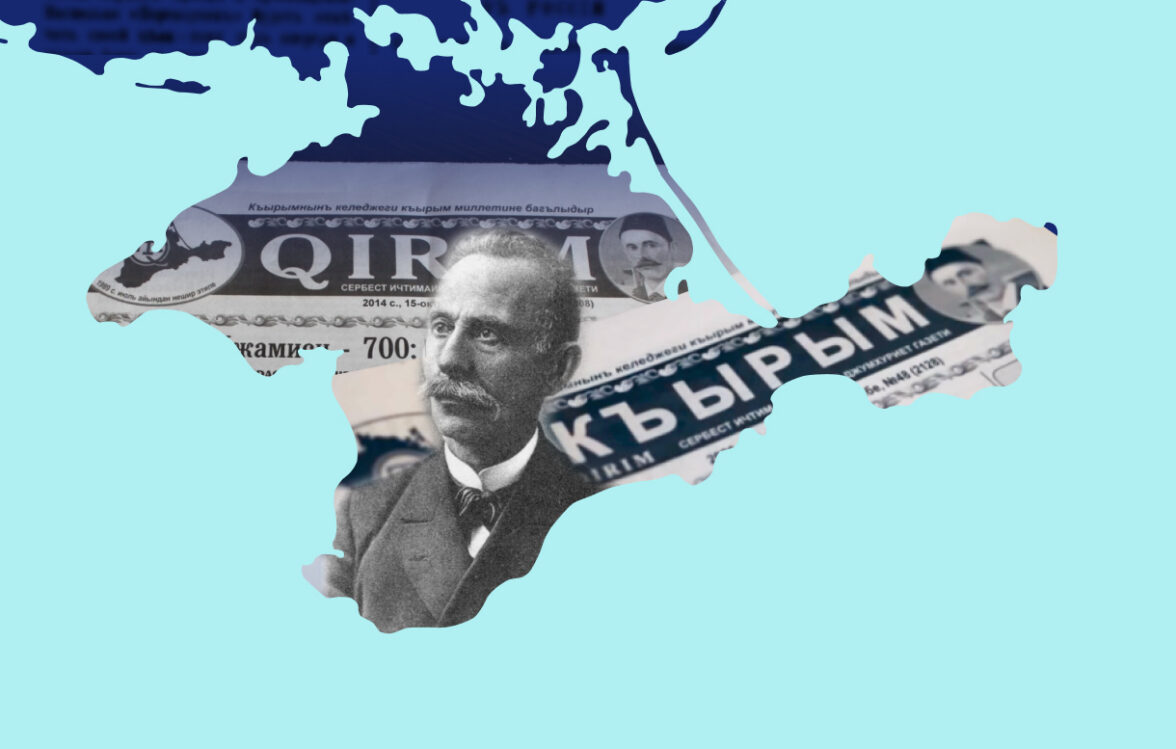
Every year on April 10, Crimean Tatar Journalism Day is marked as a reminder of the power of the word, the responsibility to society, and the importance of preserving the cultural heritage of the Crimean Tatar people. The initiative to mark this day was proposed by the Mejlis of the Crimean Tatar People and was established in 2011 following a journalists’ conference in Bakhchysarai. On this day in 1883, the first issue of Terciman newspaper was published — the first periodical of the Crimean Tatar people, founded by Ismail Hasprinskyi.
Hasprinskyi’s newspaper served as a key source of information on the state of the national press. Dzhamaletdin Validi, a Turkic educator, once noted that Terciman had a greater influence on Turkic peoples than The Times had on Europe.
Its pages recorded the emergence of several associated publications, including the satirical newspaper Ha-ha-ha, the women’s magazine Alem-i Nisvan (The World of Women), the children’s magazine Alem-i Subyan (The World of Children). Hasprinskyi himself actively promoted the press, informing readers about new newspaper arrivals in libraries and bookstores.
In 1906, Aivazov and Mediiev attempted to launch new Crimean Tatar publications — Qırım Sedası (The Voice of Crimea) and The Voice of Muslims — but these projects were never realized due to increasing pressure on the national press. Around the same time, Abdureshit Mediiev also published a newspaper titled Our Voice.
Significant changes in the development of Crimean Tatar periodicals occurred after the February Revolution of 1917, which led to the emergence of numerous national publications. This shift created space for politicians, scholars, and writers to openly discuss the future of the national press.
A notable example of such discourse was the April 1927 issue of the magazine İleri (Forward), which featured an editorial and a series of articles by prominent authors including Asan Aivazov, Abdulla Dermendzhi, Osman Akchokrakly, U. Sami, I. Lomanov, and M. Nedym. These texts serve as a valuable source of information on the history, state, and challenges faced by the Crimean Tatar press and publishing industry.
A unique cross-section of the history of the Crimean Tatar press in the 1920s–1930s was presented by researcher I.A. Kerimov in his publication Medeniy esnas (The March of Civilization). This digest, based on materials from the newspapers Yañı dünya (New World) and Yaş quvet (Young Force), features dozens of publications — from brief notes to in-depth analytical reports. Together, they form a comprehensive picture of the life, challenges, and achievements of the Crimean Tatar press during that period.
An informative history of the development of Crimean Tatar youth journalism was offered by Bekir Umerov in his work Qırımda yaşlar matbuatı (Youth Press in Crimea). He identifies two periods of heightened activity — 1917–1921 and 1921–1927 — illustrating how young people contributed to shaping public opinion.
Yañı bir adım (A New Step) by Mamut Nedym is dedicated to the role of publications such as Terciman, Millet, Yañı dünya, and Yaş quvet in public life. The author highlights the importance of the press in the educational process, noting that “a newspaper is the barometer and scale of national culture.”
Following the forced deportation of the Crimean Tatar people in 1944, the development and preservation of Crimean Tatar national identity were halted for nearly half a century, and with it, the legacy of Crimean Tatar print publications disappeared. Most newspapers, magazines, brochures, almanacs, and anthologies were deliberately destroyed and have not survived to this day.
After the return of the Crimean Tatars to their historical homeland in the late 1980s, Crimean Tatar journalism became focused on the processes of national revival.
On 15 July 1990, the newspaper Avdet was established, becoming the first independent Crimean Tatar publication after the deportation of the people in 1944. The newspaper became an important tool for covering the issues of return and rehabilitation of the Crimean Tatars.
A significant cultural and academic publication of this period was the journal Yıldız, founded in 1976 in Tashkent and later relocated to Crimea after 1991. The journal published scholarly articles on linguistics and literary studies, works by Crimean Tatar writers, and materials on the culture and history of the people.
Another important role in the development of Crimean Tatar journalism was played by the newspaper Areket, established in 1991. It served as the official outlet of the National Movement of the Crimean Tatars and published materials on political, social, and economic issues related to the restoration of the rights of the Crimean Tatar people.
Crimean Tatar journalism during the period of national revival played a vital role in the development of the Crimean Tatar language and in shaping national identity among young people.
One of the symbolic figures of this era is Aishe Seitmuratova — a dissident, journalist, and human rights defender who spent decades fighting for the return of Crimean Tatars to their homeland. In her publications, she shed light on the repression of the Soviet regime and the violation of her people’s rights. Her voice was heard on Western radio stations; she collaborated with international human rights organizations and repeatedly appealed to the United Nations and other global institutions. Her journalistic work was instrumental in drawing international attention to the deportation of Crimean Tatars and the systemic oppression they faced. In 2019, at the age of 82, she was detained by the occupation administration but was released shortly afterward.
An important contribution to the study of Crimean Tatar journalism has been made by Ukrainian scholar Nataliia Yablonovska. Her academic work encompasses both the historical development of the Crimean Tatar press and contemporary trends in the media landscape. In her 2007 study The Crimean Tatar Issue in Samizdat Periodicals, the researcher analyzes how the topic of Crimean Tatar rights was covered in unofficial Soviet publications, highlighting the role of samizdat in preserving the national voice of the people under censorship.
In the 2008 textbook Crimean Journalism: Ethnic Aspects, Yablonovska explores the formation of ethnic media in Crimea, particularly Crimean Tatar outlets, tracing their role in national revival and interethnic dialogue. The publication includes a bibliographic index of periodicals published by Crimea’s ethnic communities from the 19th century to the present.
The researcher also pays particular attention to the gender dimension in journalism. In her article Contemporary Crimean Tatar Women’s Magazines: Content and Promotion Features, she analyzes the content, target audience, and distribution methods of such publications in today’s digital environment.
Equally significant is her work The Formation of the Ethnic Press System in Crimea in the 1920s, in which the author traces the development of Crimean Tatar journalism following the revolutionary events and during the period of Ukrainization. In this study, she emphasizes how the press contributed to shaping national consciousness and fostering cultural dialogue among the peninsula’s ethnic communities.
Today, under the conditions of Russian occupation in Crimea, Crimean Tatar journalism continues to play a crucial role in the struggle for the rights and freedoms of the Crimean Tatar people. Journalists, often at great personal risk, document human rights violations, report on persecution and repression, and preserve the historical memory and cultural heritage of the Crimean Tatars.
Since 2014, there have been no independent media outlets in Crimea, and freedom of speech has been effectively destroyed. Valentyna Samar, editor-in-chief of the Center for Investigative Journalism, noted during a briefing titled “The Destruction of Freedom of Speech in Crimea: Causes, Methods, Consequences”: “There is no media in Crimea that can operate freely. There are only Telegram channels where people can express their opinions anonymously — and even those are being targeted.”
Representatives of the Crimean Solidarity movement, despite lacking formal journalistic education, have taken on the role of documenting repression on the peninsula. They report on searches, detentions, and court hearings, informing human rights institutions and the international community of violations — and in doing so, become direct targets of the Russian security forces.
As of today, at least 18 journalists, bloggers, and citizen reporters are being unlawfully imprisoned by the Russians in Crimea, the majority of whom are Crimean Tatars. These include: Oleksii Bessarabov, Dmytro Shtyblikov, Seiran Saliiev, Marlen (Suleiman) Asanov, Vladyslav Yesypenko, Tymur Ibrahimov, Ernes Ametov, Server Mustafaiev, Iryna Danylovych, Osman Arifmemetov, Remzi Bekirov, Rustem Sheikhaliiev, Ruslan Suleimanov, Amet Suleimanov, Asan Akhtemov, Vilen Temerianov, Rustem Osmanov, and Aziz Azizov.
It is worth noting that various events and exhibitions in support of imprisoned journalists in Crimea are being held across Ukrainian cities. In particular, the Empty Chairs campaign in Kyiv and the Crimea Through the Eyes of Citizen Journalists: 10 Years in Captivity exhibition in Lviv, Dnipro, and Odesa were organized with the support of the Mission.
We call on the international community to intensify pressure on the Russian Federation to end the persecution of journalists in Crimea and to ensure freedom of expression in the temporarily occupied territory.