28 November 2024
#10yearsofResistance: Emir-Usein Kuku
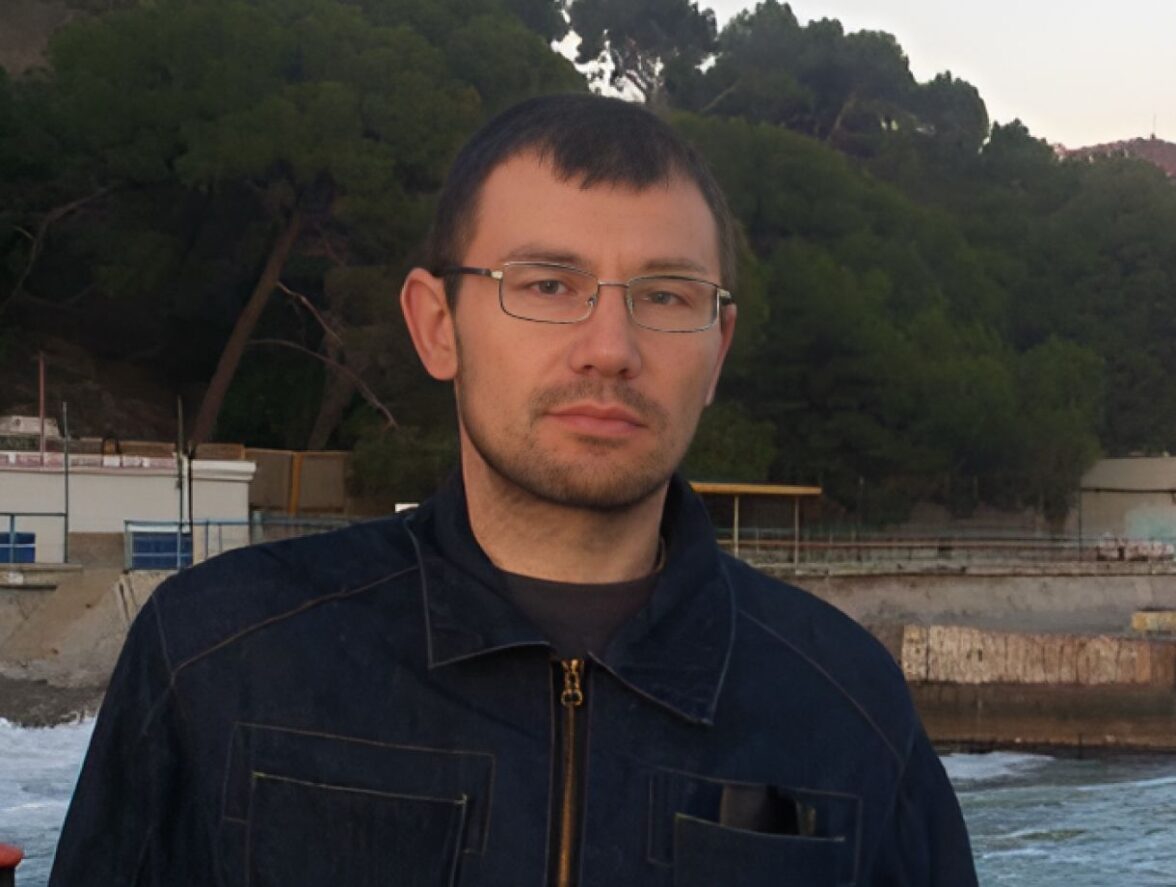
Today, we share the story of Crimean Tatar activist and human rights defender Emir-Usein Kuku, who was unlawfully sentenced by Russia to 12 years in a maximum-security penal colony.
Life before the detention
Emir-Usein Kemalovych Kuku was born on June 26, 1976, in the city of Novorosiisk, Krasnodar Krai, Russian Federation, into a family of Crimean Tatar National Movement veterans.
He spent the early years of his life there, attending the first grade at Secondary School No. 28. Despite living in Novorosiisk, the Kuku family always remembered their true homeland. In 1993, they returned to Crimea, settling in the village of Koreiz near Yalta, where he completed the 11th grade at the local school.
In 1994, Emir-Usein enrolled at Kherson State Technical University, graduating in 2000 with a degree in management. In 2001, he also completed his studies at the Kharkiv Financial and Economic Institute.
The political prisoner actively worked in economic positions. From 2001, he served as Deputy Chairman for Economic Affairs at the Stroimekhanizatsiia Joint Stock Company, and from 2006 to 2011, he worked as Deputy Director for Economics at Aliansstroiservis.
What did the occupiers come up with?
The persecution of Emir-Usein Kuku began in 2015 when he was detained by representatives of the Russian FSB, becoming one of the first victims of Russian repression on the occupied peninsula. During the arrest, he was brutally beaten, sustaining injuries to his spine and kidneys. Despite this, he was released after a search of his home.
However, on February 11, 2016, security forces of the occupation administration once again raided his home. Following the raid, he was detained on fabricated charges under the so-called “Yalta Group of Crimean Muslims” case.
The occupiers tried to coerce the political prisoner into cooperating, threatening to “rot him in prison,” but he resisted their pressure.
On June 26, 2018, on his 42nd birthday, Emir-Usein Kuku declared a hunger strike to protest the fabricated case and his baseless detention. For 25 days, he refused food, losing nine kilograms, which significantly weakened his health. He ended the hunger strike at the request of his wife.
On November 12, 2019, a court in Russia’s Rostov-on-Don sentenced him to 12 years in a maximum-security colony.
“One morning, I was hurrying to a court hearing, and as I climbed to the bus stop, I took a photo of Ay Petri glowing fiery red in the sunrise. At that moment, I thought of Emir-Usein and decided to send him this picture. I printed it out, sent it, and I remember how passionately he spoke about the photo, how much he misses his native cities and our beautiful Ay Petri,” shared his wife, Meriem Kuku.
Why was Emir-Usein Kuku actually detained?
Due to his human rights activities, support for the rights of Crimean Tatars, and efforts to preserve their cultural heritage, Emir-Usein Kuku became a target for the occupation administration. His dedication to justice, principled stance, and active engagement led to his persecution.
Since 2002, he has been an active member of the Crimean Tatar community, serving as the deputy head of the “Eren Evliia” Muslim community in Koreiz. In this role, he helped organize religious celebrations and supported the preservation of cultural traditions. Emir-Usein Kuku also collected historical artifacts of Crimean Tatar culture, safeguarding the heritage of his people.
As a human rights defender, he was part of the Crimea Contact Group on Human Rights and the Crimean human rights movement. His work focused on protecting the rights of Crimean Tatars, combating discrimination, and promoting tolerance.
Where is Emir-Usein Kuku now?
On June 25, 2020, the Military Court of Appeal in the Russian city of Vlasykha upheld Emir-Usein Kuku’s sentence.
From his initial detention in 2015, Emir-Usein Kuku endured physical violence, resulting in severe injuries. Chronic health issues, including kidney and spinal conditions, have worsened during his imprisonment in Russia. In 2019, he was diagnosed with a Baker’s cyst, which restricts movement and causes constant pain. However, the prison administration systematically neglects his need for adequate medical care.
In June 2023, his health sharply deteriorated due to an intestinal illness that required urgent surgery. He was taken to a city hospital, where doctors diagnosed an intestinal obstruction and performed surgery. Following the operation, he was transferred to Prison Hospital No. 17 in Ufa. Yet, just three days later, despite medical advice to remain under supervision, he was returned to the penal colony.
Without proper postoperative care, Emir-Usein Kuku has been forced to manage his wound and adhere to a strict diet independently. He receives no detailed guidance from medical professionals, and any dietary misstep triggers further complications. He continues to suffer severe pain in his lower back and kidneys, especially during the cold season, further exacerbating the harsh conditions of his imprisonment.
He is currently held in Penal Colony No. 16 in Salavat, Republic of Bashkortostan, over 2,500 kilometers from his native Crimea. This deliberate relocation serves as another method to isolate political prisoners from their families and communities, applying additional psychological pressure.
Despite the harsh conditions of imprisonment and declining health, Emir-Usein Kuku remains steadfast in his faith and hope. His wife, Meriem, and their two children, who last saw him in 2020, draw strength from his letters. Filled with resilience and optimism, these letters inspire his family to continue fighting for his freedom and justice.