07 February 2025
#10yearsofResistance: Rustem Emyruseinov
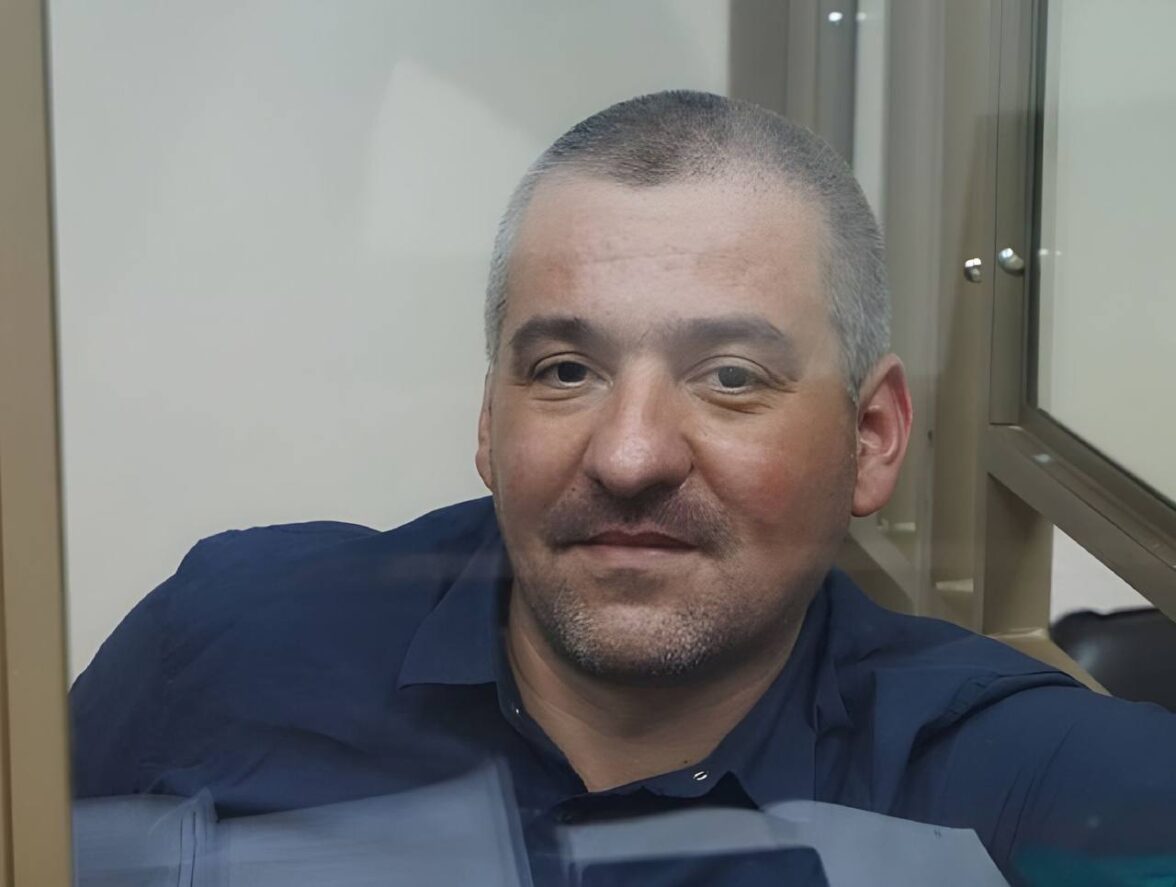
Today, we share the story of Crimean Tatar activist Rustem Emyruseinov, who has been unlawfully sentenced by Russia to 17 years in a high-security colony.
Life Before the Detention
Rustem Reshatovych Emyruseinov was born on July 5, 1979, in the city of Bekabad, Tashkent region, Uzbekistan, where his family had been deported by the Soviet Union along with thousands of other Crimean Tatars in 1944.
In 1989, his family returned to Crimea, settling in the village of Biiuk-Onlar, Kurman District. He completed his studies there at the Ismail Gasprinsky Crimean Tatar National School and later attended the Krasnohvardiiske Private Men’s Lyceum.
In 1996, he enrolled in the Faculty of History at Istanbul University, but before completing his studies, he returned to Crimea.
Before his unlawful arrest, he worked as a private entrepreneur.
What did the occupiers come up with?
On February 14, 2019, another round of unlawful searches was conducted in Crimea by the occupation administrations. That same day, Rustem Emyruseinov, along with Arsen Abkhairov and Eskender Abdulhaniiev, was detained.
On November 3, 2020, a court in Rostov-on-Don, Russia, issued an unlawful verdict, sentencing Rustem Emyruseinov to 17 years in a high-security colony.
Why was Rustem Emyruseinov actually detained?
Since 2014, when mass repressions began in Crimea following Russia’s aggression and occupation, Rustem Emyruseinov did not stand aside. He attended court hearings, staged solo pickets, and supported the families of unlawfully imprisoned individuals.
Just a week before his own arrest, he had returned from Rostov-on-Don, Russia, where he had been monitoring the trial of other Crimean Tatar activists—and was already planning his next trip.
Where is Rustem Emyruseinov now?
On November 1, 2021, the Court of Appeal in Vlasikha, Moscow region, Russia, rejected Rustem Emyruseinov’s appeal, leaving the unlawful sentence unchanged.
Following the verdict, Rustem Emyruseinov was held at Pre-Trial Detention Center No. 3 in Novocherkassk, Rostov region, while awaiting his appeal. He was later transferred to a prison in Balashov, Saratov region.
After his arrest, Rustem developed serious dental and gastrointestinal issues, and his vision deteriorated to the point where he could no longer read or write. However, he has received no medical assistance from the prison administration. In just two months, he lost 16 kilograms and began showing symptoms of diabetes.
“At the time of his arrest in 2019, Rustem had almost no serious health complaints. But after just four years of imprisonment, his condition has drastically worsened. It is terrifying to imagine what could happen in the coming years,” said Rustem Emyruseinov’s wife.
In February 2024, an occupation “court” in Crimea refused to count the time he spent in pre-trial detention toward his prison sentence, effectively extending his imprisonment beyond the term set by the verdict.