03 October 2024
#10yearsofResistance: Yashar Muiedinov
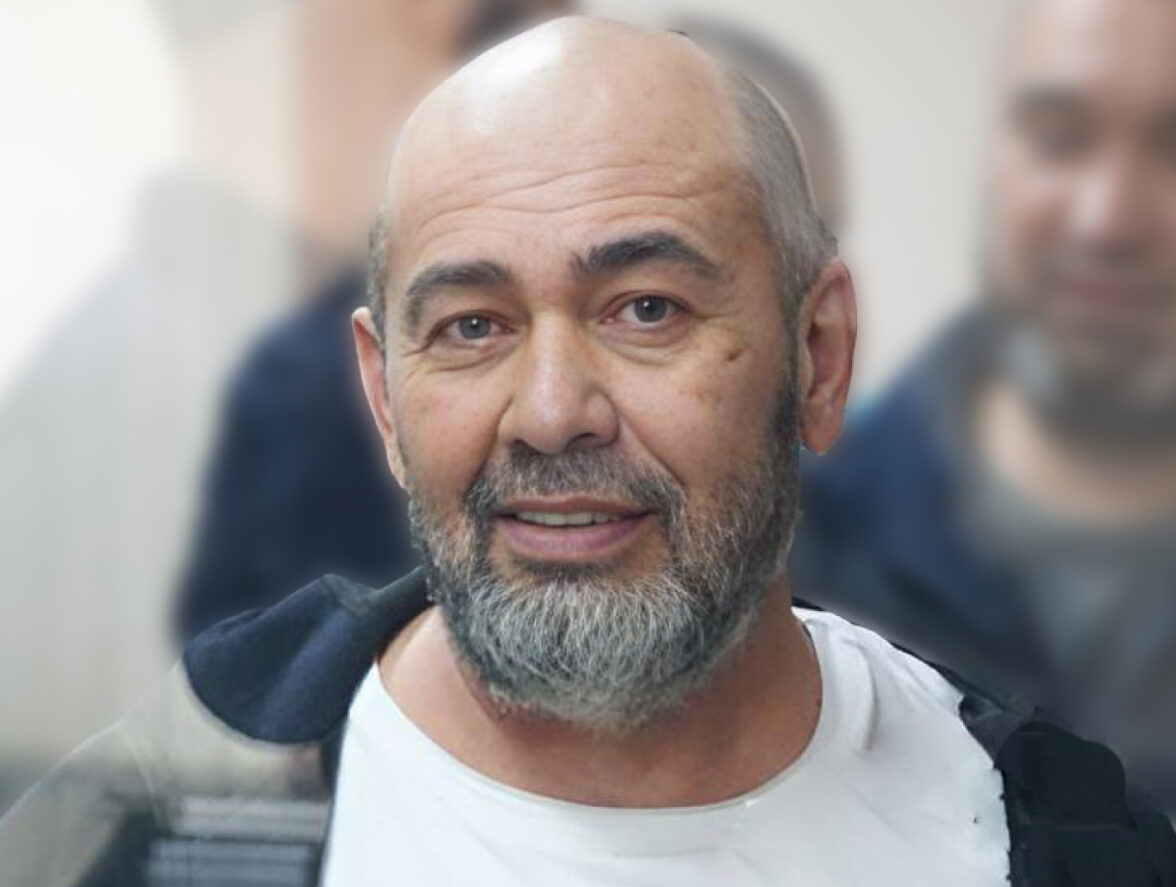
Today, we are telling the story of Yashar Muiedinov, a Crimean Tatar who was illegally sentenced to 13 years in a maximum security prison.
Life before the detention
Yashar Aliievych Muiedinov was born on April 14, 1968, in Syrdarya, Uzbekistan, where his family was deported by the Soviet regime in 1944.
In 1985, Yashar entered the Tashkent State Transport University, majoring in civil engineering.
After returning to Crimea, Yashar and his family settled in Simferopol.
Yashar worked as a construction worker and, in his spare time, attended court hearings on politically motivated cases in Crimea to show support for his community.
What did the occupiers come up with?
On March 27, 2019, one of the largest searches of Crimean Tatars’ homes during the occupation was conducted in occupied Crimea. In a few hours, Russian security forces searched dozens of homes, arresting more than 20 people, and Yashar Muiedinov was detained at the same time.
On November 24, 2022, a so-called “court” in Rostov-on-Don passed a verdict sentencing 54-year-old Muiedinov to 13 years in a maximum security prison, of which he will serve the first 4 years in prison.
Why was Yashar Muiedinov actually detained?
As in the cases of many other Crimean Tatars, his detention was part of systematic ethnic persecution on trumped-up charges by the occupation administration.
Where is Yashar Muiedinov now?
After his appeal was denied, Yashar Muiedinov was held in a penal colony in the city of Dymytrovhrad, Ulianivsk region of the Russian Federation.
He suffers from numerous chronic diseases, including hypertension, severe swelling of the legs, and back pain. His health condition is constantly deteriorating due to inadequate conditions of confinement and lack of medical care.
There is no surgeon in the colony who can examine the resident of Crimea, and he has asked his wife, Nailia Ibrahimova, to send him the necessary medications.
Yashar can call his family only once a month, and their last conversation lasted less than 15 minutes, which only further complicates the possibility of obtaining detailed information about his health or possible difficulties.