13 February 2025
February 13, 1945 – The Death of Volodymyr Sharafan, Ukrainian Underground Leader in Crimea and OUN Member
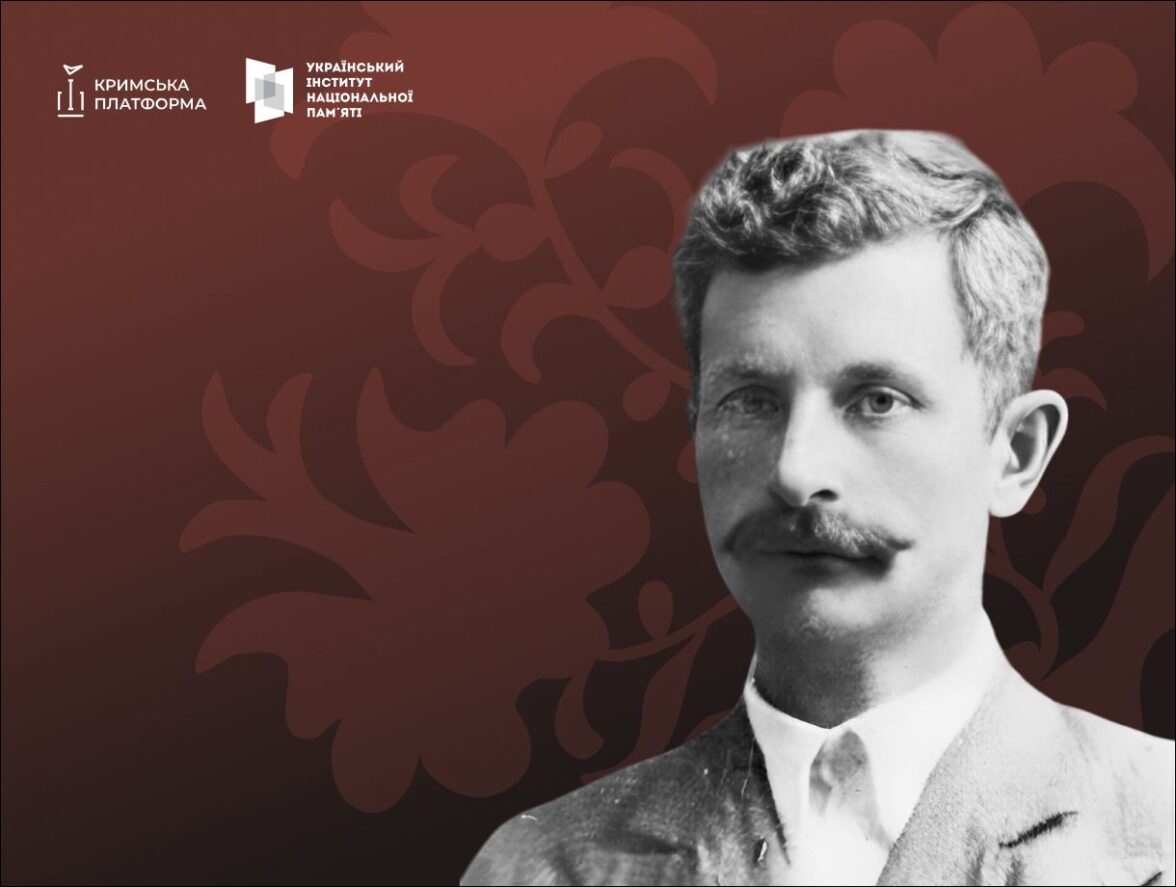
On February 13, 1945, Volodymyr Sharafan, one of the leaders of the underground Ukrainian organization in Crimea, was killed. The organization operated under the harsh conditions of the Nazi occupation. In June 1944, he was arrested, and after six months of “investigation” and torture, he was executed by the NKVD.
Volodymyr Sharafan was born in 1908 in Kyiv and studied at the Kirovohrad Pedagogical College. Fleeing the Holodomor, he moved to Crimea, where he became a student at the Faculty of Physics and Mathematics of the Simferopol Pedagogical Institute. After completing his studies, he worked there as a physics lecturer.
On August 8, 1941, Sharafan was mobilized into the Red Army. In November, along with his fellow soldiers, he destroyed equipment and documents before fleeing into the forest, unwilling to wait for evacuation. There, he was captured by Romanian troops and sent to a camp in Karasubazar (now Bilohirsk). Later, Volodymyr escaped from the camp and went into hiding in Simferopol, where he connected with OUN (Melnykivtsi) leaders Yaroslav Savka and Borys Sukhoverskyi.
By April, however, Volodymyr Sharafan had joined OUN, operating under the pseudonyms “Usach”and “Sha.” He became deputy head of the Ukrainian Committee, established by Ukrainian civic activists in Simferopol in September 1942, where he worked on issues related to school education, library affairs, and propaganda.
Together with Sharafan, his mother, Raisa Hryhorivna, and stepfather, Yakiv Stepanovych, also joined the underground movement, acting as liaisons between Soviet underground fighters and partisans. Volodymyr himself maintained connections with the Soviet underground group “Sokil,” which operated in the Simferopol theater. He provided them with intelligence on the locations of German troops, weapons and fuel depots, strategic sites, and lists of Gestapo collaborators.
In mid-April 1944, after Crimea came under Soviet control, Volodymyr Sharafan was once again mobilized into the Red Army. He participated in the liberation of Sevastopol from the Nazis, fighting in battles at Sapun Ridge, Sakharna Holovka, and Malakhov Kurgan, where he was seriously wounded.
In June 1944, Volodymyr Sharafan was arrested by the NKVD, with the main charge being his “voluntary surrender with weapons in hand” in 1941. During the investigation, he was accused of participating in the Crimean Ukrainian Committee and the regional branch of the OUN. Despite intense interrogations, Sharafan did not betray anyone.
On December 4, 1944, Volodymyr Sharafan was sentenced to execution under Article 58-1, “Treason against the Motherland.” On February 13, 1945, he was executed.
After Ukraine regained independence, Sharafan was exonerated in 1993 by the Military Prosecutor’s Office of the Odesa Military District under the Law on the Rehabilitation of Victims of Political Repressions.
That same year, a memorial plaque dedicated to Volodymyr Sharafan was installed at Malakhov Kurgan in Sevastopol, funded by the local community. However, it was later torn down by local communists. A foundation stone for a planned monument was later placed at the site where Volodymyr Sharafan was wounded.