14 August 2024
August 14, 1941: Deportation of the German Population of Crimea by the Soviet Authorities
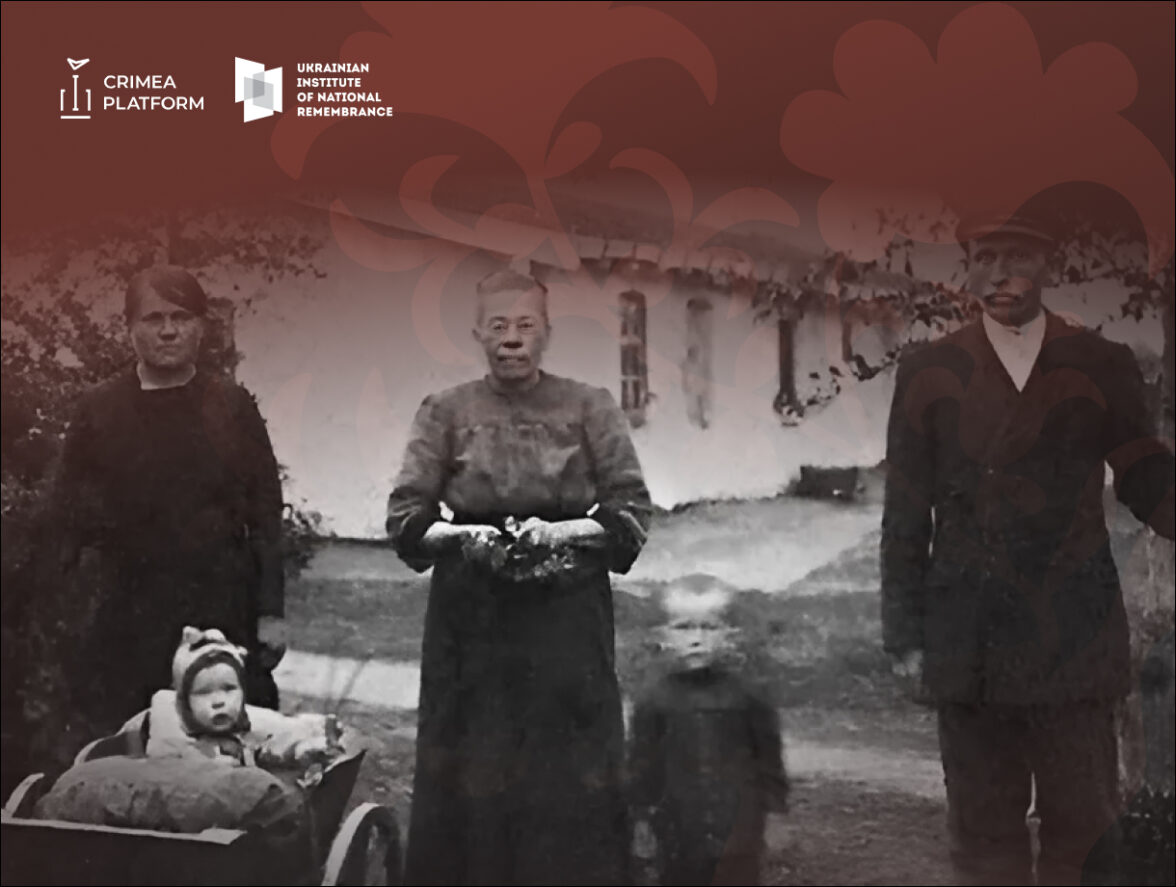
On August 8, 1941, German troops captured Uman and subsequently established control over the entire territory of Right-Bank Ukraine. The siege of Kyiv continued, and the threat of invasion loomed over Soviet-controlled Left-Bank Ukraine. German troops were preparing to invade Crimea.
On August 14, 1941, a Directive of the Supreme Command Headquarters was issued, ordering the 51st Army, which was stationed in Crimea, to “immediately clear the territory of the peninsula of local German residents and other anti-Soviet elements.” The Evacuation Council Resolution №CE-75c of August 15, 1941, instructed the government of the Crimean Autonomous Soviet Socialist Republic to “evacuate” the German population.
But how did the Germans end up in Crimea? It happened as part of the Russian policy of colonizing the peninsula, during which the local Crimean Tatar population was forced out, and foreign colonists were invited to take its place. Thus, at the beginning of the nineteenth century, the German colonies of Neusatz, Friedenthal, Rosenthal, Heilbrunn, Sudak Fortress, Herzenberg, Zurich, and Kronenthal appeared in Crimea. Before World War II, Germans represented about 6% of the population of Crimea. There were German villages and even two German national districts: Telmanivskyi and Buiuk-Onlarskyi.
With the outbreak of the German-Soviet war in June 1941, the German population of Crimea was classified as “anti-Soviet elements.” According to the directive and resolution of the Evacuation Council of August 15, 1941, 59,744 people were evicted from Crimea, including 11,000 non-ethnic Germans who were related to Germans by family ties – Ukrainians, Crimean Tatars, and Russians.
Unlike the Crimean Tatars, Bulgarians, Greeks, and Armenians deported in 1944, the Crimean Germans were not formally deported; the documents only refer to “evacuation.” Almost 60 thousand people were deported to the North Caucasus and later to Siberia and Kazakhstan.
By the end of 1941, another 2,233 Germans had been deported, and a small number were expelled in March 1942 from the Kerch Peninsula when Soviet troops briefly recaptured some of the territory as a result of a landing operation. After the liberation of Crimea from the Nazis in 1944, 2,300 Germans were expelled.
Although all charges against the Germans of Crimea were canceled after 1955, and in 1967, it was recognized that the accusations of mass collaborationism against the inhabitants of Crimea were unjustified, the administrative ban on returning to Ukraine was canceled for Germans only on November 3, 1972. Nevertheless, there was no mass return of Germans to the peninsula, as with the Crimean Tatars. After the collapse of the USSR, most Germans chose to live in their historical homeland in Germany rather than in Crimea.
According to the 2001 census, only two and a half thousand Germans lived on the peninsula, and organizations such as Wiedergeburt (Renaissance) and the Community of Deported Germans of Crimea existed. A newspaper, Hoffnung (Hope), was published in German and Russian, and Lutheran churches functioned in Simferopol, Sudak, and Yalta.