14 October 2025
October 14 marks the birthday of Şefika Gaspıralı
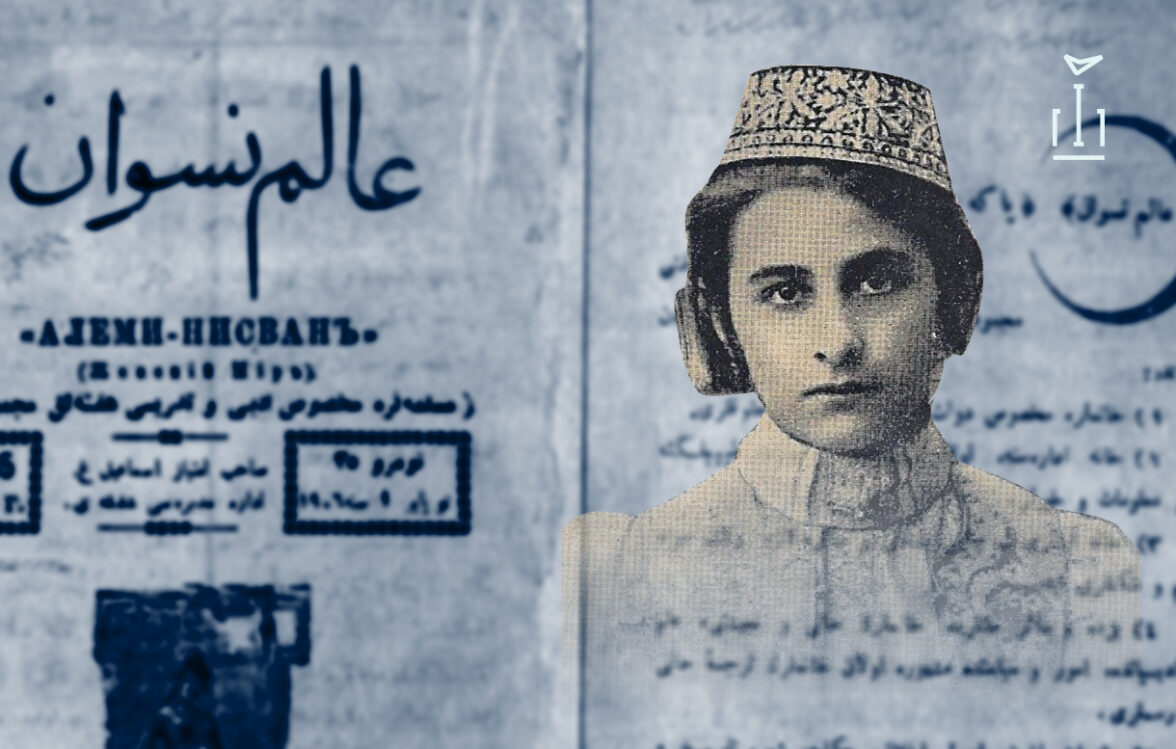
Today we commemorate the 139th anniversary of the birth of Şefika Gaspıralı — an outstanding Crimean Tatar public figure, journalist, educator, and one of the first leaders of the women’s movement among Muslims of Crimea and the entire Turkic world.
Şefika Gaspıralı was born on October 14, 1886, in Bakhchysarai, into the family of Ismail Gaspıralı — a prominent Crimean Tatar educator, reformer, and founder of the newspaper Terciman (“The Interpreter”). Growing up in a family where education, culture, and the native language were central to life, Şefika saw herself from an early age as part of the great mission to renew Crimean Tatar society through knowledge.
She received her education at the school founded by her father, which followed the Jadidism system — a progressive approach that combined classical Islamic learning with modern teaching methods.
From a young age, Şefika was involved in her father’s editorial work — translating texts, corresponding with authors, and later writing her own articles. Her first publications, which appeared in the early 1900s, addressed issues of education, culture, and the social position of women. Thus began her long and dedicated struggle for women’s right to education, work, and participation in public life.
In 1905, Şefika Gaspıralı founded Alem-i Nisvan (“The Women’s World”) — the first women’s periodical among Muslims of the Russian Empire. Published in Bakhchysarai as a supplement to Terciman, the journal aimed to create a space where women could exchange ideas and discuss education, child-rearing, culture, health, and social roles. Through its pages, Gaspıralı called for expanding women’s education, overcoming prejudice, and involving women in public life. Her ideas combined modernist enlightenment views with deep respect for Islamic traditions, which she saw not as limitations but as a moral foundation for progress.
The magazine gained readers far beyond Crimea — in Kazan, Baku, Tbilisi, Tabriz, and Istanbul. Thus, Şefika Gaspıralı became one of the first female journalists in the entire Turkic world.
The events of 1917 were a turning point for Crimea and the entire empire. After the February Revolution, the Crimean Tatar people began the process of national self-determination, and Şefika took an active role in this movement. She became one of the founders of the Executive Committee of Muslim Women of Crimea — an organization that united women in the struggle for civil rights, equality in education, and participation in political life. Under her leadership, women’s groups, meetings, and conferences were organized across Crimea.
Within the framework of the 1917 Qurultay of the Crimean Tatar People, Şefika advocated for the full participation of women in the national movement, believing that a free society could not be built if half of it — women — were excluded from education and development.
After the Bolshevik occupation of Crimea and the fall of the Crimean People’s Republic, Şefika Gaspıralı was forced to leave her homeland. Settling in Istanbul, she continued her public activities. In Turkey, she worked as the director of an orphanage, participated in the work of the Turkish Red Crescent, and helped Crimean émigré families.
In 1930, she founded the Union of Crimean Tatar Women, which focused on education, social support, and the preservation of Crimean Tatar culture within the diaspora. She continued to publish articles in Turkish and Crimean Tatar outlets, maintained contact with former colleagues, and actively participated in meetings and cultural events of the Crimean Tatar community.
Şefika Gaspıralı lived in Turkey for more than half a century. She passed away on August 31, 1975, in Istanbul and was buried at the Zincirlikuyu Cemetery.