17 October 2025
142 years ago Petro Bolbochan was born
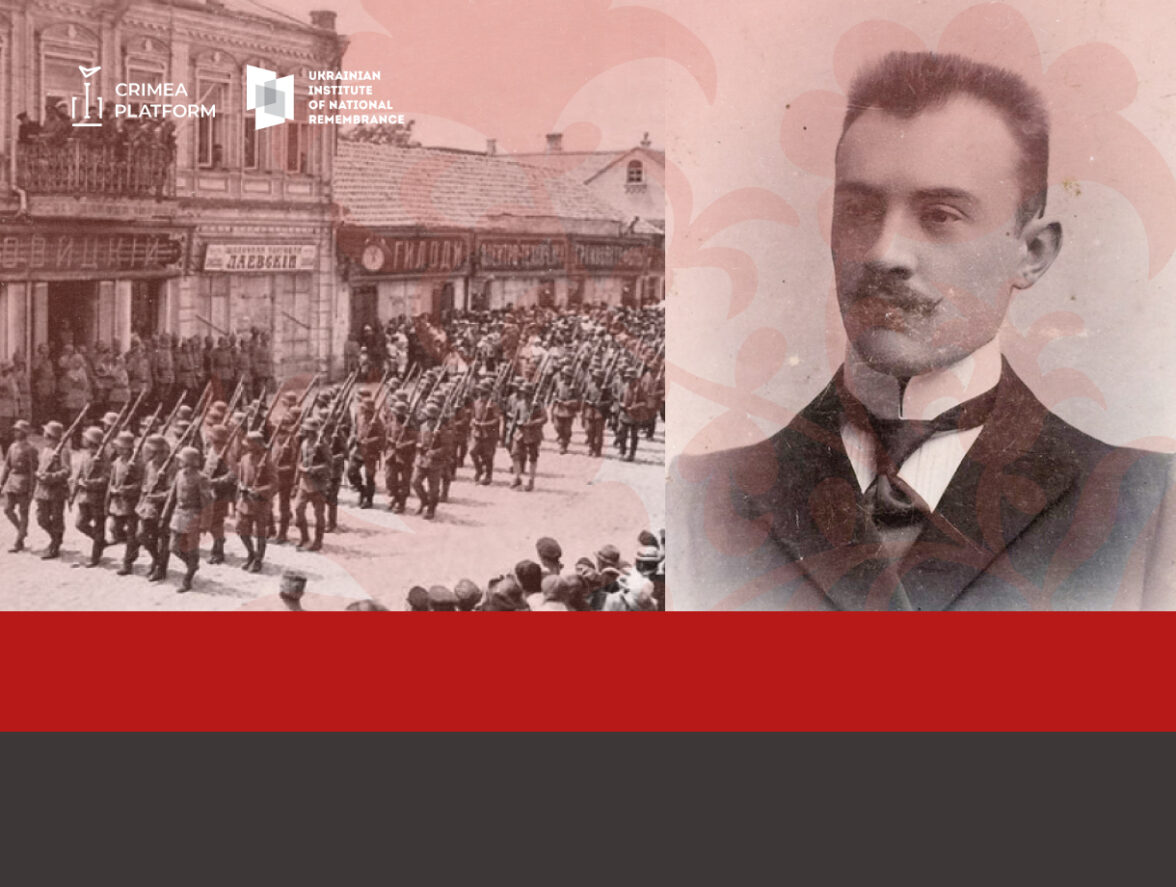
Petro Bolbochan was born on October 17, 1883, in the village of Hidzhiv, Bessarabia Governorate (now Yarivka in Bukovyna), into the family of an Orthodox priest, Fedir Bolbochan.
The family was of modest means, so young Petro had two possible career paths — the clergy or the military. He first studied for two years at the Chișinău Theological Seminary, but later transferred to the Chuhuiv Infantry Cadet School.
It was there that he first showed his national consciousness and “organized a Ukrainian circle to promote the native language.” The circle was soon shut down, and Bolbochan received a reprimand for his initiative.
After graduating from the cadet school in 1908, he was assigned to the elite 38th Tobolsk Infantry Regiment, with which he entered World War I. He took part in dozens of battles, carried out reconnaissance missions, and trained reserve troops. For his bravery, he received numerous awards, including the Orders of St. Stanislaus (2nd and 3rd Class) and the Orders of St. Anna (2nd and 3rd Class).
With the outbreak of the February Revolution in 1917, Petro Bolbochan supported the Ukrainian Central Rada and actively participated in the Ukrainization of military units. He helped form the First Ukrainian Bohdan Khmelnytsky Regiment, and by November 1918, he commanded the First Ukrainian Republican Regiment, based in Proskuriv (now Khmelnytskyi).
However, the Bolshevik soldiers’ committee ordered the regiment to be disarmed. Despite Bolbochan’s resistance and the loyalty of his soldiers, the Bolshevized troops managed to destroy their barracks and weapons.
In January 1918, Bolbochan organized the Republican Battalion from loyal troops and brought it to Kyiv just before the city was seized by the Bolsheviks. He took part in suppressing the Bolshevik January Uprising.
Later, the Republican Battalion was reorganized into the Zaporizhian Battalion, which in March 1918 expanded into the Zaporizhian Division. Together with his “Zaporozhians,” Bolbochan participated in the offensive on Kyiv and later in liberating a number of towns in the Poltava region — Hrebinka, Lubny, and Poltava itself.
In April 1918, Bolbochan was appointed commander of the Crimean Group of the Ukrainian People’s Republic Army with the rank of division commander. He received a secret order from the UPR government to capture Crimea before the German forces did.
Here, his strategic talent shone most brightly — the soldiers of the Zaporizhian Division, riding on rail trolleys, crossed the mined bridge at Chonhar and took the Bolsheviks by complete surprise.
Within three days, the “Zaporozhians,” together with Vsevolod Petriv’s cavalry, liberated Simferopol, Dzhankoi, and Bakhchysarai. However, the Ukrainian government, unwilling to damage relations with its German ally (which had its own vision for Crimea’s future), ordered Bolbochan’s forces to withdraw to Melitopol — as victors.
Petro Bolbochan was a firm advocate of an independent Ukrainian state. According to contemporaries, he consistently defended the principles of Ukrainian sovereignty and a strong national army as its foundation.
In one of his orders, Bolbochan wrote:
“I will not allow any soviets of people’s deputies or monarchist organizations. I emphasize that we are fighting for an independent, democratic Ukrainian Republic — not for a united Russia, whatever its form may be, Bolshevik or monarchist.”
Enemies hated Bolbochan, while his subordinates were proud to serve under his command. The Bolsheviks placed a bounty of 50,000 gold rubles on his head.
In November 1918, Bolbochan supported the Anti-Hetman Uprising. Later, as part of the UPR Army, he fought the Bolsheviks on the Left Bank of Ukraine, but this time his units were defeated, and Bolbochan was accused of treason. He spent several months under arrest and was later placed under police surveillance in Stanislaviv (now Ivano-Frankivsk).
Thanks to the persistence of his “Zaporozhians,” who stood firmly by their commander, Petro Bolbochan was eventually released and sent to Italy to form military units from Ukrainian prisoners of war from World War I. By that time, the Zaporizhian Corps was already led by Volodymyr Salsky.
Upon Bolbochan’s return, State Inspector Havryshko accused him of attempting to seize command of the corps and stage a coup. Later, a military field court sentenced him to death by firing squad. Despite numerous pleas for clemency for the heroic commander, Symon Petliura insisted on carrying out the sentence.
Colonel Petro Bolbochan was executed on June 28, 1919, at the Balyn railway station, Khmelnytskyi region.