16 November 2025
16 November — International World Heritage Day
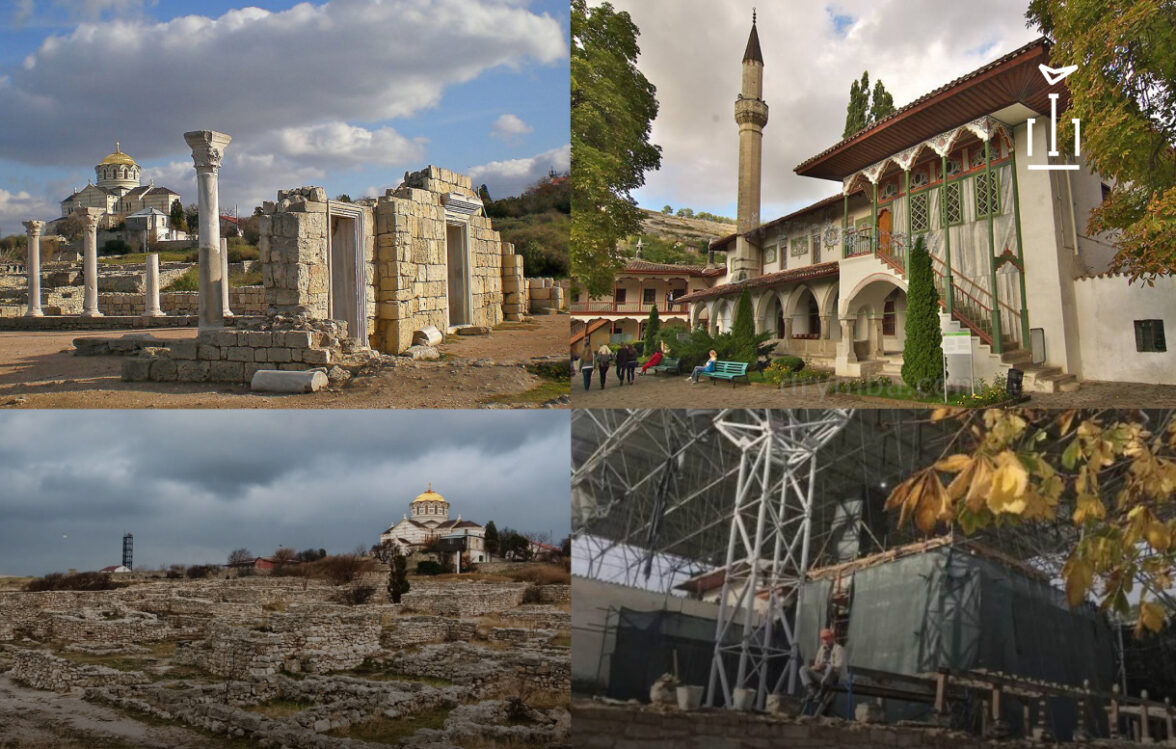
Every year on 16 November, International World Heritage Day is observed. Around the world, this date is an occasion to highlight the value of the past. At the same time, in Ukraine it is also a reminder of how Russia has been deliberately destroying this historically significant heritage for decades.
In 2014, Russia illegally occupied Crimea, and for more than 11 years, the occupiers have been systematically demolishing the unique historical and cultural heritage of the Crimean Peninsula. In occupied Crimea, Russian authorities continue to plunder and devastate other cultural monuments as well. The occupation administration is effectively pursuing a policy of cultural ethnocide: historical landmarks are either physically destroyed or distorted beyond recognition.
One of the most well-known examples is the Ancient City of Tauric Chersonese and its Chora, a unique monument of an ancient Greek colony and a UNESCO World Heritage Site. Over the years of occupation, Russia has irreversibly altered its historical appearance.
On the site, Russia surrounded the archaeological remains with walls and tourist walkways. Later, an “open-air theatre” was constructed, essentially built on top of ancient ruins, placing additional multi-ton pressure on them. Heavy machinery was used throughout the construction process, stripping away up to 10 meters of cultural layers and destroying the remains of the ancient city, including those of an ancient temple and a city necropolis with unique burials.
This “reconstruction” has an overt ideological purpose. In Russian propaganda, Chersonese is now referred to as the “Russian Pompeii” and “Russian Troy,” promoting the myth that it was the site of Prince Volodymyr’s baptism. And this is only one example.
Equally illustrative is the fate of another key landmark of the peninsula — the Khan’s Palace in Bakhchysarai, the main residence of the Crimean Khans in the 16th–18th centuries and the only surviving example of Crimean Tatar palace architecture in the world. In 2013, the complex was included in UNESCO’s Tentative List, and preparations for its World Heritage nomination were underway. However, after the occupation, Russia began reconstructing the site in a way that destroyed its historical integrity.
The most severely affected structure was the Great Khan Mosque (Biyuk Khan Jami), built in 1532 and the oldest building of the complex. In the autumn of 2016, Russian workers removed the ancient roof, dismantled the carved walnut ceiling, tore down the historic calfskin plafond inlaid with gold, and the unique 18th-century wooden chandelier disappeared without a trace. This irreversibly deprived the mosque of its authentic appearance. By 2018, the eastern minaret had cracked, stained-glass windows had collapsed, and wide fissures appeared across the mosque’s façades.
That same year, a massive steel canopy frame was installed directly above the palace’s main building without proper soil studies. By early 2022, due to overloading, one corner of the structure had subsided, detaching a wall from the complex and causing spiral cracks to spread.
These actions by the Russian Federation are not only acts of destruction against historical heritage but also an attempt to erase the memory of Crimea’s unique multicultural identity. Through this, the occupation administration seeks to remove an entire people from history and reshape the peninsula according to its own imperial narratives.
But no amount of destruction can erase what lives within the people themselves. Crimea will be de-occupied, and we will restore our right to preserve our history as it deserves.