16 October 2025
October 16 — Petro Hryhorenko’s Birthday
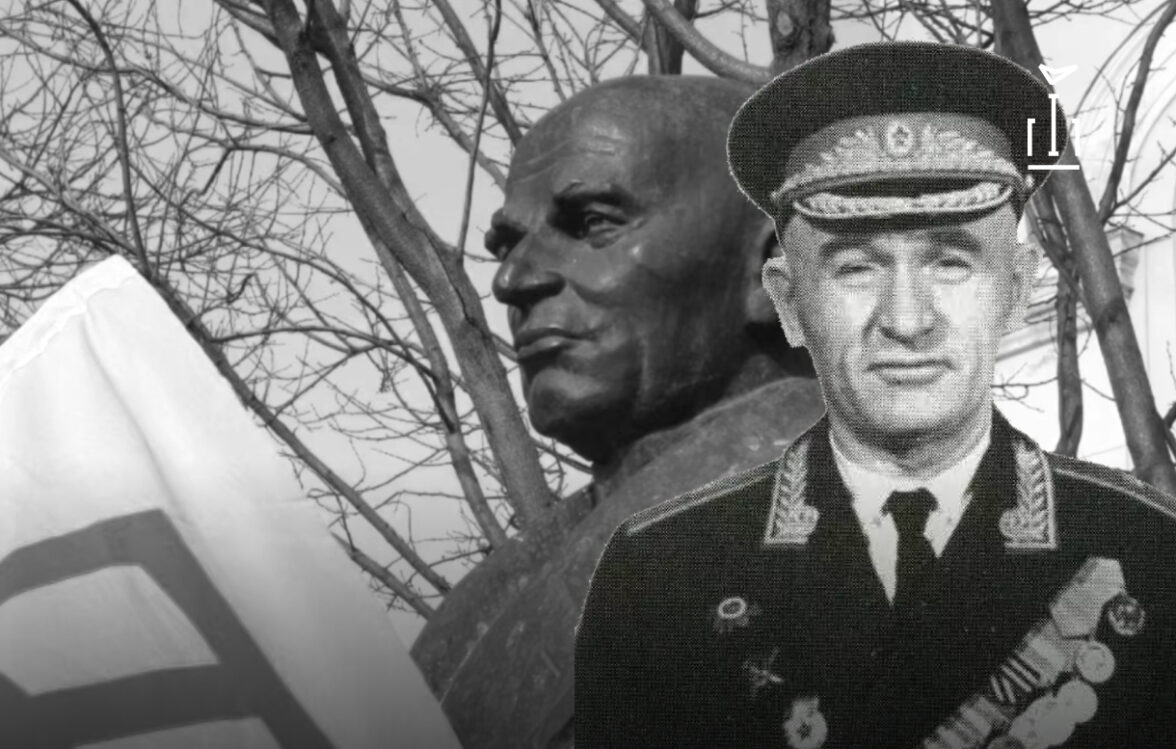
On October 16, 1907, near Berdyansk, Petro Hryhorenko was born — a Ukrainian general in the Soviet army who became one of the most renowned human rights defenders of the 20th century. He fought in World War II, received numerous military awards, taught at the Frunze Military Academy, and had a brilliant military career — until he dared to speak the truth.
After the war, Hryhorenko became one of the first in the USSR to openly speak out against political repression. In 1961, during a discussion of the CPSU Program, he publicly questioned the “democratic” nature of the Soviet system, asking:
“We approve the draft program, in which we condemn the cult of personality, but is everything being done to ensure that the cult of personality does not repeat itself?”
That was enough for him to be stripped of his positions and military rank and sent for compulsory “treatment” in a psychiatric hospital — a typical form of repression by the totalitarian Soviet authorities against dissidents.
Petro Hryhorenko’s support for the Crimean Tatar people was particularly significant. He openly opposed the deportation of the Crimean Tatars, demanded their return to Crimea, spoke at international forums, and wrote open letters to the Soviet leadership, calling for the deportation to be recognized as a crime.
Thanks to his stance, the issue of Crimea and the Crimean Tatar question ceased to be considered an “internal affair of the USSR” and reached the international level. Later, the leader of the Crimean Tatar people, Mustafa Dzhemilev, would say:
“No one in the world has done as much for the Crimean Tatars as Petro Hryhorenko.”
The Crimean Tatars regarded him as a true ally — so much so that they organized informal protection near his Moscow home to shield the general from KGB persecution.
In 1976, Hryhorenko became a co-founder of the Moscow and Ukrainian Helsinki Groups, which demanded respect for human rights in accordance with the Helsinki Accords. His ideas about dignity, the accountability of authorities to citizens, and the right to truth became a guide for an entire generation of Soviet dissidents.
After traveling to the United States for medical treatment, the Soviet authorities revoked his citizenship. The general could never return home — to the country he had fought for and defended not only with weapons but also with his words.
Petro Hryhorenko died in 1987 in New York. He was buried at the Ukrainian cemetery in Bound Brook, New Jersey. After the collapse of the USSR, he was rehabilitated, and in 1999, on the initiative of the Crimean Tatar community, a monument was erected in Simferopol — a gesture of gratitude to a man who never betrayed the principles of truth and justice.