26 February 2025
Panel 2: Overcoming the Impact of Crimea’s Occupation: Achievements and Future Priorities
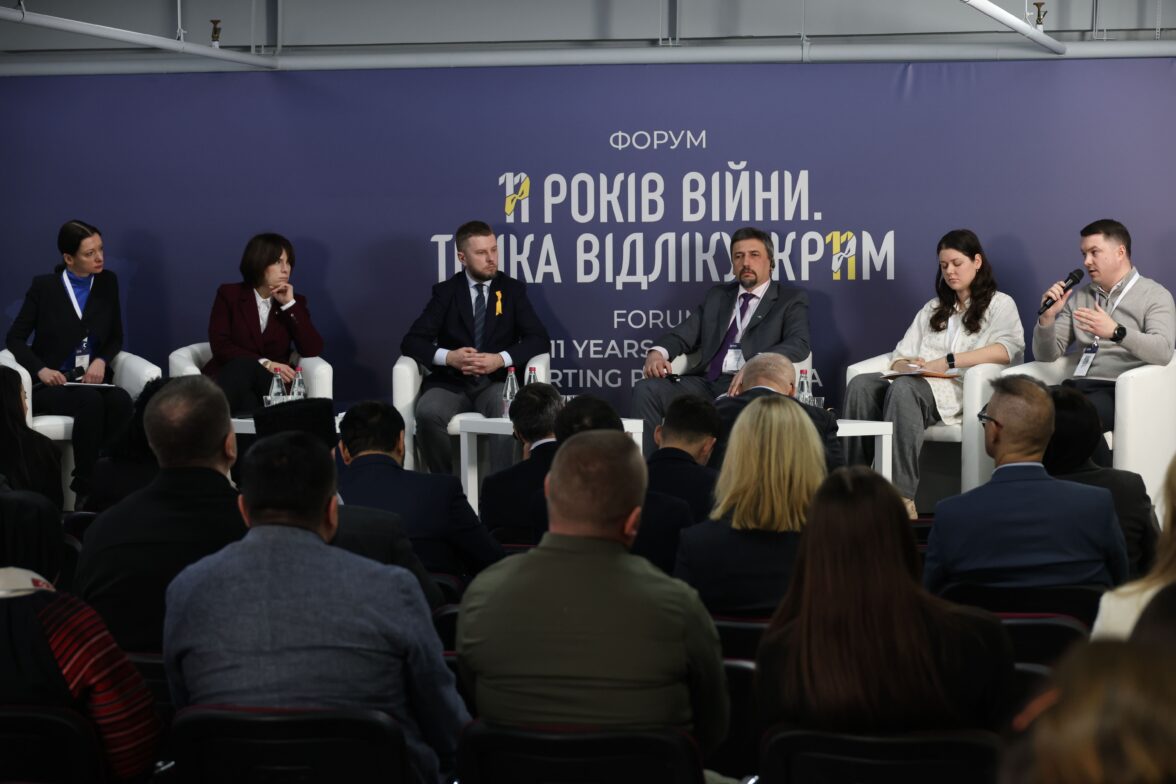
As part of the 11 Years of War. Starting Point: Crimea Forum, the second panel discussion, titled “Overcoming the Impact of Crimea’s Occupation: Achievements and Future Priorities,” was held.
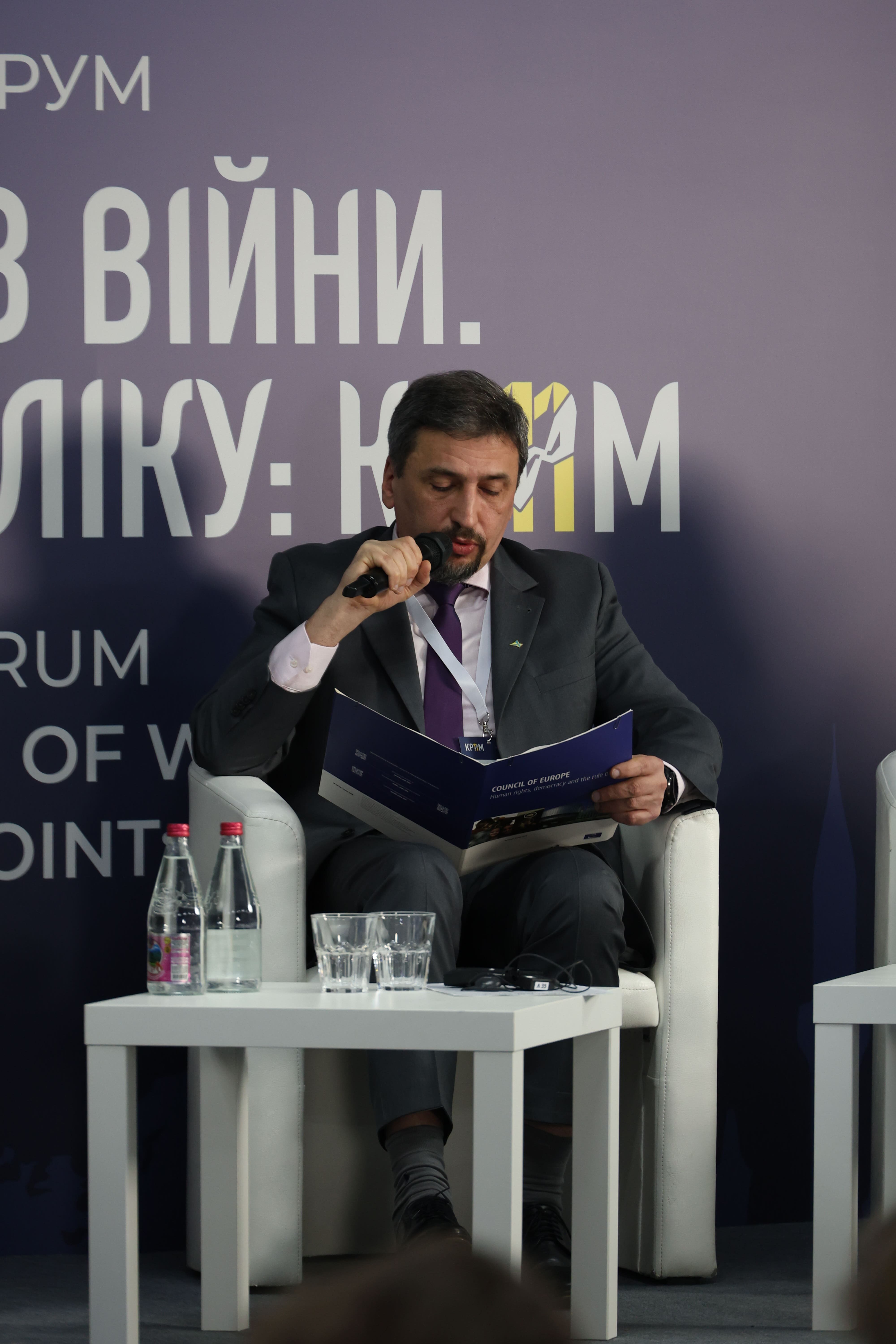
The discussion featured Deputy Minister for Communities and Territories Development of Ukraine Oleksii Riabikin, Permanent Representative of the President of Ukraine in the Autonomous Republic of Crimea Olha Kuryshko, Head of the Prosecutor’s Office of the Autonomous Republic of Crimea and the City of Sevastopol Ihor Ponochovnyi, Head of the Council of Europe Office in Ukraine Maciej Janczak, and Head of the Center of Civil Education Almenda Mariia Sulialina. The panel was moderated by journalist Khrystyna Berdynskykh.
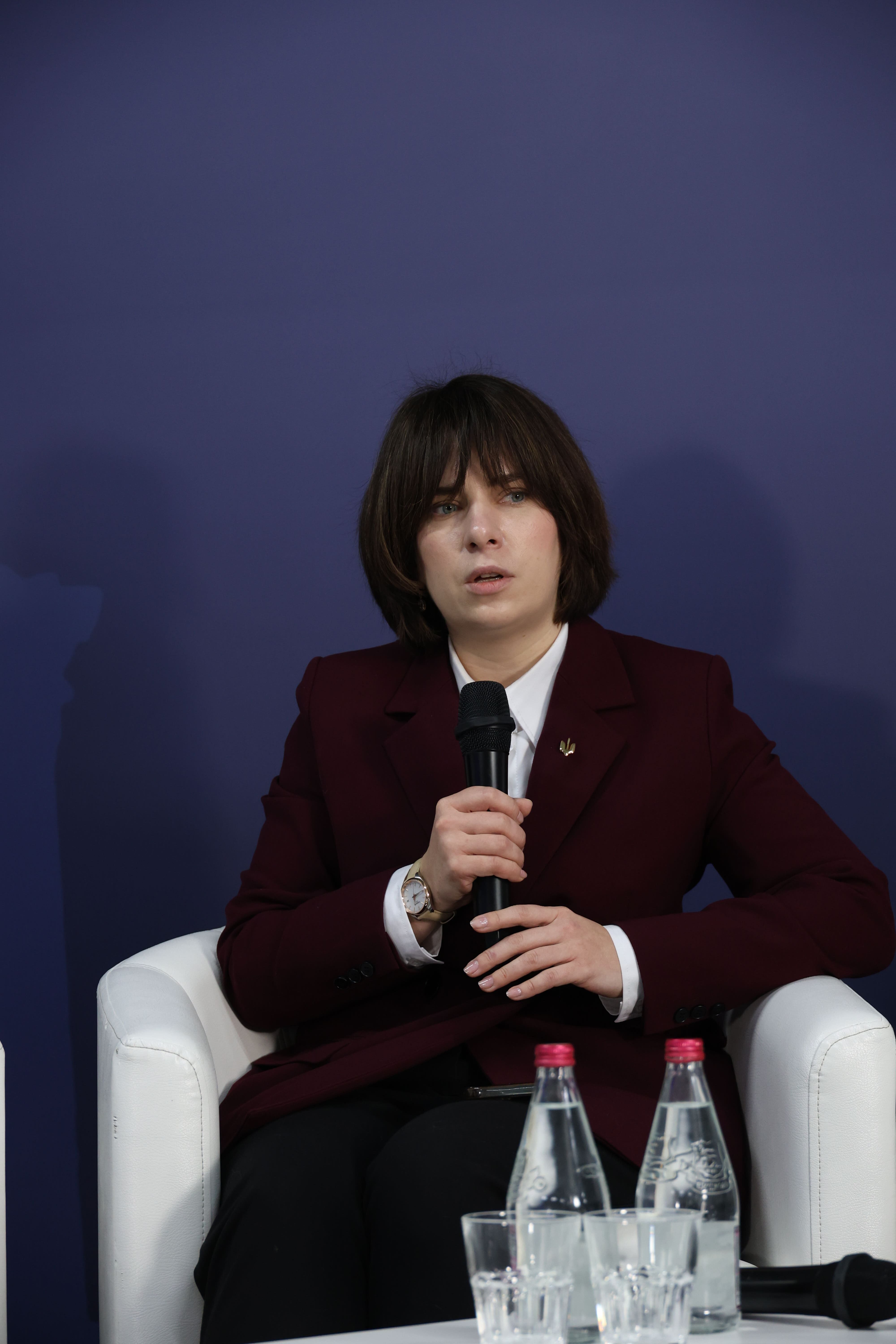
Permanent Representative Olha Kuryshko, during her speech, emphasized that Ukrainian society must continue its fight for the return of Crimea to Ukraine and the restoration of justice.
“The occupation of Crimea, which has lasted for eleven years, has inflicted profound damage on various aspects of life on the peninsula. First and foremost, in the political dimension: hundreds of Ukrainian political prisoners are being illegally held both in temporarily occupied Crimea and in Russia itself—this is a cynical attempt to suppress Ukrainian resistance and erase national identity,” emphasized Permanent Representative of the President Olha Kuryshko.
Minister for Communities and Territories Development of Ukraine, Oleksii Riabykin, stated that the government is actively working on regional development strategies and governance systems that will be implemented in Crimea for the peninsula’s reintegration. The most crucial task at present is maintaining connections with the residents of Crimea and developing concrete policies for post-reintegration actions.
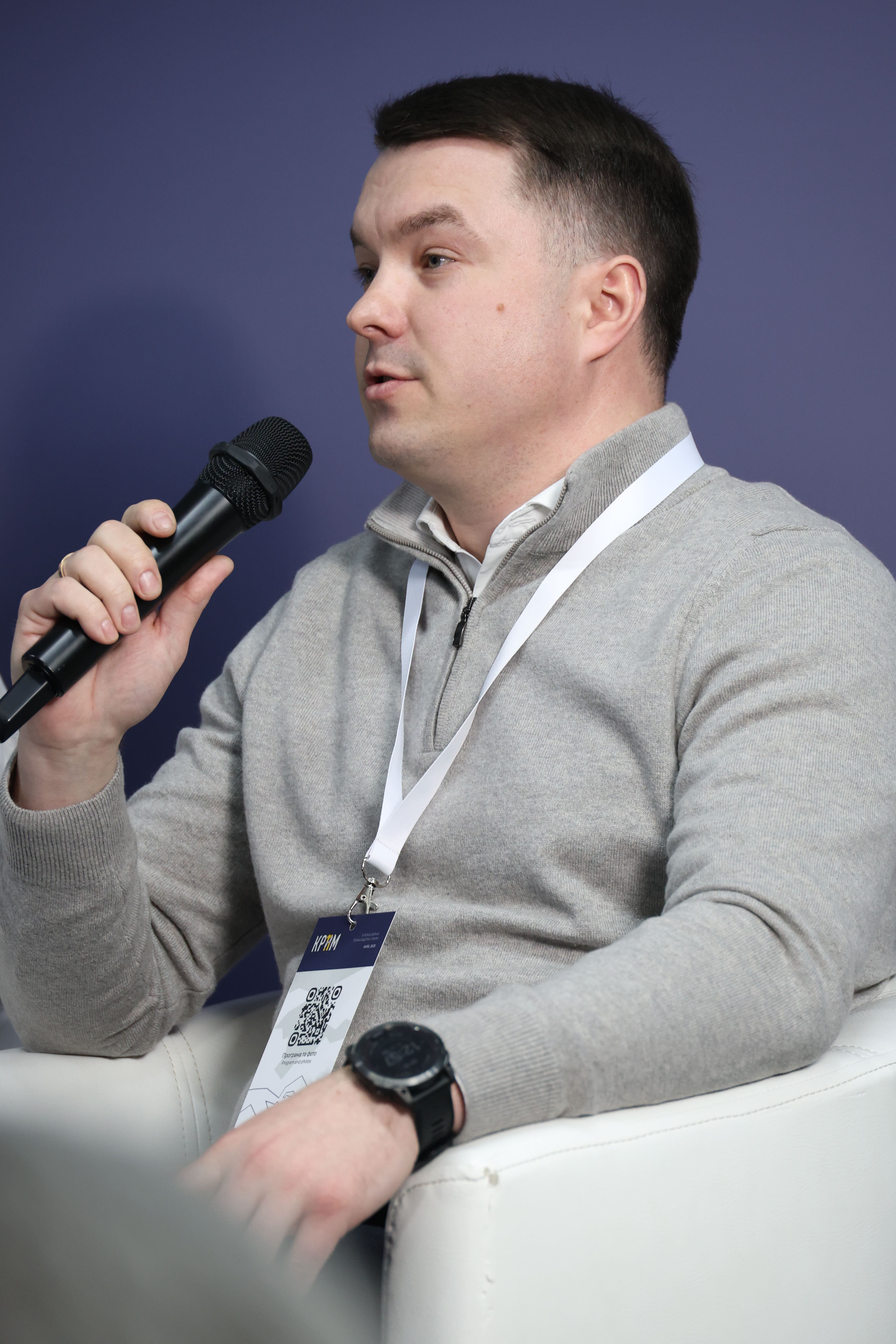
“We need to ensure that the Crimean Tatar population currently residing on the peninsula does not lose its connection with our state and that those who have relocated and are now living outside Crimea continue to remember their identity,” Oleksii Riabykin emphasized.
Head of the Council of Europe Office in Ukraine, Maciej Janczak, emphasized that the Council of Europe firmly supports Ukraine’s sovereignty, independence, and territorial integrity.
“The illegal attempt to occupy Crimea has led to numerous human rights violations. The European Court of Human Rights, along with the international community, bears a strong legal responsibility for these events. We are closely monitoring the situation, documenting all violations, and ensuring that these crimes will not go unpunished,” Maciej Janczak stated.
Head of the Prosecutor’s Office of the Autonomous Republic of Crimea and the City of Sevastopol, Ihor Ponochovnyi, emphasized the importance of a systematic approach to liberating Crimea from Russian occupation. He underscored that since 2014, the occupation administration has deliberately worked to eradicate Ukrainian and Crimean Tatar identities through mass repression, torture, and inhumane detention conditions aimed at suppressing any form of resistance.
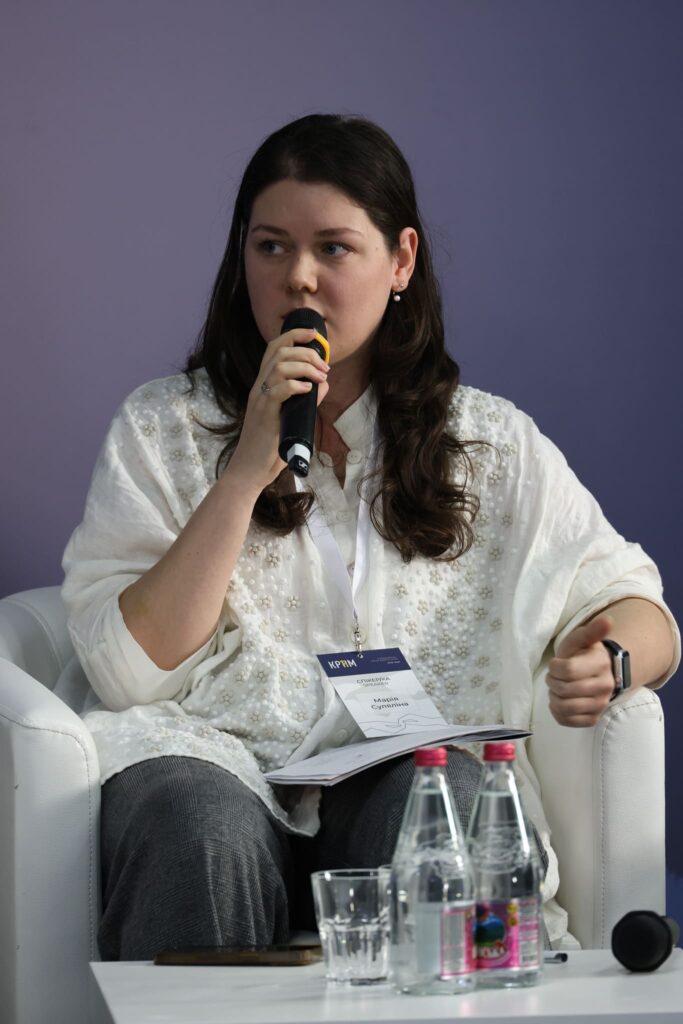
Mariia Sulialina, Head of the Center of Civil Education Almenda, highlighted the significant changes that have taken place in Crimea’s education system since the occupation and the challenges Ukraine faces in maintaining educational ties with children from temporarily occupied territories. She emphasized the need not only to create opportunities for these children to access education but also to adapt the national education system accordingly.
“Over the past 11 years, there were many things we should have done but we didn’t. Now, we must make up for lost time because the future of these children in Ukraine depends on it,” concluded Mariia Sulialina.