18 February 2025
February 18, 1900 — Birth of Oksana Petrusenko, Ukrainian Opera Singer from Crimea
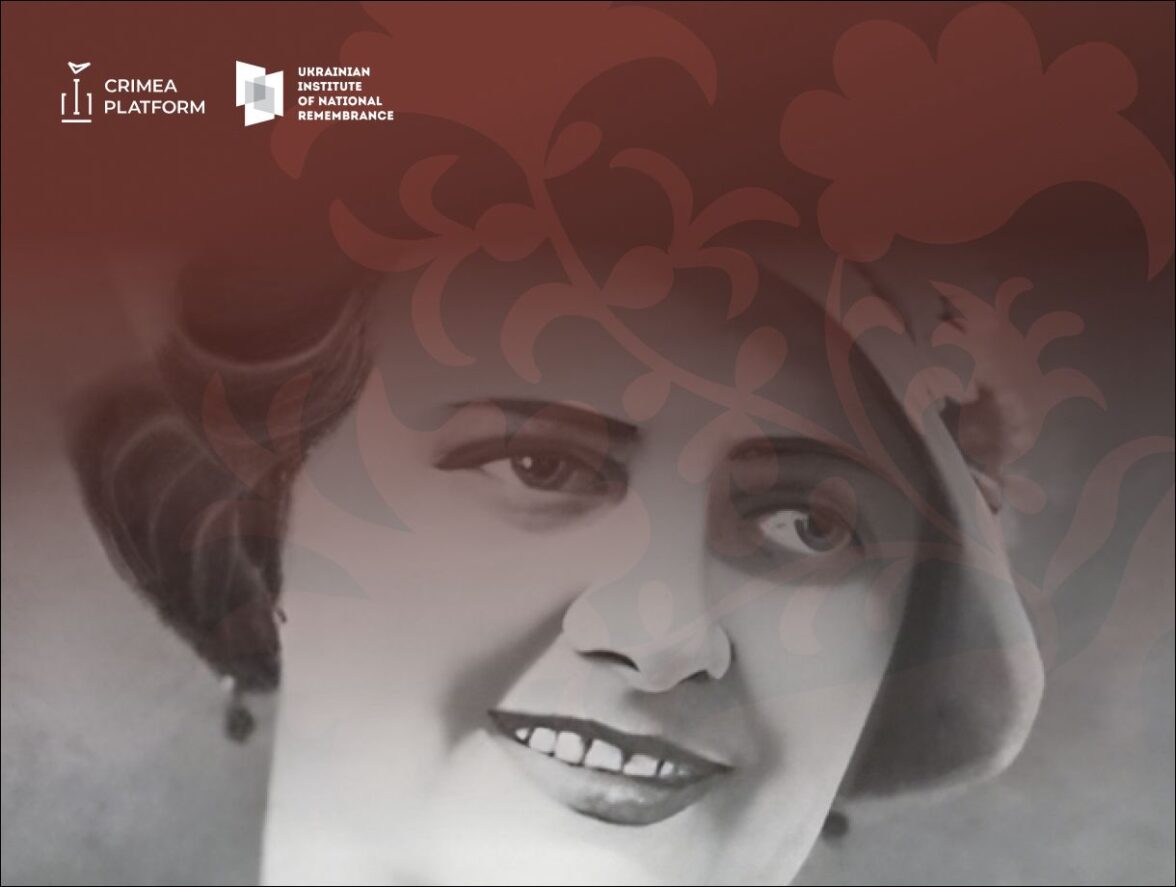
On February 18, 1900, Kseniia Borodavkina (the birth name of Oksana Petrusenko) was born in Balaklava, near Sevastopol. According to another version, she was born in Balakliia, Kharkiv region, where her father, Andrii Borodavka, was originally from. His service as a sailor in the Black Sea Fleet brought him to Sevastopol, where his surname was altered to Borodavkin. Kseniia’s mother, Mariia Kuleshova, was originally from Oryol Governorate.
Kseniia inherited her musical talent from her father, who had a remarkable voice. However, she hardly knew him—when she was just one year old, he died of tuberculosis. Her mother remarried, but her new husband was a heavy drinker, and they eventually got divorced.
The future singer’s life began under harsh conditions of poverty and hardship. As a child, she sang in a church choir in Sevastopol, played the guitar, and started working at an early age. At 18, she ran away from home with Stepan Hlazunenko’s musical-dramatic troupe, marking the start of her touring career. That same autumn, she joined the Kherson Ukrainian Music Drama Theater, led by Ivan Sahatovskyi, initially as a chorus member and later as a leading actress with a powerful voice.
In 1921, the Kherson Theater disbanded, and Oksana continued her search for success by joining traveling theater groups while also attempting to receive a professional education. From 1923 to 1924, she studied at the Lysenko Kyiv Music and Drama Institute but had to interrupt her studies after falling in love with baritone singer Mefodii Semeniuta-Barylо, becoming pregnant, and giving birth to her son, Volodymyr.
She spent seven years performing in Russia with Sahatovskyi’s touring troupe and on the opera stages of Kazan, Sverdlovsk, and Samara. In 1934, Oksana Petrusenko returned to Ukraine, where she was accepted into the Kyiv Academic Theater of Opera and Ballet. Her extraordinary talent immediately secured her leading roles, which in turn sparked jealousy and rumors.
In her personal diary, she once wrote:
“A group of the unscrupulous have come to hate me for my stage and vocal talent—my work, my success keeps them up at night. But since they failed to hinder my rise, both in my craft and in public life, it is difficult to drag me back—I am too prominent in the eyes of society. Yet they are digging a deep pit beneath me. It’s hard to take me down…”
Oksana Petrusenko quickly became a public idol. She closely collaborated with Maksym Rylskyi, who translated opera parts into Ukrainian and helped her refine her command of the language. During a tour in Moscow, she was invited to Stalin’s countryside residence and offered a trip to Milan to further develop her vocal skills. However, the trip to Italy never took place due to the deterioration of political relations with Mussolini’s government.
This story took a tragic turn. During the 1937 repressions, the arrested theater director Yan Yanovskyi, under torture, claimed that Petrusenko had been planning to leave for Italy. In despair, she nearly took her own life, and only an appeal to Moscow managed to stop the persecution.
A particularly significant moment in her career was her role in the discovery of the world-renowned talent of Kateryna Bilokur. After hearing a folk song performed by Oksana on the radio, the artist wrote to her, asking for help and enclosing several of her own drawings. Oksana forwarded the letter to specialists at the Central House of Folk Art, and soon after, a commission visited Bilokur. As a result, her paintings gained international recognition—even Paris was captivated by her work.
Oksana Petrusenko passed away on July 15, 1940, at the age of 40, just eight days after giving birth to her second son, Oleksandr. The official cause of death was reported as a sudden blood clot detachment, but rumors circulated that she had been poisoned. According to some witnesses, the wife of Marshal Tymoshenko, who had become infatuated with the singer and wanted to bring her to Moscow, allegedly bribed a nurse, fearing that her husband would leave her. On July 17, her funeral procession stretched for several kilometers, a testament to the deep admiration she commanded. Oksana Petrusenko was laid to rest at Kyiv’s Baikove Cemetery, near the church.
The memory of Oksana Petrusenko lives on. Streets in Kyiv, Kherson, Luhansk, Kramatorsk, Lviv, and other cities bear her name. In 2024, she became the subject of the National Unity Radio Dictation, dedicated to the 100th anniversary of Ukrainian Radio. The text, titled “The Magic of Voice,” was written by writer Oksana Zabuzhko:
“The human voice is a magical substance—it can captivate you, even if you’ve never seen the person behind it. ‘Oksano, Oksano, I hear your voice, the wind has carried it to me from Ukraine’—people still dance to this tango at weddings, unaware that it comes from the folklore of exile, from the Gulags—not a song to a beloved girl, but an homage to the legendary singer Oksana Petrusenko, whose voice, in Stalin’s years, was broadcast by All-Union Radio, reaching even the depths of the Siberian wilderness.”