18 May 2025
18 May: A Day When Remembrance Becomes an Act of Solidarity. Marking the 81st Anniversary of the Genocide of the Crimean Tatar People
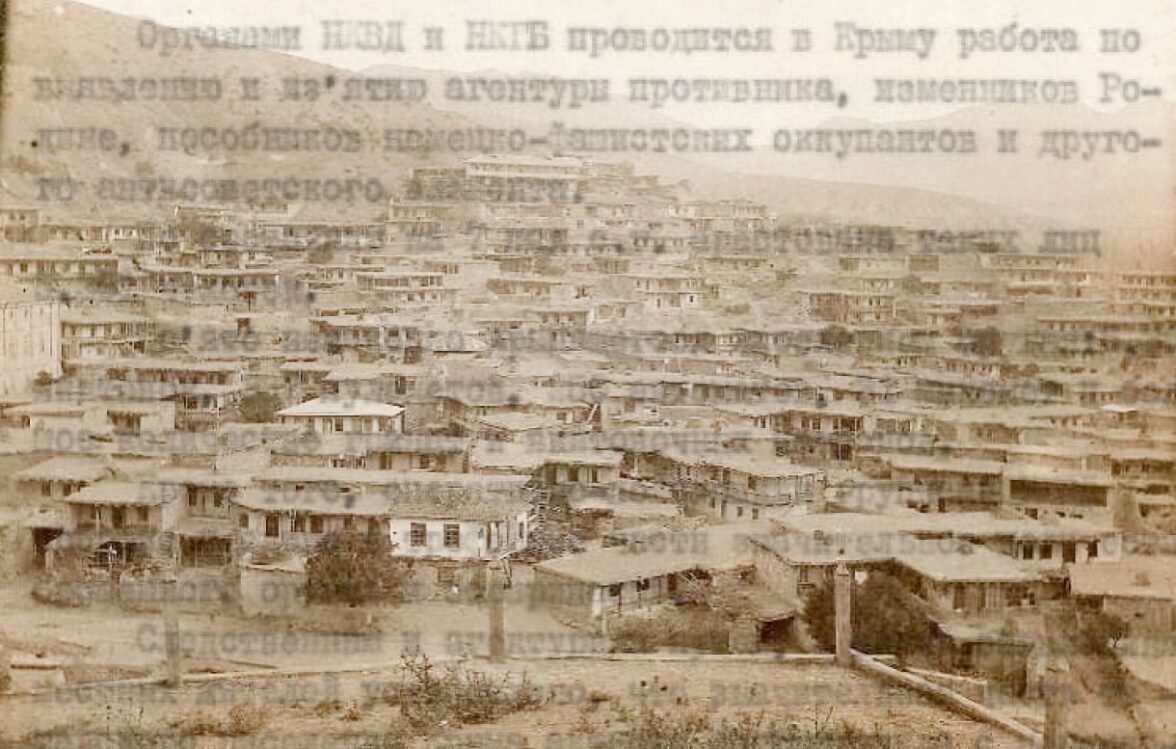
On 18 May, Ukraine commemorates one of the most tragic chapters of its national history — the genocide of the Crimean Tatar people. On this day, we remember those who were forcibly stripped of their homes, language, culture, homeland, and, in many cases, their very lives. The 1944 deportation did not last merely a few days — its consequences spanned decades of exile, loss, forced labour, and the stigmatisation of an entire people as “traitors.”
The systematic campaign to expel Crimean Tatars from Crimea began with the annexation of the Crimean Khanate by the Russian Empire in 1783. Over the centuries, this policy evolved into various forms of colonial rule, religious oppression, resettlement, assimilation, and prohibition. Its apex came on 18 May 1944, when, under Stalin’s orders, the Soviet regime launched the mass deportation of the Indigenous people from their peninsula.
The operation, which began at 5 a.m. on 18 May, lasted for three days. According to the decree of the USSR State Defense Committee dated 11 May 1944, more than 32,000 personnel from military units were involved in the deportation, including members of the NKVD, along with hundreds of trucks and railcars. By 20 May, 207,111 people had been forcibly removed from Crimea, including 92,553 children. A total of 47,885 families were deported in freight wagons under inhumane conditions — without access to water, food, or medical care. Between 7,000 and 8,000 people died en route.
Upon arrival, the deportees were placed in “special settlements” where they faced severe movement restrictions, extremely harsh living conditions, and the threat of imprisonment for up to 20 years for violating the settlement regime. In 1948, these restrictions were further intensified. More than 6,000 individuals were sent directly to GULAG camps during the deportation. Many Crimean Tatars tried on their own to locate family members separated during the forced displacement.
During the first year and a half of exile, approximately 30,000 Crimean Tatars died in Uzbekistan alone. In some regions, the mortality rate reached 60–70%. According to the National Movement of the Crimean Tatar People, overall losses amounted to up to 46% — those who perished due to hunger, disease, exhaustion, and repression.
World War II veterans were particularly hard-hit: around 9,000 Crimean Tatars who had served in the Red Army were deported after the war as well. Despite receiving state honors — including 21 Crimean Tatars awarded the title Hero of the Soviet Union, with Amet-Khan Sultan receiving the title twice, in 1943 and 1945 — these distinctions did not protect them from persecution.
The genocide aimed not only at the physical displacement of the people but also at the erasure of their historical presence. In Crimea, place names were changed, memory of the Crimean Tatars was systematically pushed out of the public space, and an imperial myth of a “primordially Russian” Crimea was constructed. The homes of the deported were handed over to newly arrived settlers from the Russian Soviet Federative Socialist Republic.
Today, under the occupation of Crimea by the Russian Federation, this policy continues. Repressions, arrests, enforced disappearances, torture, persecution of Crimean Tatars for their political and religious beliefs, and restrictions on language and culture all reflect the ongoing colonial pressure.
18 May is not only a day of mourning but a day of responsibility. Ukrainian society and the state reject the politics of oblivion that underpins both Soviet and present-day Russian practices. We recognize the 1944 tragedy as genocide, we honour the memory of its victims, and we reaffirm our solidarity with the Crimean Tatar people’s struggle for freedom, identity, and the right to live on their native land.