20 November 2025
November 20 — Children’s Day
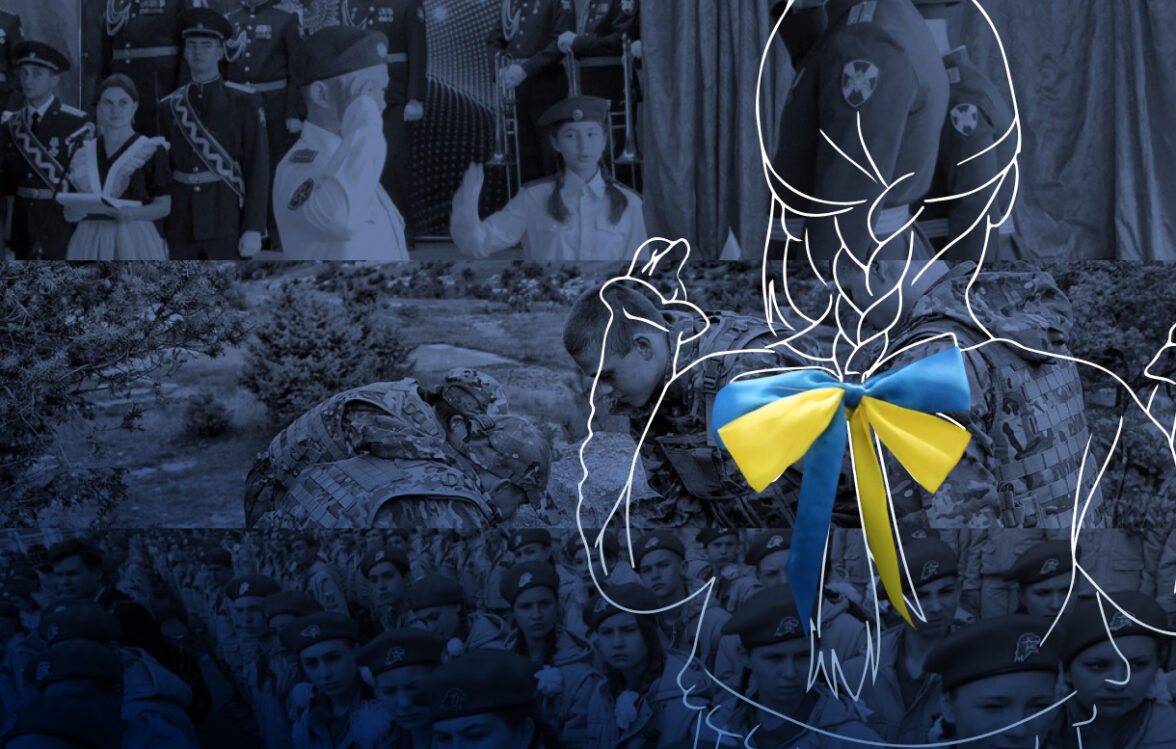
Ukrainian children have the right to safety, family, and education in their own country. Yet, Russia has been denying them this right for over ten years — since the beginning of the occupation of Crimea in 2014 — and, since 2022, has turned the peninsula into one of the main hubs for the deportation and ideological conditioning of children. This is not a matter of isolated cases, but a systematic policy that bears the hallmarks of war crimes and crimes against humanity.
Following the occupation of Crimea, Russian authorities established an extensive network for relocating children from the temporarily occupied territories of southern and eastern Ukraine. Before being transferred deeper into Russia, children are held in sanatoriums and camps across Crimea — in Simferopol, Sevastopol, Yalta, Gurzuf, and other Crimean cities. Their names, citizenship, and sometimes even dates of birth are changed. Under the guise of “health improvement” or “evacuation,” they are effectively removed from their native environment and form a new Russian identity.
Another aspect is militarization. Through movements such as “Yunarmiya” and “Movement of the First,” children are trained in drill exercises, participate in “military-patriotic” games, and are indoctrinated with aggression against Ukraine. The so-called “International Center ‘Artek’ in Gurzuf,” once a symbol of childhood, has now been transformed into a propaganda hub, where children meet with Russian military personnel, are instilled with a cult of war, and the center is used to legitimize the occupation in the eyes of the international community.
Russia is violating international humanitarian law, including the Fourth Geneva Convention and the UN Convention on the Rights of the Child. The International Criminal Court has already recognized the unlawful transfer of Ukrainian children as a crime against humanity. At the same time, the European Court of Human Rights has identified it as part of Russian administrative practice, accompanied by systematic concealment of information and data falsification.
The return of Ukrainian children to their homes is complicated by Russia’s refusal to provide information, demands for relatives’ personal presence on Russian territory, and dangerous routes through third countries. Nevertheless, Ukraine continues working to bring every child back — through the Bring Kids Back UA program and the International Coalition for the Return of Ukrainian Children, which now includes over forty countries.
The actions of the Russian occupation administration against Ukrainian children constitute a crime that requires an international response. Ukraine calls on its partners to strengthen sanctions against those involved in the deportations, support investigations of war crimes, and contribute to establishing an effective mechanism for identifying and returning children to their homes.
This year, Children’s Day serves as a reminder of our duty to bring every child back to Ukraine so that they may grow up in freedom, safety, and dignity — on their own land.