21 February 2025
241 years ago, on February 21, 1784, Catherine II renamed Akhtiar to Sevastopol
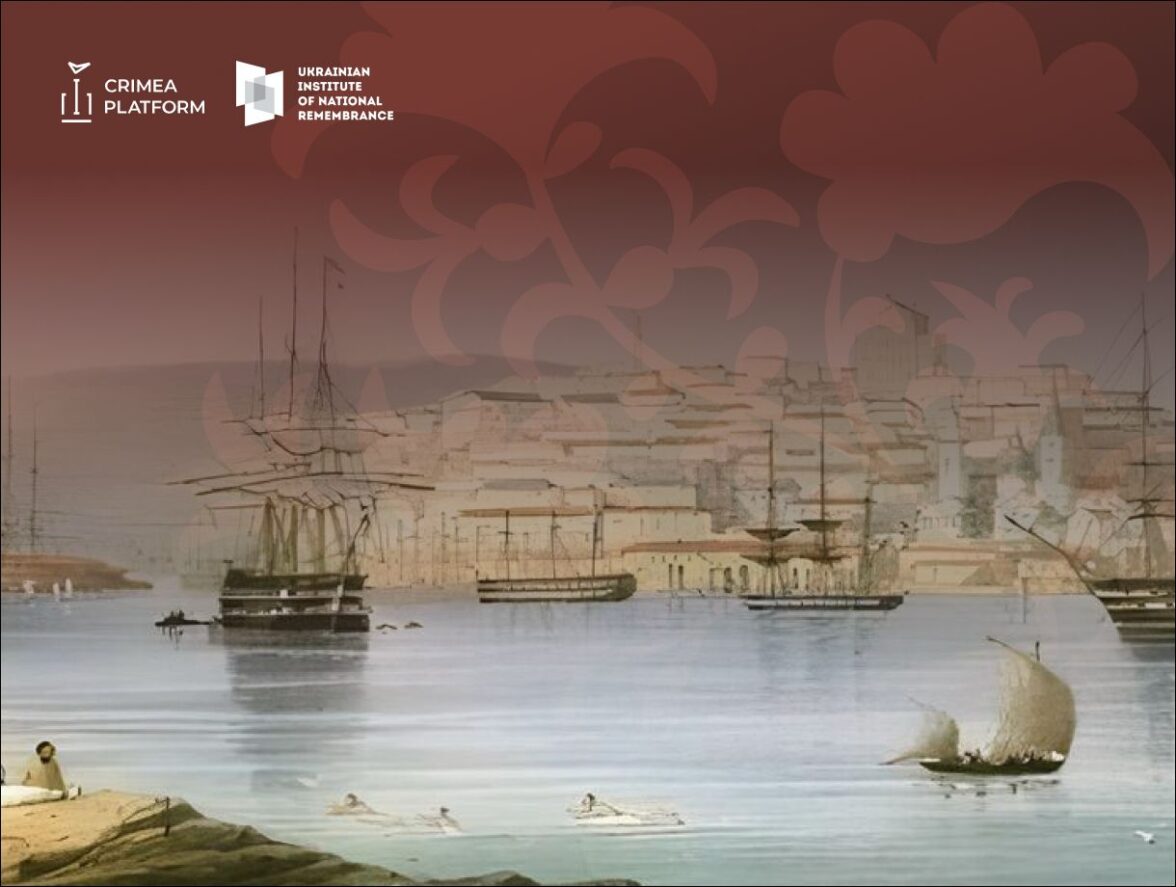
241 years ago, on February 21 (February 10, Old Style) 1784, Russian Empress Catherine II issued a decree renaming the port and city of Akhtiar to Sevastopol. Shortly before that, on February 13 (February 2, Old Style) 1784, a similar decree established the Taurida Region from the lands of the Crimean Khanate, which had been occupied in 1783.
The founding day of Ukrainian Sevastopol falls on June 14 (June 3, Old Style). On this day in 1783, Russian Rear Admiral of Scottish descent Thomas Mackenzie laid the foundations of the first four buildings in the city: the Chapel of St. Nicholas, the fleet commander’s house, the Hrafska Wharf, and the admiralty forge.
However, the harbors of what would later become Sevastopol were first explored by Russian sailors during the Russo-Turkish War of 1768–1774 and the initial occupation of Crimea by Russian forces. In the autumn of 1771, a detachment led by navigator Ivan Baturin arrived at Akhtiar Bay (now Sevastopol Bay), followed by the summer of 1778, when ships under the command of the Crimean Corps’ General-Lieutenant Alexander Suvorov were stationed there.
The newly founded city in 1783 was originally named Akhtiar, after the nearby Crimean Tatar settlement of Ak-Yar (Akhtiar), which had been known since 1686. The name translates from Crimean Tatar as “white cliff.”
The city received its modern name only in the following year, 1784. In the decree “On the establishment of new fortifications along the borders of the Katerynoslav Governorate,” it was stated that it was necessary to found “a great fortress of Sevastopol, where Akhtiar is now located, and where an admiralty, a shipyard for first-class ships, a port, and a military settlement should be established.”
The new pseudo-Ancient Greek name is attributed to Prince Potemkin, the Governor-General of Katerynoslav and Tavriia. For instance, the “Historical Guide to Sevastopol,” published in 1907 under the editorship of Russian military historian Major General Andrii Zayonchkovskyi, states that the city was named Sevastopol by the Empress upon Potemkin’s suggestion.
The name “Sevastopol” can be translated as “majestic” or “worthy of veneration city” (from the Greek σεβαστός—”highly honored, sacred”—and πόλις—”city”). However, the most precise translation is “City of the Divine,” meaning a city of the emperor. This interpretation aligns with the numerous historical Sebastopolises that emerged during the reign of the Roman Emperor Augustus, who bore the title Divine.
Potemkin, well aware of this historical context, saw an opportunity to flatter his patron, Empress Catherine II, and solidify his influence at court by proposing such a grandiose name for the city. At that time, Catherine was deeply invested in the so-called Greek Project, which aimed to dismantle the Ottoman Empire and divide its territories among Russia, the Holy Roman Empire, and the Republic of Venice.
The name invented by Catherine II might not have become permanent. After her death, in an act of defiance against his despised mother, the next Russian emperor, Paul I, restored the city’s historical name, Akhtiar. This name remained even after Paul’s assassination and persisted throughout the reign of Alexander I. It was only in 1826 that Nicholas I once again renamed the city Sevastopol, fulfilling the wishes of his grandmother.