27 May 2025
May 27 — Birth of Bekir Çoban-zade: Prominent Turkologist, Poet, and Victim of Stalinist Terror
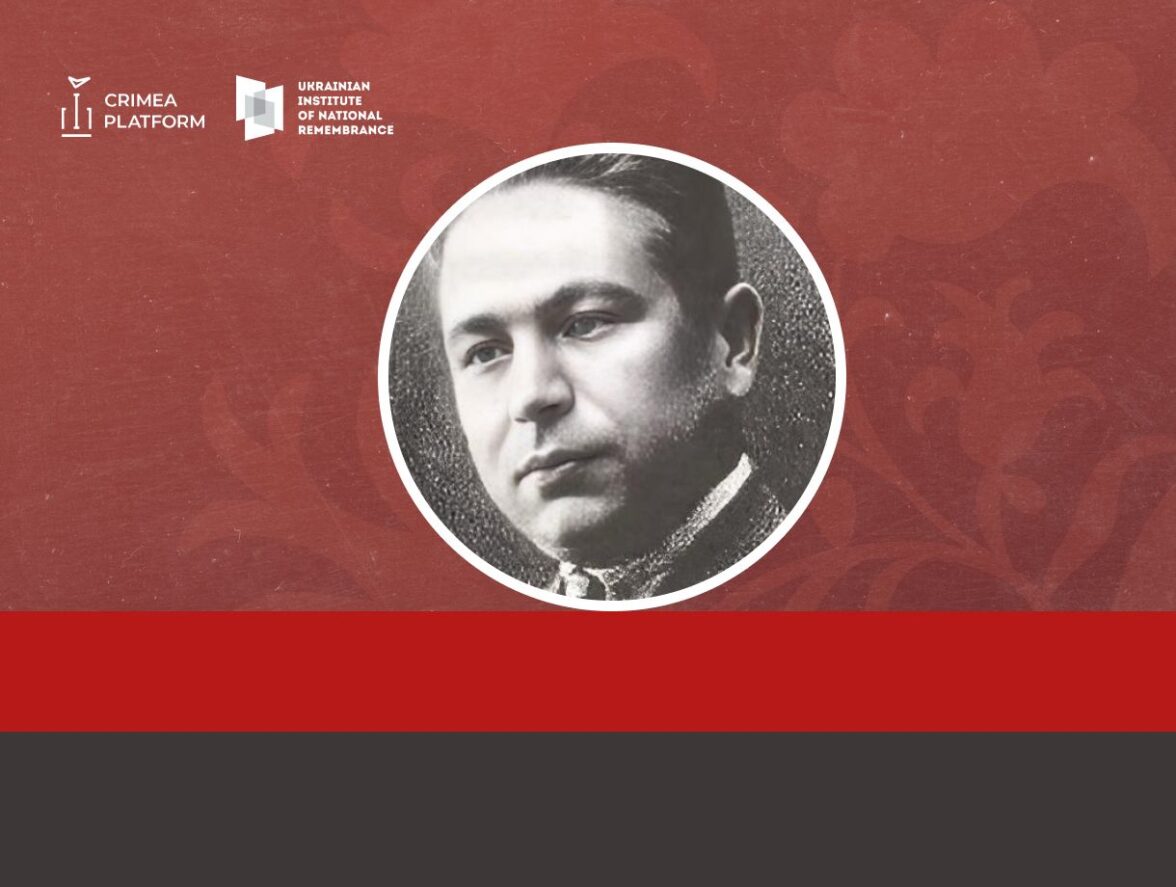
On May 27 (May 15 in the old style), 1893, Bekir Vaapovych Çoban-zade was born in the town of Karasubazar (now Bilohirsk, Crimea). He was a prominent Crimean Tatar scholar, philologist, poet, and public figure. He came from a shepherd’s family. This life experience left a deep imprint on his work and inspired the formation of his pseudonym “Çoban-zade” (“son of a shepherd”), which later became his official surname.
The childhood he spent among the Crimean steppes and flocks of sheep remained forever etched in the memory of the sensitive boy — his poetry would later be filled with pastoral imagery of the Crimean landscape. He received his primary education at the local rüşdiye school in Karasubazar from 1904 to 1908, graduating with distinction. Recognizing his talents, a Muslim charitable organization funded the continuation of his education in the Ottoman Empire. From 1909 to 1914, he studied literature at the Galatasaray Lyceum in Istanbul. At the same time, he completed three-year courses in Arabic and French at Istanbul University, earning the right to teach both languages in secondary schools. It was in Istanbul that he published his first poems under the pen name “Çoban-zade.”
In 1915, Bekir received permission to continue his education in Austria-Hungary and, in early 1916, he departed for Budapest. He enrolled in the Faculty of History and Philology at Pázmány Péter University and defended his doctoral dissertation in 1920, earning a PhD in Philology at the age of 26. Prior to that, he also completed a research internship at the University of Lausanne in Switzerland. His studies abroad and active involvement in both academic and political life — including participation in the Hungarian Soviet Republic — shaped his worldview.
After returning to his homeland, Çoban-zade immersed himself in teaching and academic leadership. In Simferopol, he taught Crimean Tatar language and literature at the Crimean Tatar Pedagogical Institute, and in 1922, he became head of the Turkology Department at the newly established Crimean (Taurida) University. He would soon go on to lead the young academic institution as its rector. In parallel, Bekir played an active role in building the autonomous republic: he headed the Department of Public Education of Crimea, managed the Tatar division of the provincial education authority, and was elected a member of the Central Executive Committee of the Crimean ASSR. In the early 1920s, he also held a leadership position in the Crimean Tatar national party Milliy Firqa, which at that time still operated legally in Soviet Crimea. Through his academic work and civic engagement, Çoban-zade quickly gained wide respect across his native peninsula.
In 1924, he moved to Baku, where he took up a professorship at Baku University. There, he became one of the leading experts in the field of Turkology. He headed the Faculty of Oriental Studies and delivered lectures on introduction to Turkology, comparative grammar of Turkic languages, Turko-Tatar dialectology, phonetics, Orkhon script, and Azerbaijani philology. He was actively involved in the reform of the writing system, contributing to the transition of Turkic languages to the Latin alphabet. He chaired the humanities section of the Azerbaijani Terminology Committee and, from 1927, served on the academic council of the All-Union Committee for the New Turkic Alphabet.
Over the course of his career, Çoban-zade published around 150 scholarly works, many of which were groundbreaking studies. He was a full member of the Azerbaijani branch of the USSR Academy of Sciences, and in 1935, he became a member of the Linguistic Society of Paris. Thanks to his broad erudition, he lectured in numerous cities across the Soviet Union — from Moscow and Kazan to Tashkent and Bukhara. He was fluent in many languages, including several Turkic languages, as well as Arabic, Persian, Hungarian, French, German, Armenian, Georgian, Russian, and English.
In the early 1930s, a smear campaign was launched against Çoban-zade, accusing him of “bourgeois nationalism” and Pan-Turkism due to his advocacy for Turkic cultures. Despite the attacks in the press, he managed to maintain an unblemished reputation and continued his scholarly work, earning the respect of his colleagues. From 1930 to 1935, he expanded the geographical scope of his academic activity — heading the Department of Uzbek Language at the Fergana Pedagogical Institute while simultaneously teaching at the universities of Tashkent and Bukhara.
On January 28, 1937, while undergoing medical treatment in Kislovodsk, Çoban-zade was arrested by NKVD agents. He was accused of involvement in underground nationalist organizations, Pan-Turkic conspiracies, ties to the Milliy Firqa party, and espionage on behalf of Türkiye and Poland. Under torture, he was forced to sign a “confession.” His trial in Baku in September 1937 lasted only 20 minutes and sentenced him to death without the right to appeal. The sentence was carried out on October 13, 1937. It was not until June 25, 1957, that the Supreme Court of the USSR fully rehabilitated Bekir Çoban-zade, recognizing that no crime had been committed. However, during his lifetime and for decades after, all mentions of him were erased, and his works were banned — effectively removing his name from history for nearly twenty years. Despite the Soviet regime’s efforts to suppress his legacy, Çoban-zade’s scholarly and literary contributions have been preserved and restored, standing today as a symbol of the unbreakable spirit of the Crimean Tatar people and a testament to his devotion to knowledge and culture.