29 November 2025
29 November – International Women Human Rights Defenders Day: Women of Crimea
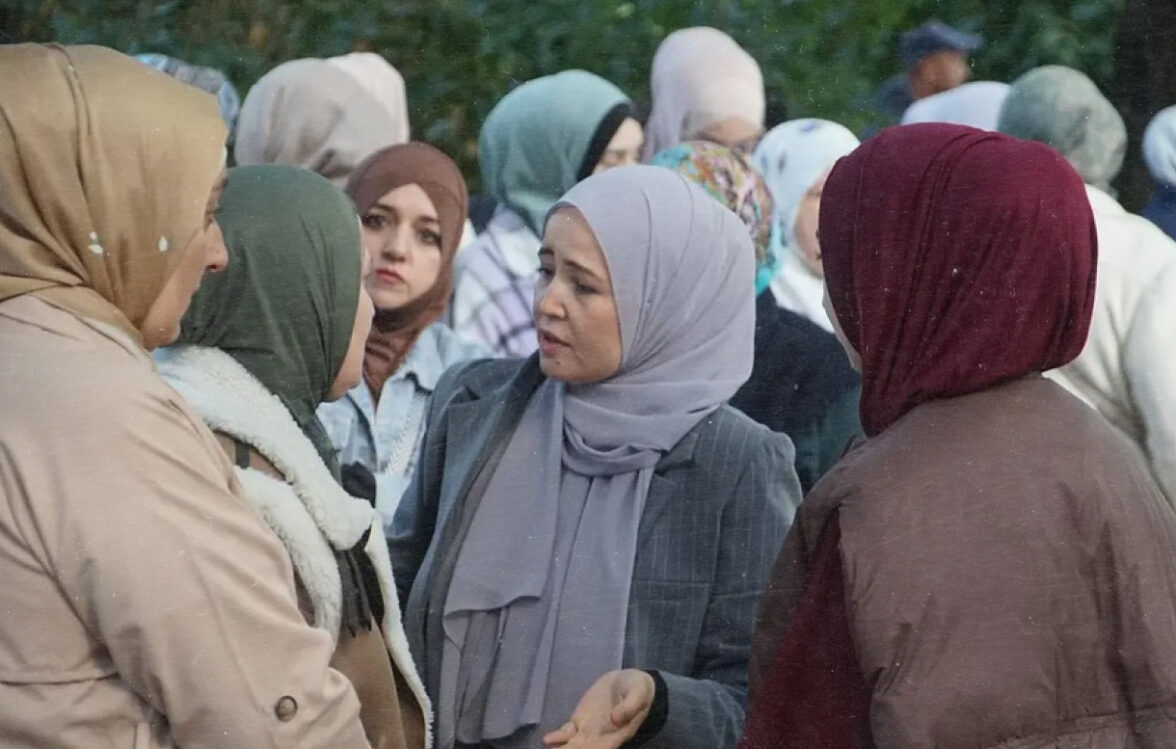
The International Women Human Rights Defenders Day, commemorated annually on 29 November, is not only a day of solidarity but also a painful reminder of the fate of Crimean women who resist the Russian occupation of Crimea. Since 2014, when Russia occupied the peninsula, women journalists, activists, mothers, and wives of political prisoners have become a primary target of repression. The occupation administration systematically employs searches, detentions, torture, and imprisonment to break resistance and silence the voices of freedom.
While before the full-scale invasion in 2022, there were only five women among Crimean political prisoners, as of October 2025, their number has exceeded 40, and more than 26 criminal cases against women activists have been documented in total.
Russian security forces do not merely persecute—they create an atmosphere of total fear. Searches of homes are often conducted at night or in the early morning hours, accompanied by threats and violence, particularly against the mothers and wives of political prisoners. For example, on 15 October 2025, the FSB raided the homes of Crimean Tatar women in Bakhchysarai, detaining Esma Nimetullaeva—the mother of five children and the wife of political prisoner Remzi Nimetullaiev. Such actions are part of a broader campaign in which women are accused of “extremism” or “discrediting the army” for social media posts or participation in peaceful protests. Since 2014, dozens of cases of torture and psychological pressure have been documented, including denial of medical care and threats to take children away.
Occupation courts hand down harsh sentences while ignoring personal circumstances such as the presence of young children, seriously ill relatives, or the women’s own health conditions. Many of them urgently require medical assistance. In general, many Crimean political prisoners suffer from chronic illnesses due to the denial of treatment, as in the cases of Dzhemil Gafarov and Kostiantyn Shyring, who died in detention. In March 2025, Rustem Viratti died from complications caused by the lack of medical care.
Crimean women human rights defenders are real women—sisters, mothers, daughters. Many of them became activists after the arrest of their loved ones, and continue to fight for the freedom of others.
Lutfie Zudiieva is a Crimean Tatar human rights defender and journalist who has faced constant persecution by the Russian occupation authorities since 2017, including searches, detentions, and attacks. After being added to the “foreign agents” register in May 2025, the pressure intensified. Despite continuous threats, she continues to coordinate support for the families of prisoners, document crimes, and provide legal assistance. In August 2025, an administrative case was opened against her for “political activity under foreign influence” due to materials on the rights of political prisoners prepared for CNN and Newsweek.
Lenie Umerova is a 26-year-old former Kremlin prisoner who was released from Russian captivity and returned to Ukraine on 13 September. She was detained by Russian forces while crossing the Georgian border in 2022 while traveling to Crimea to visit her father, who was suffering from cancer. After her release, she continues to advocate for political prisoners, focusing on women’s rights.
Mumine Saliieva is a well-known Crimean Tatar human rights defender, an activist of the “Crimean Solidarity” initiative and a project coordinator. She is the wife of Crimean political prisoner and civic journalist Seiran Saliiev, who was sentenced by the Russian authorities to 16 years in a penal colony.
Iryna Danylovych is a Ukrainian civic journalist, human rights defender, and nurse from Crimea who was illegally abducted and imprisoned by the Russian occupying authorities. For her courage, human rights work, and independent journalism, she has received several international awards, including the Platform of European Memory and Conscience Award (2025) and the “Stories of Injustice” Award from the Czech organization People in Need. Iryna is held in appalling conditions and does not receive proper medical care. She has suffered at least one microstroke, experiences severe headaches and tinnitus, and has completely lost hearing in her left ear. Despite her critical health condition, the colony administration ignores her complaints.
Iryna Horobtsova was sentenced to 10.5 years in prison on charges of “espionage” in 2022. A mother of two, she coordinated humanitarian aid and documented war crimes. She is currently held in a penal colony in Mordovia without proper medical assistance.
Halyna Dovhopola is a 70-year-old pensioner from Sevastopol and one of the first women illegally convicted by the occupation administration for “treason.” Her health condition has critically deteriorated in Russian captivity, posing a direct threat to her life.
Vezhiye Kashka (1934–2017) was a veteran and a symbol of the Crimean Tatar national movement for the return to the homeland. She was one of the most respected figures in the community. Vezhiye Kashka tragically died on 23 November 2017 in Simferopol after an attempted detention by Russian security forces. Her family and human rights defenders dispute the official version of a heart attack, stating that her death was the result of the disproportionate use of force.
These women have forever entered history as defenders of their people. They not only fight for themselves and their families—they create support networks across the occupied peninsula and beyond, conduct human rights campaigns, document persecution, and engage in advocacy. Many of them, like Zudiieva and Saliieva, have become “citizen journalists,” recording searches and court hearings despite the risk of arrest.
Wives and mothers are forced to assume the roles of breadwinners, lawyers, and activists simultaneously. More than 64 wives, 119 mothers, and 98 daughters of political prisoners suffer from discrimination—from employment denial to threats by child protection services. Children grow up without their fathers, while women face further restrictions, including bans on visits and access to medical care. These are not isolated cases. Repression against women has become a distinct policy of the Russian administration aimed at intimidation and breaking resistance. Yet in the twelfth year of the war, we see the opposite: resistance continues and grows stronger.
The International Women Human Rights Defenders Day is a call to action. The international community, the United Nations, the Council of Europe, and the International Crimea Platform are institutions empowered to uphold the truth and defend human rights. We must intensify pressure on the occupying power: demand access to prisons, investigate cases of torture, and continue sanctions against perpetrators. Every letter to a prisoner, every petition, and every act of mentorship for a political prisoner is a step toward freedom. These people carry our freedom on their shoulders so that Crimea remains Ukrainian and their voices can be heard in liberty. We must protect and free our citizens in the temporarily occupied territories.
Crimea will be free!