20 May 2025
May 8 — Birth of Seraia Shapshal, Prominent Karaite Leader, Orientalist, and Protector of His Community
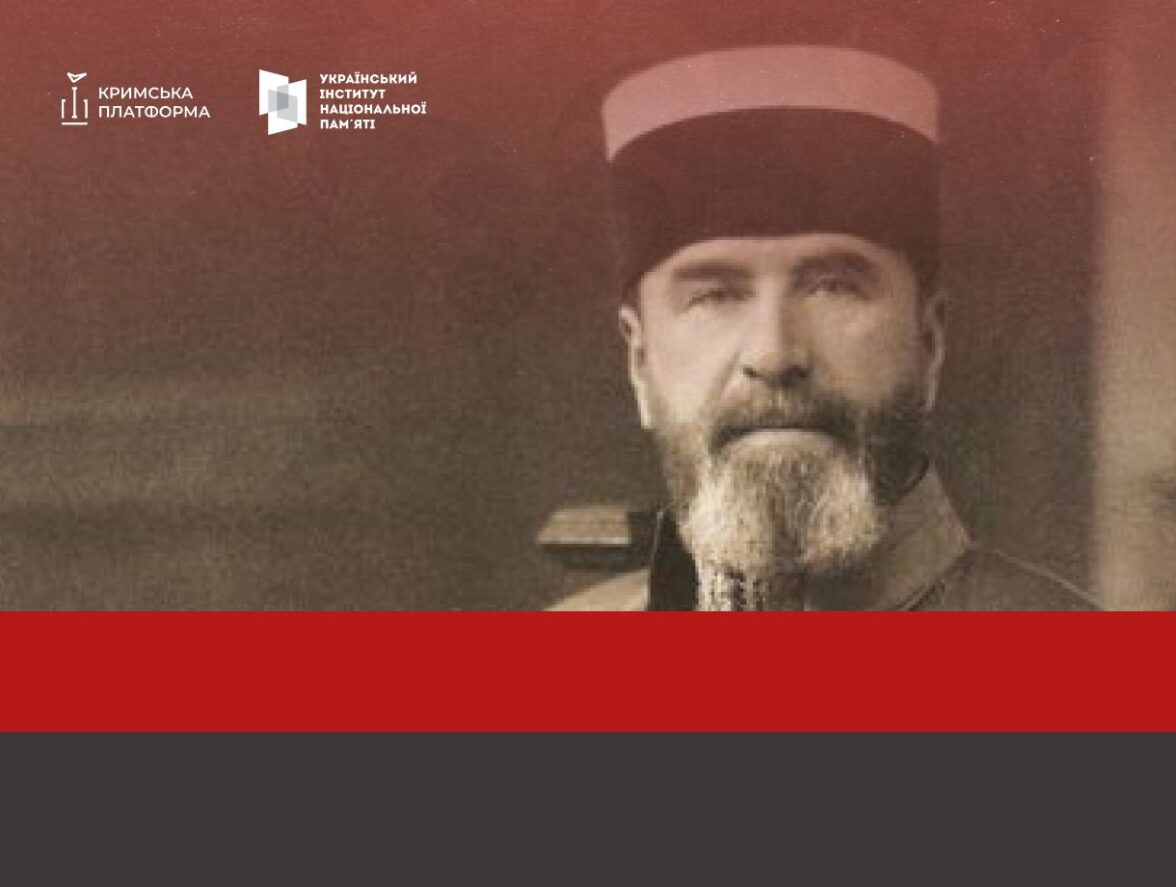
On 8 May (20 May in the Gregorian calendar) 1873, Seraia Shapshal was born in Bakhchysarai. He would go on to become a prominent figure in the Karaite community — a respected orientalist, Turkologist, and long-serving spiritual leader.
Seraia Shapshal was born in Bakhchysarai and went on to become a distinguished scholar of Eastern studies, Turkology, and a central figure in the Karaite community. He studied Oriental languages at Saint Petersburg University and, even during his student years, began his academic work — publishing his first research in 1896 titled “Karaites and Chufut-Kale in Crimea.” After graduating in 1899 with top honors, he remained at the university as a scholar under the mentorship of Professor V. D. Smirnov. In 1901, Shapshal was sent to Persia (now Iran), where he taught in Tabriz and soon became tutor to the heir to the throne, the future Shah Mohammad Ali. For his service at the royal court, he was awarded the honorary title of “Mentor to the Shah” and given the rank of Khan. He was believed to have played a role in the dissolution of the Persian parliament during the 1905–1907 revolution. Following the Shah’s ousting, Shapshal returned to Russia. Between 1909 and 1916, Seraia Shapshal worked as a translator for the Ministry of Foreign Affairs, taught Turkish at Saint Petersburg University, and was an active member of various academic societies, including the Russian Archaeological and Geographical Societies. He also served as Deputy Chair of the Society of Russian Orientalists. In 1915, he was elected the Gakham (spiritual leader) of the Karaite Spiritual Administration of Tavria and Odesa. Among his many initiatives were founding the Yardym almshouse for elderly women in Yevpatoriia, the Karaite National Council, and the Karai-Bitiklihi library-museum, which housed thousands of unique manuscripts.
After emigrating in the 1920s, Seraia Shapshal lived in Türkiye and undertook a pilgrimage to Jerusalem in 1921. In 1928, he was formally enthroned as the Gakham of the Karaites of the Republic of Poland in the city of Vilnius (then the Polish city of Wilno, now the capital of Lithuania), becoming the head of all Karaite communities in Poland and Lithuania. In this role, Shapshal initiated a series of reforms aimed at preserving the Karaites as a distinct ethnic group with their own religion. He consistently advocated the idea that Karaites were of non-Hebrew (Turkic) origin and independent of Jewish tradition. This laid the foundation for the doctrine of de-Judaization of Karaite faith and history, for which Shapshal is considered the principal architect. Among his reforms were the removal of Hebrew instruction from Karaite schools and the replacement of traditional Jewish holidays and calendar months with their equivalents in Turkic languages. He also emphasized the similarities between Karaite religious teachings and early Christianity or even Islam, focusing on shared monotheistic values and prophetic traditions rather than Mosaic Law.
During World War II, Seraia Shapshal’s assertion of the Turkic origins of the Karaites became a matter of life and death for the community. In 1939, facing the threat of Nazi persecution, Shapshal appealed to racial experts of the Third Reich to formally recognize the Karaites as a people distinct from Jews. The German authorities responded by commissioning a group of historians who, despite earlier doubts, ultimately accepted Shapshal’s version of Karaite Turkic origin. This recognition effectively saved the European Karaite communities from the Holocaust.
After the war, Shapshal lived in Vilnius, where he worked at the Academy of Sciences of the Lithuanian SSR. He continued researching the history, language, and culture of the Karaites and, together with linguist Nikolai Baskakov, co-authored the Karaim–Russian–Polish Dictionary, which was published posthumously in 1974.
He earned international academic recognition: in 1930, Lviv University awarded him a Doctor of Philosophy degree; in 1935, he became Vice-Chair of the Polish Oriental Society; and in 1939, he was appointed Professor of Oriental Languages at Vilnius University. In 1955, he was granted a Doctor of Philology degree in the USSR. Shapshal published extensively in Orientalist journals, leaving behind a significant scholarly and spiritual legacy.
Seraia Shapshal passed away in 1961 in Vilnius and was buried at the local Karaite cemetery.