11 December 2025
Day of Remembrance of the Jews of Crimea and the Krymchaks Who Perished During World War II
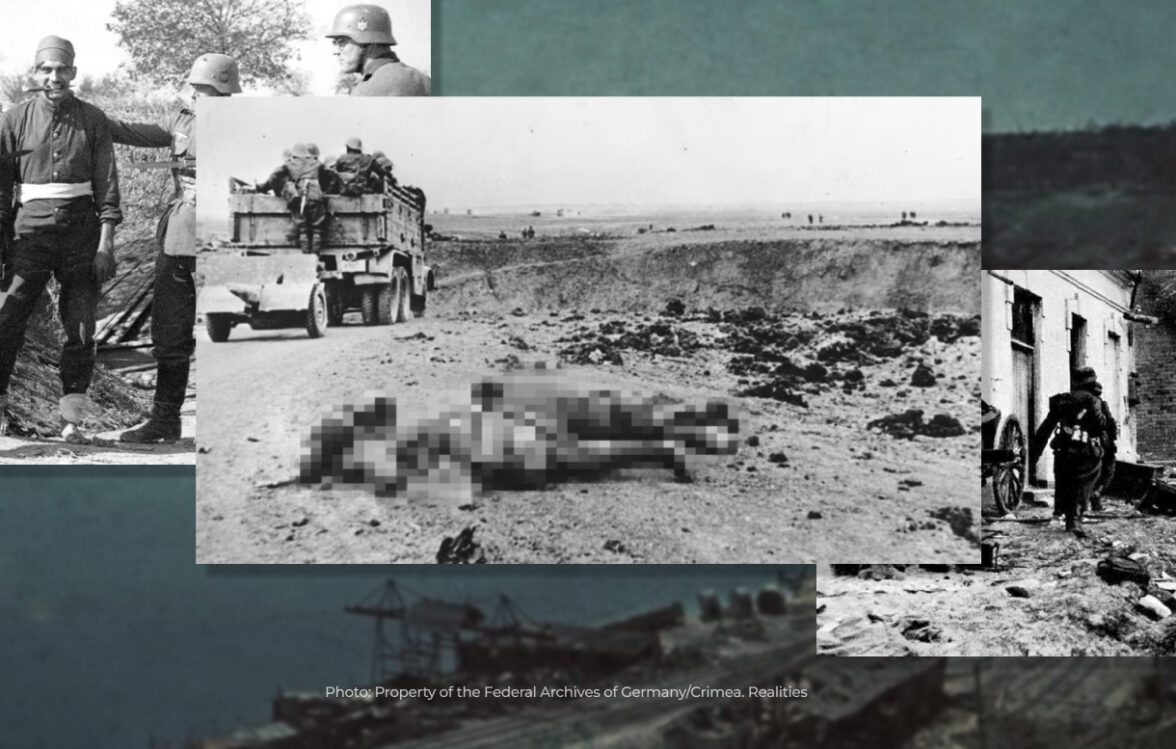
On 11 December, Ukraine commemorates the Jews of Crimea and the Krymchaks who became victims of the Nazi occupation. On that day in 1941, mass executions of civilians began near Simferopol. After the war, 11 December was officially established as a day of remembrance for these tragic events.
Before the outbreak of World War II, about 65,000 Jews lived on the peninsula, approximately 7,000 of whom were Krymchaks – a Turkic-speaking Jewish community that historically formed in Crimea.
The Nazi occupation at the end of 1941 turned Crimea into one of the regions where the Holocaust manifested itself with particular brutality. After the Wehrmacht, Einsatzgruppe D entered the peninsula and began mass executions of civilians.
Within a short period of time, the Nazis almost completely exterminated the Jewish population of Crimean cities.
• On 20 November, more than 600 Jews were executed in Yevpatoriia.
• Between 9 and 11 December, from 12,000 to 14,000 people were killed in an anti-tank trench near Simferopol, including about 1,500 Krymchaks.
• On 18 December, 1,500 Jews were killed in Yalta.
The Jewish communities of Bilohirsk , Bakhchysarai, Kerch, and Feodosiia were destroyed. Overall, the Nazis murdered approximately 40,000 Crimean Jews and Krymchaks during that period. After the de-occupation of the peninsula, only isolated individuals remained alive. The Krymchak community lost nearly 80%of its people – the world lost a linguistic and cultural heritage that can never be fully restored.
More than 80 years later, the temporarily occupied Crimea has once again become a place where culture is destroyed, freedoms are restricted, and entire communities are persecuted. The Russian occupation pursues the same objective: to deprive communities of the right to their own memory and future. The destruction of heritage sites, assimilation pressure, and attempts to rewrite their history are reminders that the policy of suppressing identity has not disappeared.
The international community condemned the tragedy of the Crimean Holocaust. At the Nuremberg Trials, Nazi crimes in Crimea became part of the body of evidence proving the genocidal policy of Nazism. Dozens of residents of the peninsula were awarded the title of Righteous Among the Nations for rescuing Jews during the occupation.