17 May 2025
To Mark the 81st Anniversary of the Crimean Tatar Genocide, a Commemorative Event Was Held at the Zhovten Cinema
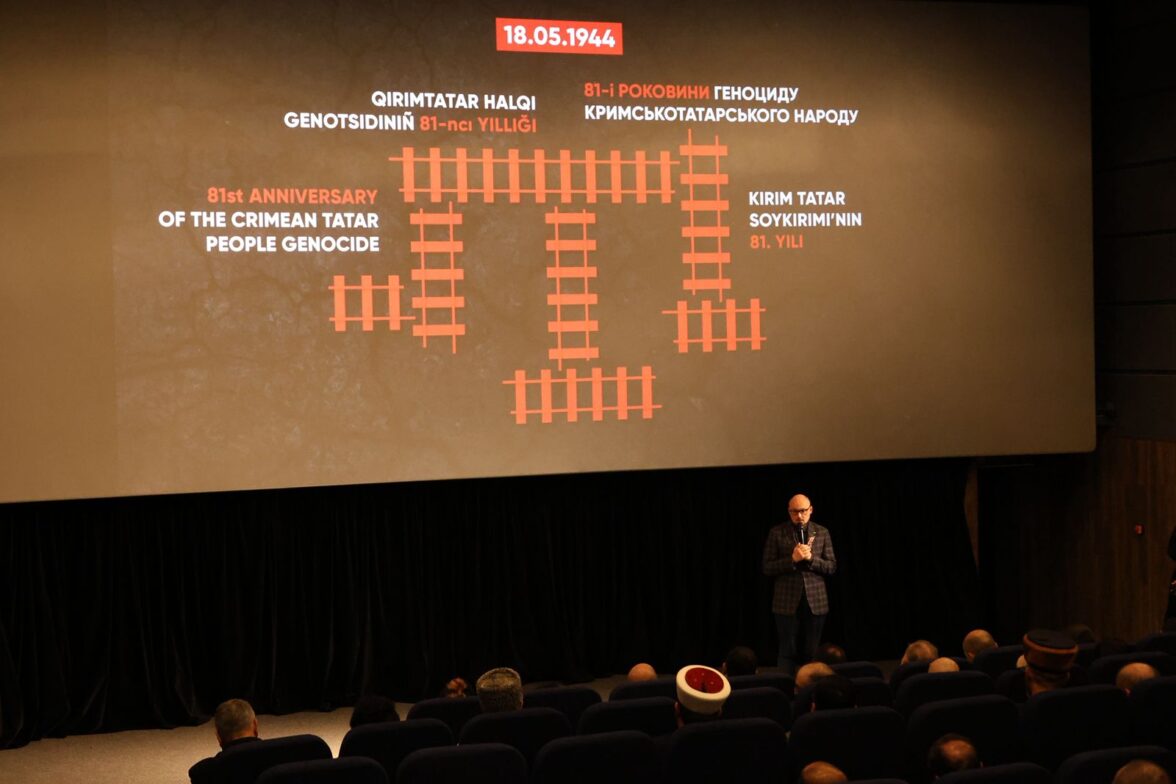
A commemorative event marking the 81st anniversary of the deportation of the Crimean Tatar people was held at the Zhovten cinema, featuring a screening of the film 1944. The event was initiated by the Mejlis of the Crimean Tatar People.
Opening remarks were delivered by Crimean Tatar leader Mustafa Dzhemilev, First Deputy Chairman of the Verkhovna Rada of Ukraine Oleksandr Korniienko, Chairman of the Mejlis Refat Chubarov, Head of the Information Department of the Mission Yevhen Bondarenko, and Mavile Khalil, screenwriter of the film and manager at the Crimean Studies Center of NaUKMA. The event was attended by representatives of the diplomatic corps, the Crimean Tatar community, civil society, and military personnel.
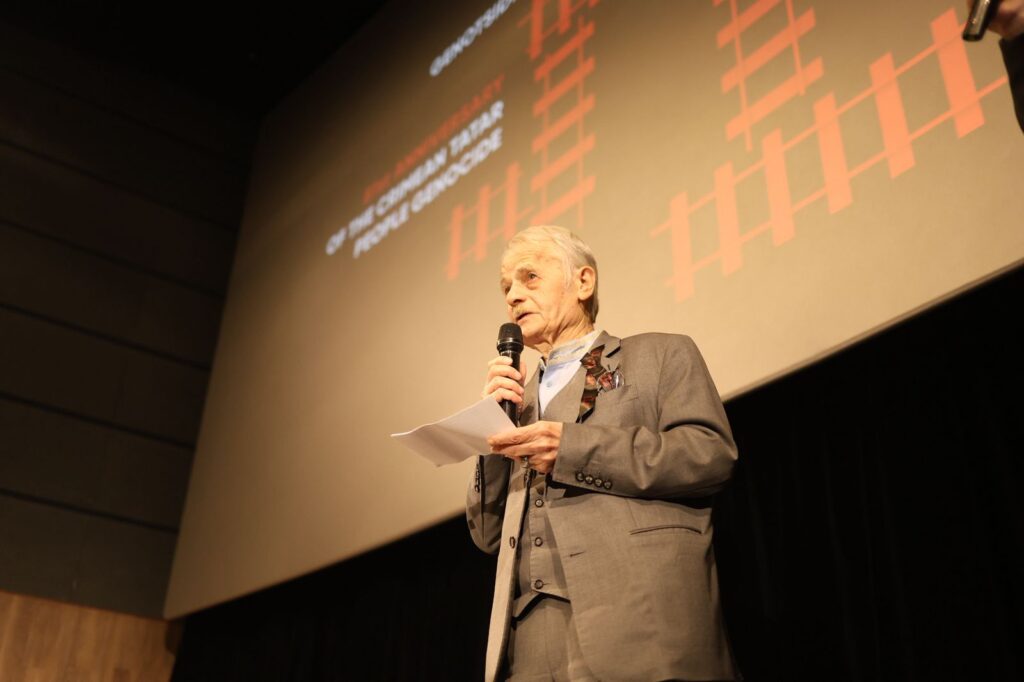
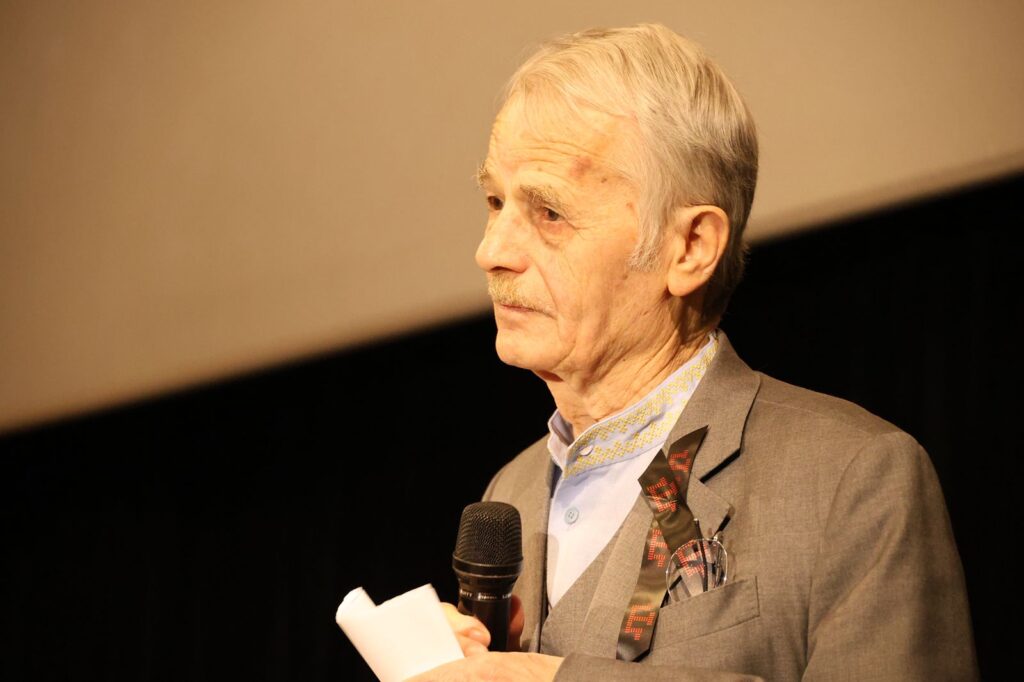
In his address, Crimean Tatar leader Mustafa Dzhemilev emphasized that following the annexation of the Crimean Khanate in 1783, the Russian Empire pursued a policy of repression, forced displacement of the Indigenous population, and resettlement of the peninsula by Russians. The mass deportation of 1944, he noted, was aimed at the physical annihilation of the Crimean Tatar people and resulted in the violent death of 46% of the population. After a long and difficult process of return, the tragedy is repeating itself: in 2014, a new Russian occupation of Crimea began, and the Crimean Tatar nation once again came under the control of the Soviet Union’s successor, which continues to oppress the peninsula. Dzhemilev expressed gratitude to the parliaments that have recognized the deportation as genocide and called on other partner states to do the same to help prevent the recurrence of such crimes.
“Recently, calls for ending the war through a so-called ‘truce’ have emerged in public discourse—one that would appease Putin by ‘gifting’ Crimea to Russia. In contrast, European politicians are drawing parallels with the Munich Agreement of 1938, which ultimately led to the outbreak of World War II,” Dzhemilev stated, firmly advocating for Ukraine’s territorial integrity.
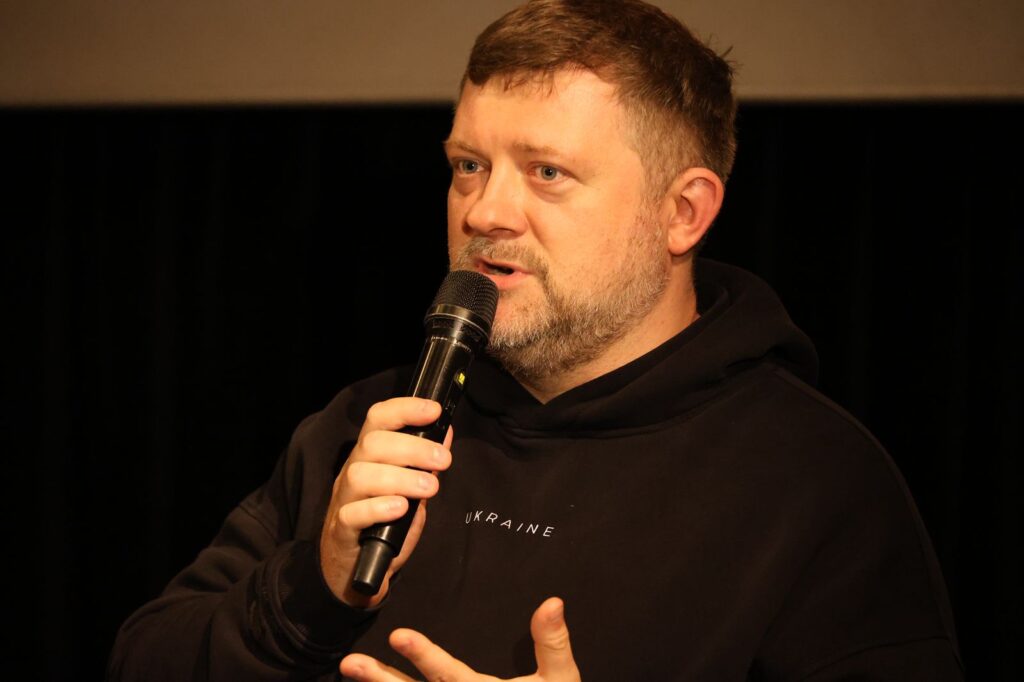
First Deputy Chairman of the Verkhovna Rada of Ukraine, Oleksandr Korniienko, emphasized the importance of maintaining the topic of the Crimean Tatar genocide within both national and international public discourse. He stressed that remembrance of the 1944 deportation requires systematic attention from the state, particularly through parliamentary communications, cultural efforts, and international engagement. Korniienko highlighted that members of the Crimean Tatar community, including Ukraine’s Ambassador to Türkiye Nariman Dzhelyal and MP Tamila Tasheva, were part of Ukraine’s official delegation to two Inter-Parliamentary Union Assemblies — an important step in amplifying Crimean Tatar voices on the global stage.
“For us in Ukraine, it must be a major objective to keep the memory of the Crimean Tatar deportation tragedy at the forefront of public attention. It is a shared responsibility of politicians, public servants, and citizens to speak about this history, to remind others of it, and to call the world to solidarity,” Oleksandr Korniienko urged.
Chairman of the Mejlis of the Crimean Tatar People, Refat Chubarov, speaking on the anniversary of the 1944 genocide, emphasized that as long as the Russian state is not held accountable for centuries of crimes against oppressed peoples, the danger of repeating such tragedies remains real. The Russian Empire, the Soviet Union, and the Russian Federation have never been punished for their policies of violence and colonization, which have led to numerous crimes against humanity. At the same time, he expressed gratitude to the Ukrainian security and defense forces for their fight to protect the lives of Ukrainian citizens.
“Any evil that goes unpunished will return. The brutality of Russian barbarians on Ukrainian soil has a clear origin — centuries of impunity. But I believe this war will end not only with the restoration of Ukraine’s territorial integrity, but with the complete and irreversible punishment of the Russian state. The oppressed nations will be freed. This absolute evil must be stopped once and for all,” Refat Chubarov stressed.
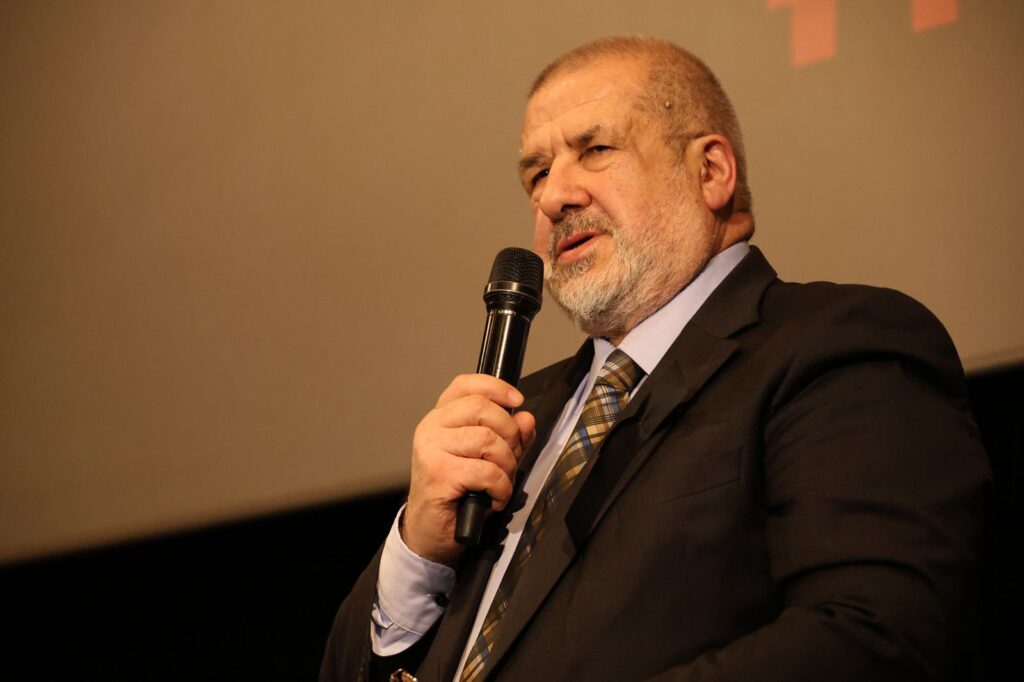
Head of the Information Department of the Mission, Yevhen Bondarenko, emphasized that for the Mission — as a state body responsible for issues related to temporarily occupied Crimea — it is crucial to cultivate a culture of memory. This culture, he noted, allows Ukraine to maintain a connection with citizens who remain under occupation and who need ties to the government-controlled part of the country.
Yevhen Bondarenko underscored the importance of culture as a tool of resistance against Russian narratives and the assimilation policy implemented by Russia on the occupied peninsula. He spoke about the systemic erasure of the Indigenous people of Ukraine from public space, from history, and from culture. This is why documentary films, archives of testimonies, and media projects focused on deportation and resistance are essential — they record the facts, preserve the truth, and defend identity. In his address, he also highlighted the importance of national unity on days of collective mourning:
“For us, as the Mission and as the Ukrainian state, it is essential that on May 18 — and in the days leading up to it — Ukrainian society not only remembers but also shares in the pain and understanding. That we stand with the Crimean Tatars, just as they stand with us in our most difficult moments,” emphasized Yevhen Bondarenko.
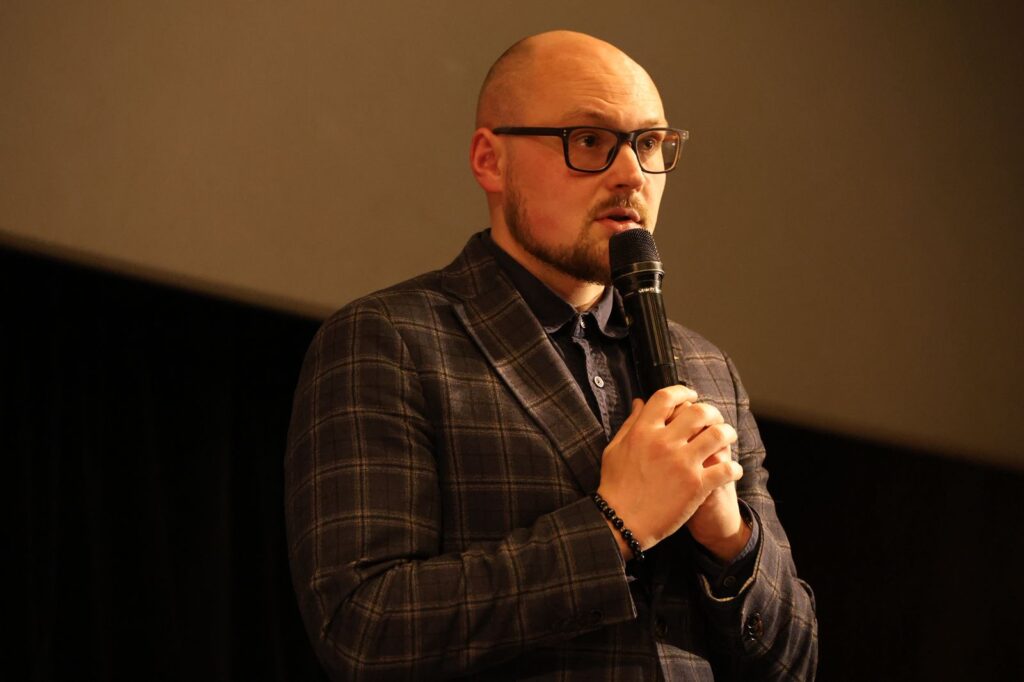
Mavile Khalil, screenwriter of the film 1944 and manager at the Crimean Studies Center at NaUKMA, shared her personal reflections from working on the film. She noted that six years ago, when the team began filming, they approached the subject as researchers — but over time, it became deeply personal. What moved her most was the resilience of those who endured the pain of deportation yet never lost their humanity. She also recalled that while collecting oral testimonies about the deportation, she would often ask people what they dreamed of—and always heard the same answer: to return home.
“At the time, it seemed incredible to me — how could an entire world be narrowed down to a single wish? But now I understand it very clearly: I just want to go home and have a cup of coffee with my parents. That’s why we must do everything in our power to ensure that future generations learn about displacement only through stories — and never have to experience it themselves,” Mavile Khalil shared.
As part of the event, attendees viewed the documentary film 1944, produced by FRESH Production. The film presents testimonies from those who survived the deportation of the Crimean Tatar people. The witnesses recount how their families were awakened by sudden knocks on the door, how they were loaded into cattle cars and taken from their native Crimea, and how the first years in exile began — years marked by hunger, disease, and mass mortality. These harsh conditions led to the deaths of nearly half of the deported population — 46% of the Crimean Tatar people.
The event also featured the information exhibition QIRIM IÇÜN / For Crimea, showcasing works by Ukrainian artist Anton Logov. The exhibition is dedicated to the Day of Remembrance of the Victims of the Genocide of the Crimean Tatar People and aims to foster reflection on Crimea’s historical connection to Ukraine — from the era of the Crimean Khanate, which established a tradition of statehood, to the tragedies and resistance of the 20th and 21st centuries. Special attention was given to illustrating the continuity of Russia’s repressive policies: from the first annexation of the peninsula in 1783, to the 1944 genocide, and the ongoing occupation that began in 2014.
The event was organized by the Mejlis of the Crimean Tatar People, the Mission of the President of Ukraine in the Autonomous Republic of Crimea, the state enterprise Crimean House, and the Crimean Studies Center at NaUKMA. Partners of the event included the Crimean Tatar cuisine restaurant Musafir, the united initiative Crimean Front, and the Zhovten cinema.