23 May 2025
Day Two of the International Spring School Resilience League: Analyzing the Challenges and Strategic Models of De-occupation
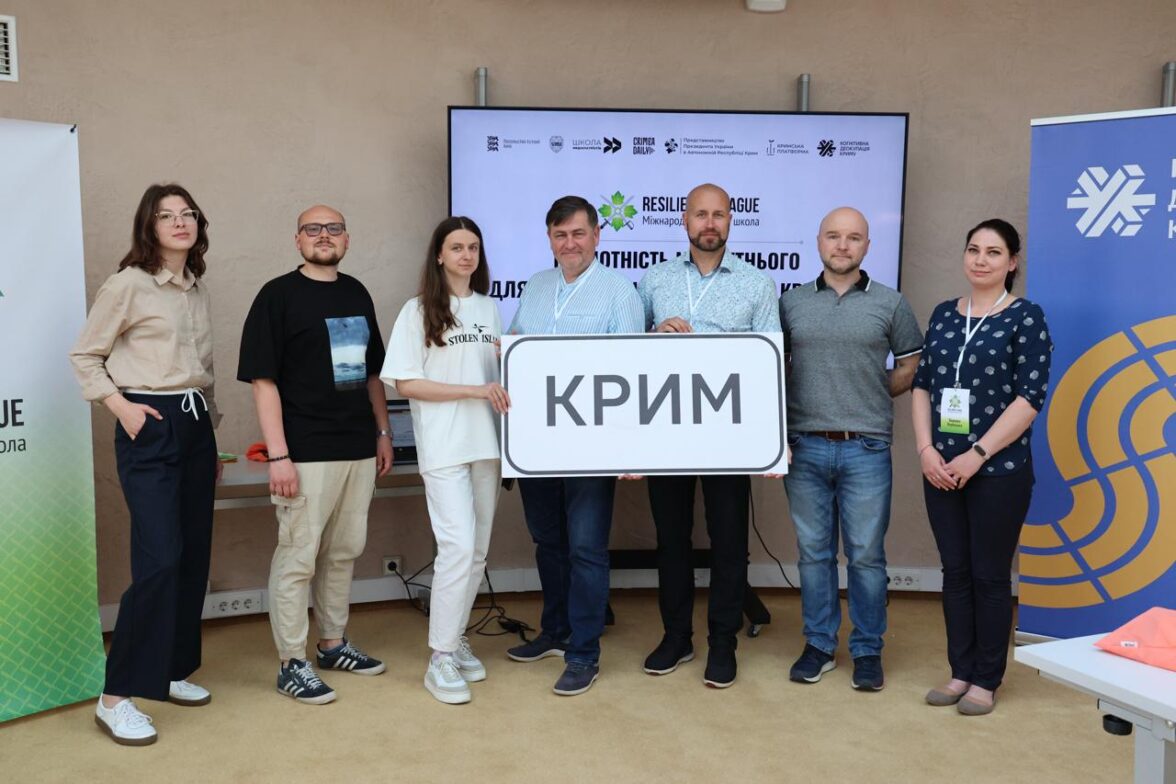
On the second day of the International Spring School Resilience League, participants delved into complex topics related to de-occupation’s social, psychological, and strategic challenges.
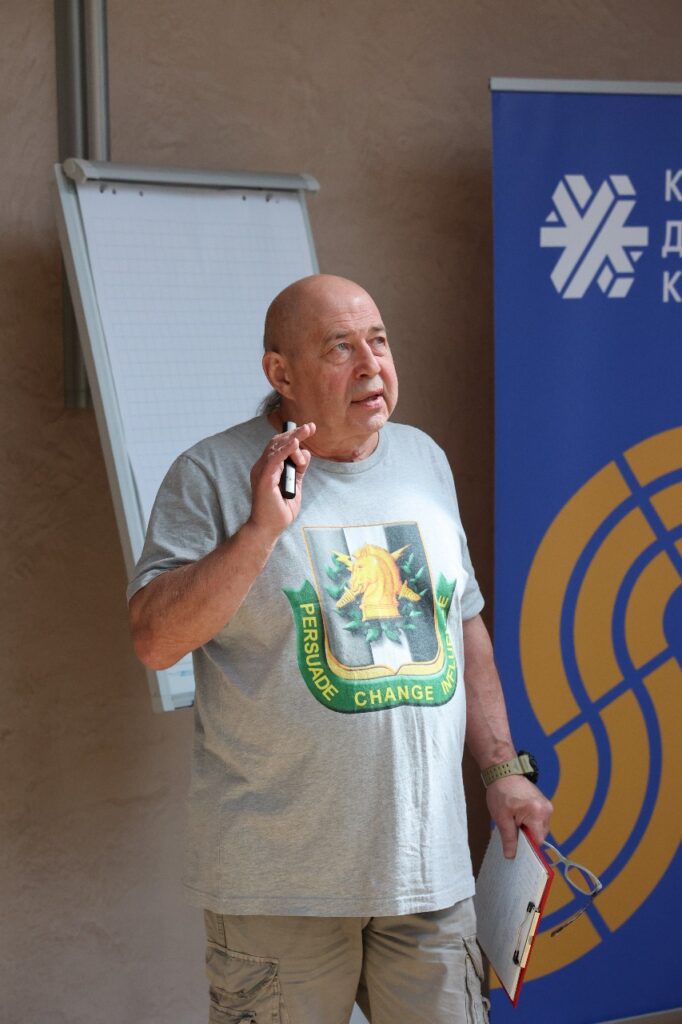
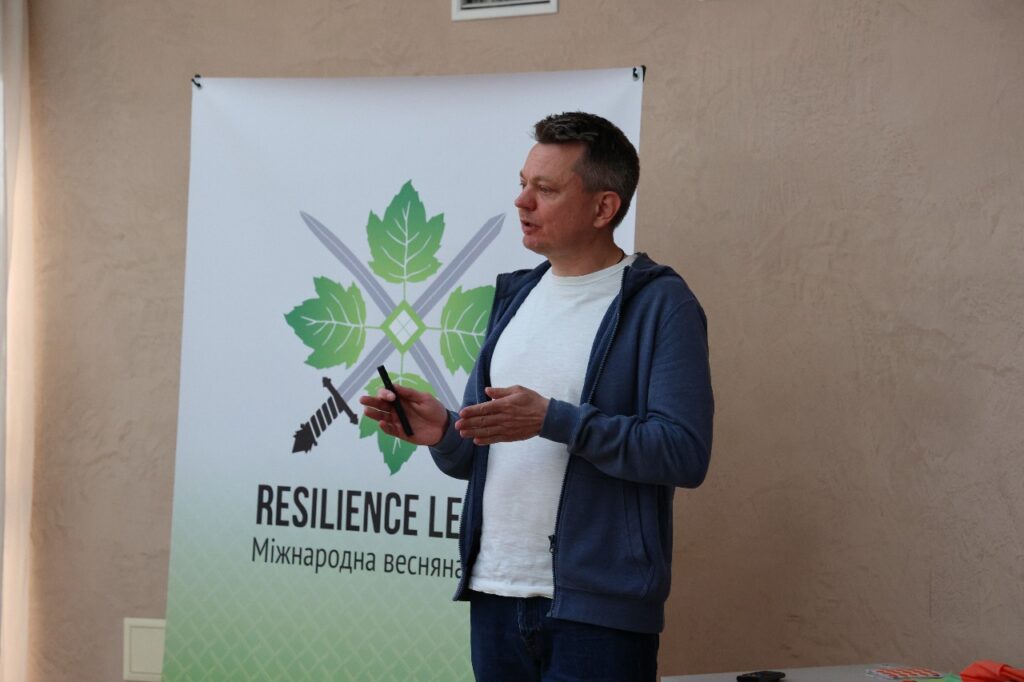
Military and social psychologist Oleh Pokalchuk presented an operational approach to analyzing the socio-psychological characteristics of liberating temporarily occupied territories. Participants discussed psycholinguistic phenomena emerging in environments shaped by prolonged propaganda — particularly the impact of constructed myths, distorted perceptions of reality, features of crisis thinking, and adaptation to change. Considerable attention was given to cognitive dissonance that may arise in society following de-occupation, as well as to mechanisms for restoring local communities, rebuilding social ties, and integrating the population into a new informational environment.
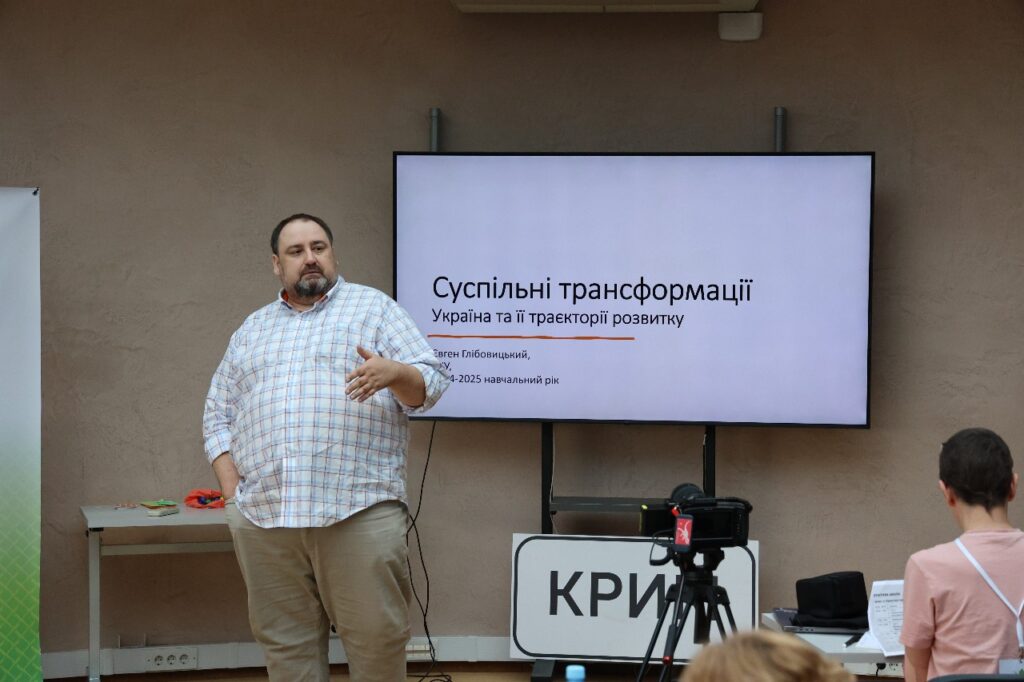
Public figure, media expert, and Director of the Frontier Institute, Yevhen Hlibovytskyi, spoke to participants about strategic thinking and the long-term challenges facing Ukraine. The discussion focused on societal transformations and potential development trajectories for the country in a context where it is necessary not only to respond to crises but also to construct a clear vision for the future.
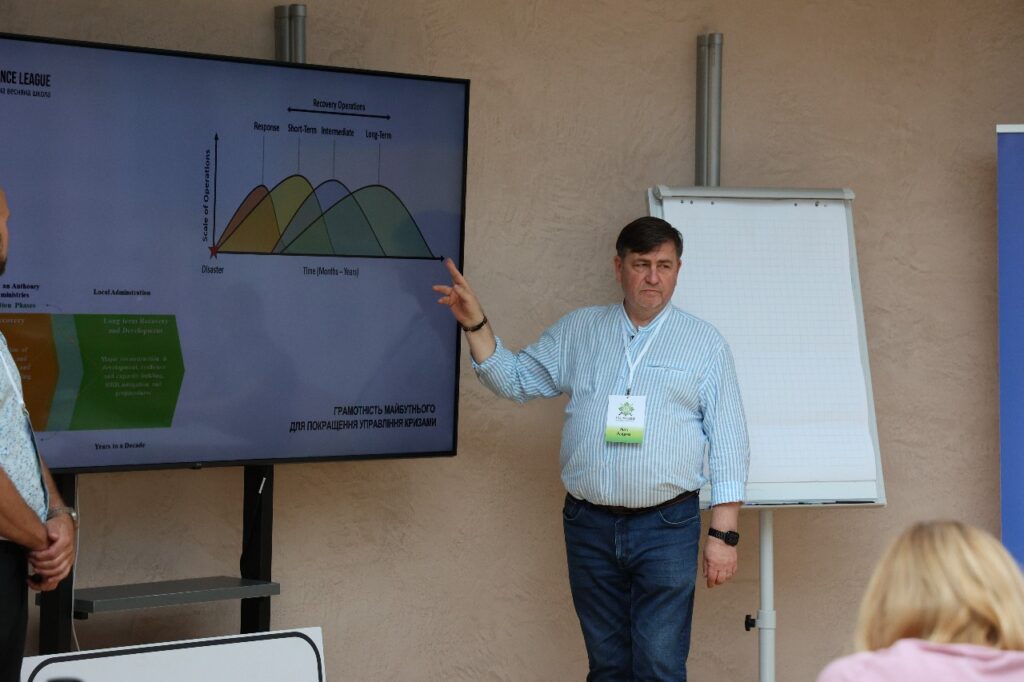
Issues of the crisis cycle, as well as the management of risks, consequences, and challenges, were addressed by Mati Raidma, member of the UN Disaster Assessment and Coordination team, and Vadym Ivanov, Head of Crisis Management at the Department of Social Insurance of the Ministry of Social Affairs of Estonia. The experts emphasized that every post-conflict situation is unique and requires a context-sensitive, adaptive approach. At the same time, there are universally important priorities: restoring security, ensuring basic services, supporting legitimate institutions, and promoting inclusive dialogue. They particularly stressed the importance of early investment in good governance, reconciliation processes, and practical solutions in infrastructure and livelihood support — all of which are key to achieving stability and sustainable peace.
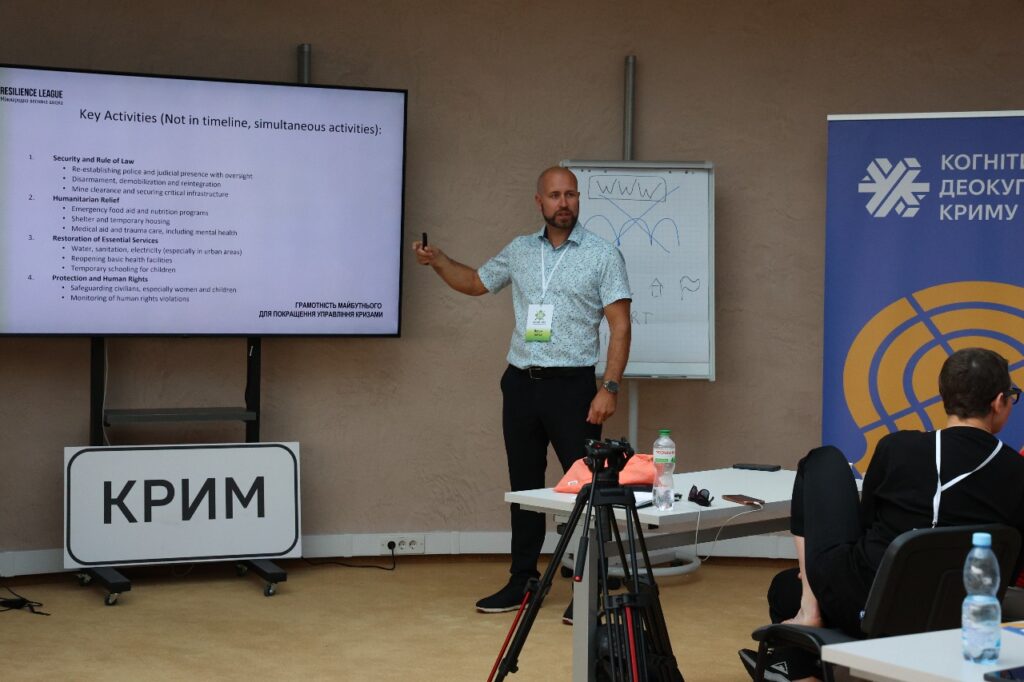
Special attention was given to crisis communications and decision-making. Andrii Zahorodskyi, communications mentor at the NGO Resilient Ukraine and a member of the National Platform for Resilience and Cohesion, shared tools that enable effective communication during instability, facilitate swift and balanced decision-making, and help maintain trust in institutions during critical moments.Special attention was given to crisis communications and decision-making. Andrii Zahorodskyi, communications mentor at the NGO Resilient Ukraine and a member of the National Platform for Resilience and Cohesion, shared tools that enable effective communication during instability, facilitate swift and balanced decision-making, and help maintain trust in institutions during critical moments.
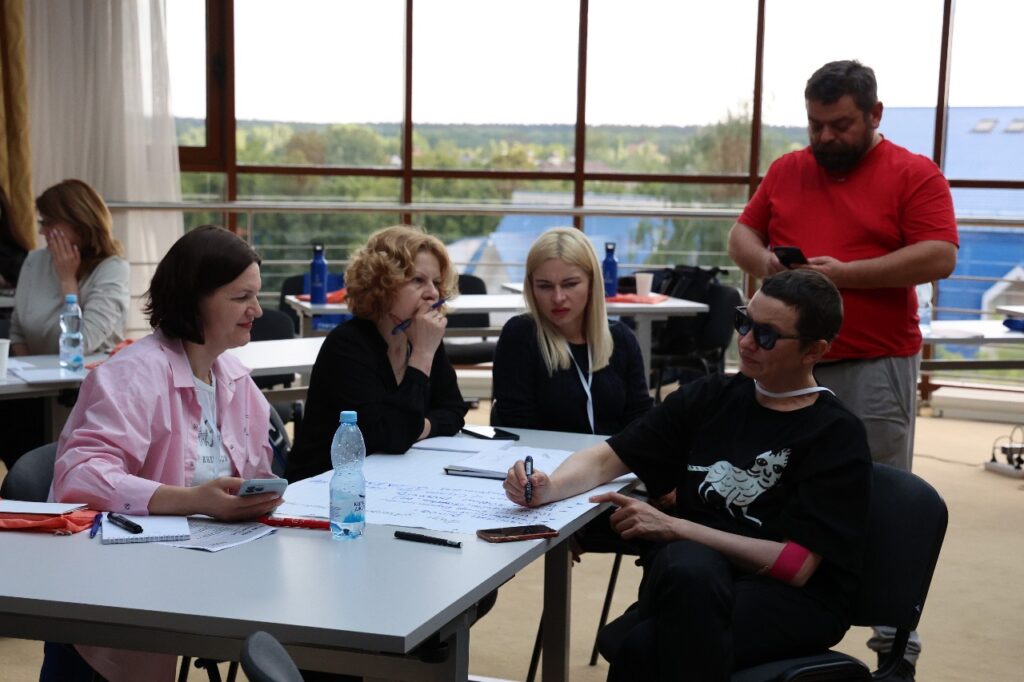
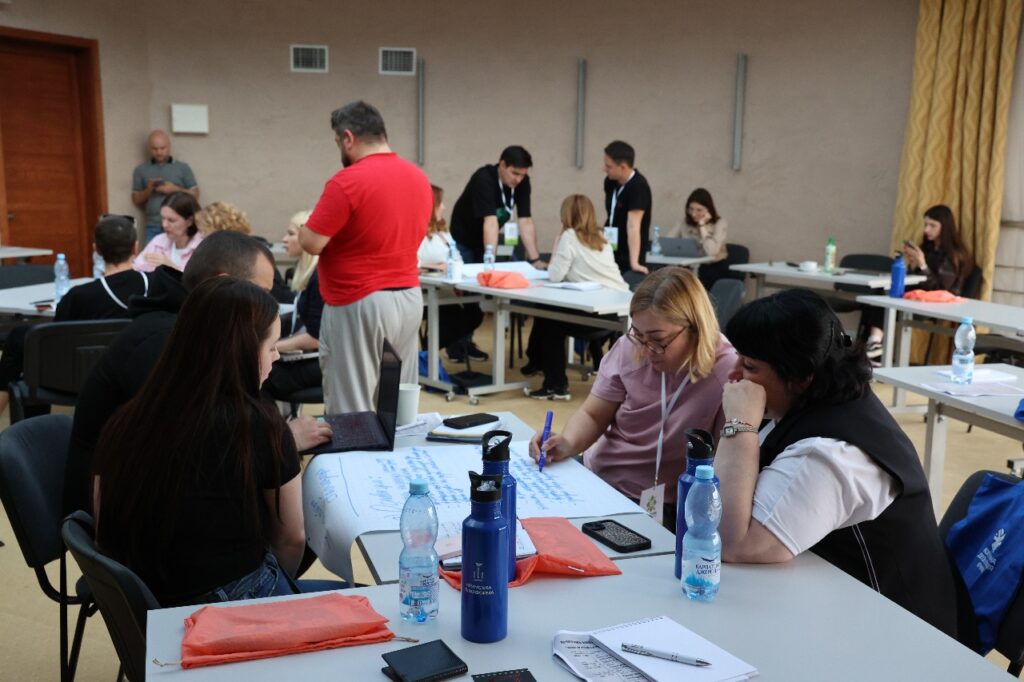
During the practical segments of the sessions, participants had the opportunity to apply their knowledge by simulating response scenarios to challenges that may arise during the de-occupation of territories. The exercises and collaborative work not only reinforced the theoretical material but also fostered team interaction, critical thinking, and analytical skills in a complex environment close to reality.
As a reminder, on 21 May 2025, the International Spring School Resilience League launched its program — a unique educational initiative established in 2016 that brings together the expertise of international specialists and Ukraine’s strategic needs in the reintegration of temporarily occupied territories. The school’s cross-sectoral format is designed to address the most complex challenges of today — not only in physical and legal terms, but also in the informational, social, and psychological dimensions.
The project is implemented in cooperation with the NGOs Resilient Ukraine and School of Media Patriots, in partnership with the media initiative Crimea Daily, and with the support of the Mission of the President of Ukraine in the Autonomous Republic of Crimea / Office of the Crimea Platform, the Council on Cognitive De-occupation of Crimea, and the Embassy of Estonia in Ukraine.