11 November 2024
Pomegranate: Symbol of the Second International Conference Crimea Global
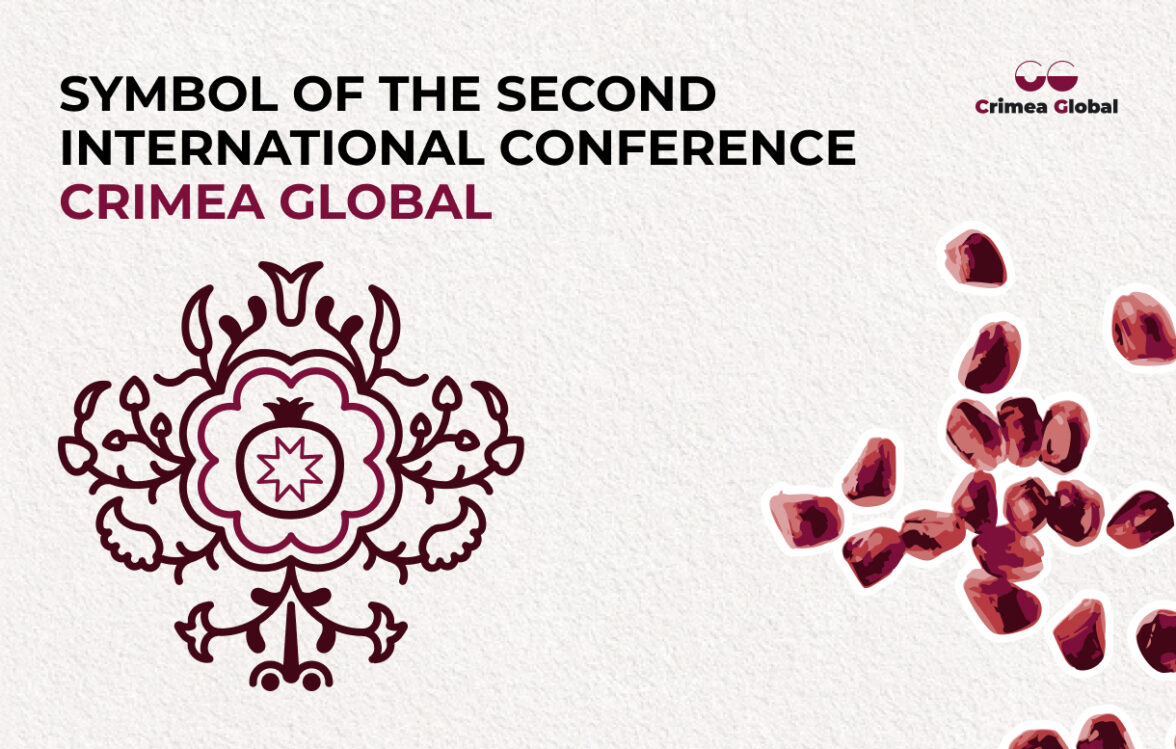
On November 21-22, 2024, Kyiv will host the Second International Conference, Crimea Global. Understanding Ukraine through the South. This event serves as a crucial international platform to foster dialogue between Ukraine and countries in Africa, Asia, and Latin America, where current challenges, cooperation prospects, and the restoration of justice will be discussed.
This year, the pomegranate has been chosen as the conference’s symbol, uniting nations in their pursuit of justice and freedom. It holds special significance for many countries worldwide, including Ukraine and its Indigenous People—the Crimean Tatars.
The symbolism of the pomegranate across global cultures highlights the deep connections between Africa, Asia, and Latin America on the one hand and Crimea on the other. In various religions, this fruit represents hope, renewal, and spiritual rebirth. Originating in India, where it has been known since prehistoric times, the pomegranate spread westward in antiquity, reaching the Middle East, Greece, and other Mediterranean regions. In Persia, the pomegranate was used in significant negotiations as a symbol of the desire for mutual understanding and peaceful conflict resolution.
In Ancient Egypt, pomegranates were placed in the sarcophagi of pharaohs as a symbol of rebirth in the afterlife. In Greek mythology, it was associated with life itself and with the goddess Persephone, who brought spring back to the earth.
In African countries, the pomegranate often embodies resilience and continuity of life, particularly due to its botanical features. Its seeds symbolize endurance and the ability to overcome challenges.
For many cultures and religions, the pomegranate holds sacred meaning. In Christianity, it represents resurrection and spiritual renewal, frequently appearing in art as a symbol of a rich spiritual life. In Judaism, it signifies goodness and righteousness, mentioned in the Torah as one of the fruits signifying the abundance of the promised land, Canaan. In Islam, the pomegranate is referenced in the Quran as a fruit of paradise, symbolizing divine grace and prosperity.
For Armenia and India, the pomegranate holds deep cultural significance as a symbol of fertility, prosperity, and family happiness. Armenians have long incorporated this fruit into wedding rituals, foreseeing a large family and a joyful married life. Indian traditions emphasize the pomegranate’s association with longevity and spiritual growth.
In the East, the pomegranate is known as the “king of all fruits.” It symbolizes love and friendship, often given as a gift to guests as a sign of respect and goodwill. It’s also believed that the shape of the pomegranate’s calyx inspired the royal crown, adding further significance to this fruit as a symbol of power and grandeur.
For Crimean Tatar culture, the pomegranate holds special importance. Its image is frequently used in traditional ornament ornek—a unique artistic system where it symbolizes family well-being, fertility, and prosperity. Items adorned with these patterns accompany people from birth to death, underscoring their cultural connection to their native land.The international conference Crimea Global serves as a symbol of unity and understanding, where diverse cultures come together around shared values in the pursuit of justice, freedom, and human rights. As the symbol of the conference, the pomegranate reminds participants of the diversity and richness of their cultural experiences.