05 June 2024
June 5 is World Environment Day. Russia worsens environmental situation and depletes natural resources in occupied Crimea
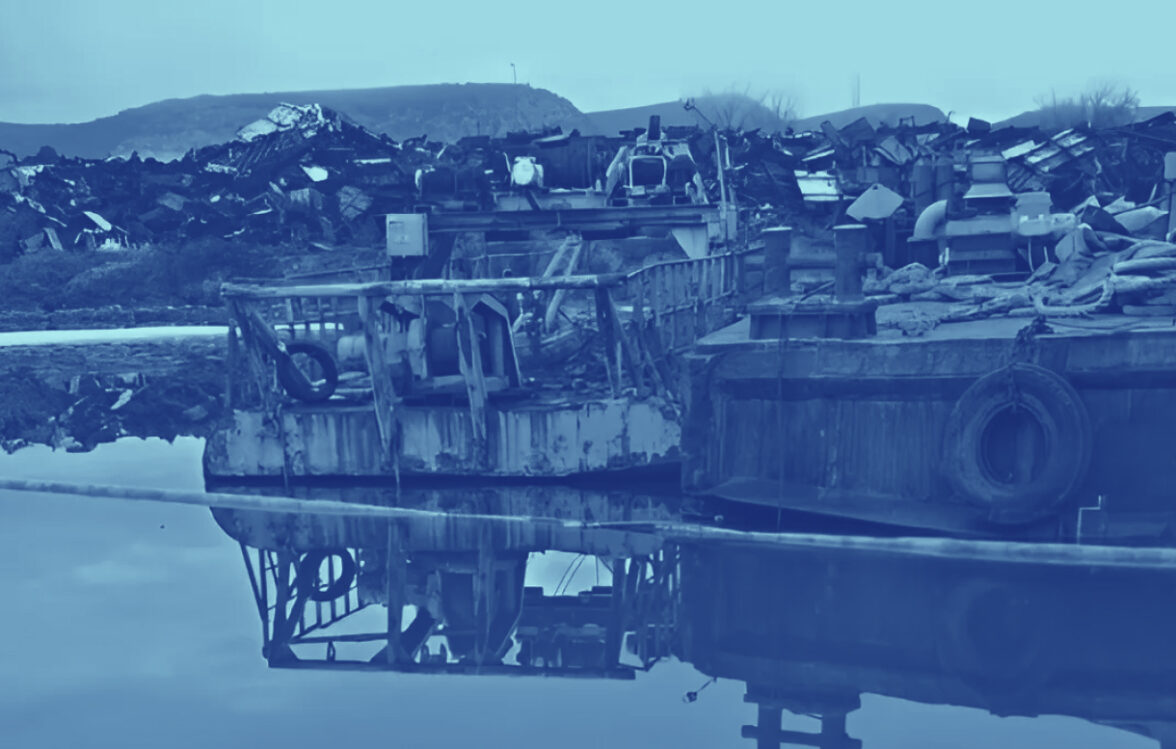
World Environment Day is celebrated every year on June 5. On this day in 1972, a conference on environmental issues began in Stockholm as a result of discussions on the integration of human-environment interaction.
Russia’s aggressive war against Ukraine has various faces and forms, including the invasive activities of the aggressor state that affect the environment of our country. For more than 10 years of the Russo-Ukrainian War, the temporary occupation of Ukrainian lands has been ruthlessly destroying our environment.
Since the beginning of the war in 2014 the colonial policy towards Crimea is manifested, among other things, in the exploitation and depletion of natural resources. Analyzing the few studies on this topic, it can be stated that the key factor here is as well the militarization of the peninsula. The situation with the depletion of water resources and water supply has become particularly acute.
Until 2014, Crimea’s freshwater needs were met by the North Crimean Canal. In 2014, Ukraine stopped supplying water to the canal, which led to a surge in Russian propaganda activity claiming that Ukraine was causing a humanitarian disaster. At the same time, it was Russia that created the man-made disaster by blowing up the dams of the Kakhovka hydroelectric plant in June 2023. Shortly after that, the occupiers realized that the North Crimean Canal was no longer filled.
During the temporary occupation of Crimea, 1710 illegal licenses for geological exploration and extraction of fresh water from underground horizons for the needs of the Russian troops were issued as of March 2024, and individual industrial facilities were converted to the military needs of the occupiers in the temporarily occupied territory of Crimea. This poses an invaluable threat to the environmental situation on the peninsula, which could have irreparable consequences in the future. And militarization is a key factor in the lack of freshwater on the peninsula.
The transfer of large amounts of military equipment, the construction of new military-industrial facilities, and the firing of Russian missiles at Ukrainian cities and villages also contribute to the general deterioration of the environmental situation. For example, industrial and often illegal sand mining on the territory of the Bakalska Spit Landscape and Recreation Park, which is not prevented by the occupation administration, has led to a noticeable narrowing and destruction of the spit.
Unfortunately, it is impossible to accurately assess all the environmental damage caused by the criminal actions of the occupiers before the de-occupation, but we can already observe negative trends. For example, according to the head of the research department of the Tuzly Estuaries National Nature Park, about 50,000 dolphins have died in the Black Sea since the beginning of the full-scale invasion. The main reason is believed to be the activity of Russian submarines and surface vessels off the coast of occupied Crimea. Shell-shocked animals with symptoms of sonar damage are being thrown ashore.
The world should not remain silent when Russia commits environmental crimes and regularly destroys the ecosystem of Crimea and Ukraine. Under international law, intentional damage to the environment is considered a war crime.