08 April 2025
Cultural Heritage as a Form of Resistance: Ukraine Presents Exhibition on Crimean Tatar Identity in Tashkent
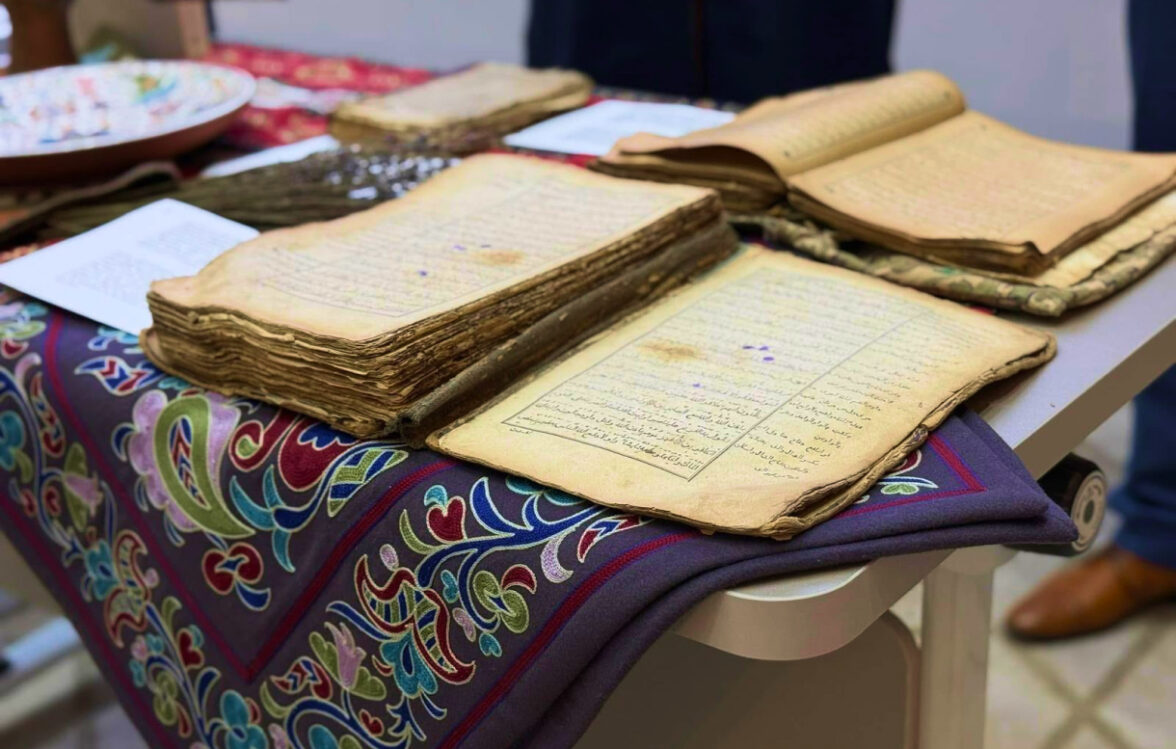
During the 150th Assembly of the Inter-Parliamentary Union, held from 23 to 27 April 2025 in Tashkent, Republic of Uzbekistan, the Ukrainian delegation presented the exhibition Ukrainian Cultural Heritage and Identity: Protection of Culture and Religious Freedoms. The event was initiated by Member of Parliament of Ukraine Tamila Tasheva together with the Ukrainian parliamentary delegation to the Inter-Parliamentary Union, with the support of the Mission/Office of the Crimea Platform.The exhibition was organized within the framework of the 12+ Geopolitical Group — the largest group within the Inter-Parliamentary Union, uniting 47 countries, including EU member states, Canada, Türkiye, Israel, Australia, and others.
The official opening ceremony was attended by the First Deputy Chairman of the Verkhovna Rada of Ukraine Oleksandr Korniienko, Member of Parliament and Co-Chair of the Crimea Platform Inter-Factional Association Tamila Tasheva, Mufti of the Spiritual Administration of Muslims of Crimea Sheikh Aider Rustemov, and expert of the Crimean Institute for Strategic Studies Elmira Ablialimova-Chyihoz.
First Deputy Chairman of the Verkhovna Rada of Ukraine Oleksandr Korniienko emphasized that the crimes of the past and present must not be forgotten: “The aggressor has no right to destroy our cultural heritage or encroach upon the identity of an entire people. We have the strength to preserve it and to show the world the greatness embedded in our achievements.”
At the exhibition’s opening ceremony, Member of the Ukrainian Parliament Tamila Tasheva underscored the importance of preserving Crimean Tatar culture as a unique component of Ukrainian heritage, especially in the context of war and occupation. She highlighted that for centuries, Crimean Tatars have faced persecution, with their culture and identity systematically targeted for destruction by Russia — notably during the 1944 deportation and following the occupation of Crimea in 2014. Under such conditions, the preservation of traditions, language, religion, and material heritage becomes not only an act of cultural resistance but also a guarantee of dignity and continuity for the people.
“During periods of repression and forced displacement, our identity was under threat and systematically suppressed. Despite this, the Crimean Tatars managed to preserve their traditions, language, and religion. Today, we once again face attempts to erase our identity. However, thanks to our unity, mutual support, and belief, we have endured and continue to safeguard our culture and identity for future generations,” emphasized Tamila Tasheva.
In his address, Mufti Aider Rustemov, Head of the Spiritual Administration of Muslims of Crimea, emphasized the deep connection between Crimean Tatar cultural heritage and religious identity. He also drew attention to the systematic repression faced by Muslim communities in the temporarily occupied territories of Ukraine.
The Mufti appealed to the international community to take note of the religious persecution, including the targeted destruction of mosques and Islamic cultural centers under Russian occupation.
“Since the beginning of the full-scale invasion, Russia has been systematically destroying religious sites in Ukraine — including churches, mosques, and synagogues. The goal of the occupiers goes beyond the physical destruction of buildings; they aim to erase identities and the very essence of who people are. According to various estimates, more than 600 religious sites have been destroyed or damaged. The destruction of places of worship during war serves as further evidence of the crimes committed by the Russian Federation,” Rustemov stated.
One of the central elements of the exhibition was the section titled “Qur’ans That Survived Deportation,” dedicated to rare editions of the Qur’an preserved by Crimean Tatar families despite the forced deportation of 1944, life in exile in Uzbekistan, Kazakhstan, and the Urals, and eventual return to their homeland after 1991. This part of the exhibit showcases unique Qur’anic manuscripts from Crimea dating back to the 19th and 20th centuries, each with its own history. The oldest copy on display dates back to the 1880s. One Qur’an was split into two parts so that it could be inherited by two daughters. Another made its way from Arpat to the Urals, to Fergana, and eventually returned to Crimea with the descendants of its original owners. These books are sacred relics — having survived deportation, Soviet religious repression, preservation in exile, and further displacement after the occupation of Crimea in 2014.
Another section of the exhibition focuses on Crimean Tatar decorative and applied arts, particularly traditional ceramics, which serve not only as functional household items but also as carriers of rich visual codes, aesthetic philosophy, and intergenerational memory. At the heart of this display are works by renowned Crimean Tatar ceramic artist Rustem Skibin, including cezve pots, bowls, cups, mats, and ornamental pieces. Each item is handmade using ancient techniques that are intrinsic to the Crimean Tatar tradition. The elements of this section of the exhibition were provided by the Crimean House state enterprise.
As part of the exhibition, a special corner was dedicated to the Letters to a Free Crimea initiative — a joint campaign by the Mission of the President of Ukraine in the Autonomous Republic of Crimea, PEN Ukraine, CrimeaSOS, the Crimean Process NGO, the media initiative Crimea Daily, and the ZMINA Human Rights Center.