13 November 2025
Leader of the Crimean Tatar People Mustafa Dzhemilev Turns 82 Today. He has dedicated his entire life to the struggle for Crimea.
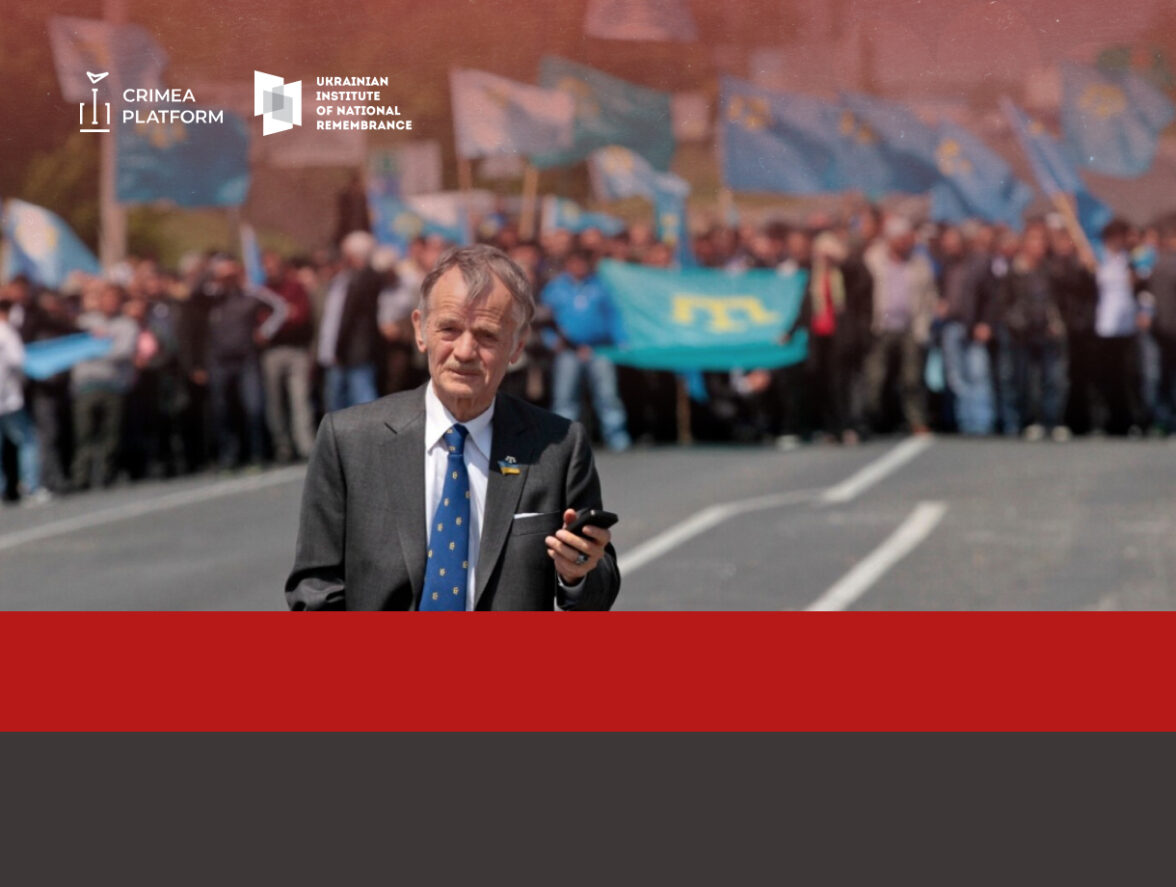
Today marks the 82nd birthday of Mustafa Dzhemilev, the leader of the Crimean Tatar people. His biography is not only the story of a political figure — it is the story of a man who has spent his whole life defending his people’s right to live in their homeland.
Mustafa Dzhemilev was born on November 13, 1943, in the village of Ay-Serez near Sudak. His family already knew what persecution meant: in the 1930s, the Soviet authorities dispossessed the Dzhemilev family and deported them to the Urals. After returning to Crimea, they briefly felt at home again — until 1944, when the entire family, along with the whole Crimean Tatar people, was deported to Uzbekistan.
In 1959, at the age of sixteen, Dzhemilev worked as a turner and joined the underground organization, the Union of Crimean Tatar Youth, where he reported on his people. Soon, the organization’s activities were suppressed, and Dzhemilev himself was placed under surveillance by the Soviet KGB.
In the 1960s, he became actively involved in the Crimean Tatar national movement — speaking out against Soviet policies and calling for the right of Crimean Tatars to return to their homeland. For his “anti-Soviet” and “nationalist” manuscript on the history of the Crimean Tatars, he was expelled from his institute.
When Dzhemilev refused to serve in the Soviet army, he was sent to a labor camp near Tashkent — the beginning of many years of persecution and imprisonment. After his release, he resumed human rights activities, maintained contacts with dissidents across the USSR, and informed the world about the plight of the Crimean Tatars. Later, he became one of the founders of the Initiative Group for the Defense of Human Rights — one of the first organizations of its kind in the Soviet Union.
The Soviet authorities repeatedly arrested Dzhemilev and fabricated criminal cases against him — in total, he spent about 15 years in prisons. As a form of protest, he repeatedly went on hunger strikes — the longest lasting 303 days — after being accused of “slandering the Soviet system.” This occurred just days before the end of his previous unlawful imprisonment.
After each new sentence, Mustafa Dzhemilev continued his human rights work. In February 1983, for the first time in 39 years of exile, he visited Crimea with his family — but just a few days later, the Soviet authorities expelled them from the peninsula again.
Dzhemilev was finally able to return to his native land only in 1989, after being released from another prison term. He settled in Bakhchysarai.
In 1991, for the first time in decades of exile, the Crimean Tatars convened their national congress — the Kurultai — and elected him as Chairman of the Mejlis. In independent Ukraine, Mustafa Dzhemilev became a Member of Parliament and continued to defend the rights of his people.
When Russia occupied Crimea in 2014, he was banned from entering the peninsula. Once again, he was separated from his home and from the land where he was born. Yet Mustafa continues to fight for Crimea — today from Kyiv and on the international stage.
In 2023, Dzhemilev received Ukraine’s highest state award, the title of Hero of Ukraine, for his outstanding personal contribution to the establishment and development of an independent Ukrainian state, as well as for his courage and dedication in defending the rights of the Crimean Tatar people.
The life of Mustafa Dzhemilev stands as proof that a struggle can last a lifetime and never lose its meaning. His strength lies in his consistency and in his belief that truth is always worth standing for.