12 March 2025
Leniie Umerova Addressed the European Parliament on the Occasion of the International Women’s Day
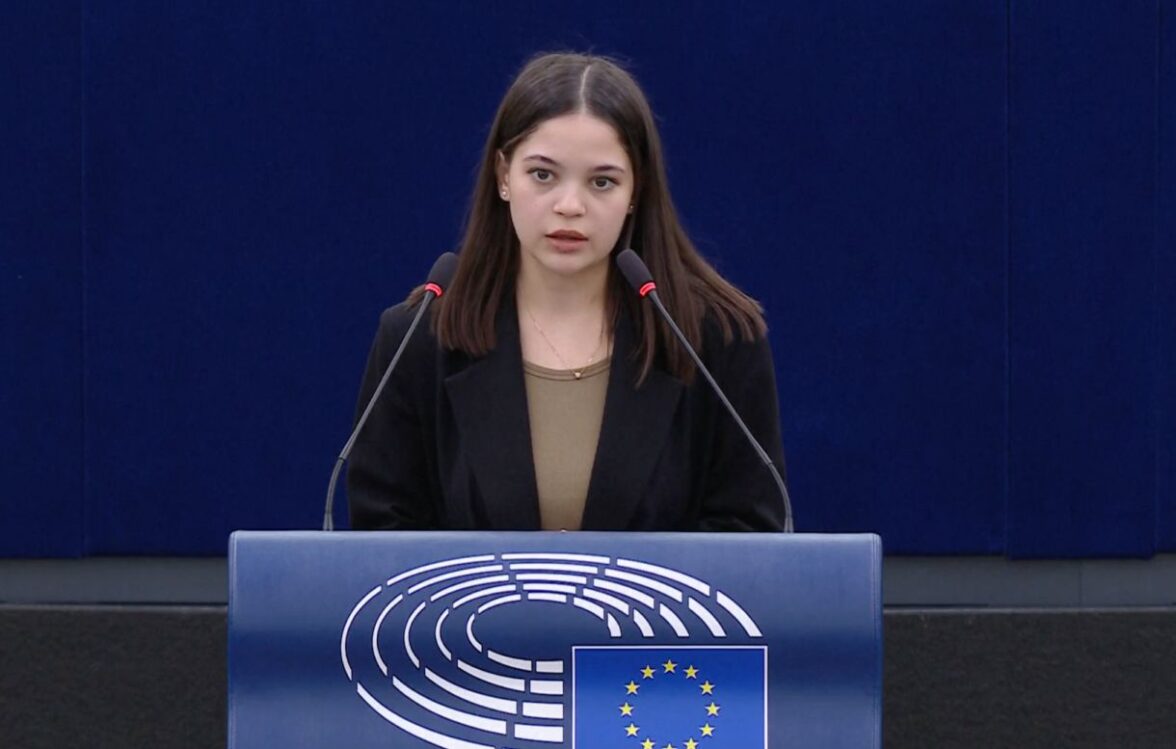
On March 11, Crimean Tatar representative and former political prisoner Leniie Umerova addressed the European Parliament as part of the International Women’s Day celebration, sharing her personal experience of persecution and human rights violations by the occupation administration in Crimea.
Leniie Umerova drew attention to the cases of other women who remain unlawfully imprisoned in Russian captivity. Among them is 70-year-old Halyna Dovhopola, a resident of Sevastopol, who endured inhumane mistreatment, and Iryna Danylovych, a Crimean journalist, who, after surviving severe torture, has been deprived of medical care in prison.
“My only ‘crime’ is that I am a Crimean Tatar, a Ukrainian born in Crimea, and I refused to take a Russian passport. For Russians, that is enough to declare me an enemy and throw me behind bars,” stated Leniie Umerova, recounting her own unlawful imprisonment.
Leniie Umerova emphasized that the repression against the Crimean Tatars began long before 2014 or 2022 and has been ongoing for centuries. In 1944, the Soviet authorities deported the entire Crimean Tatar people. Leniie’s grandmother was only ten years old when her family, along with hundreds of thousands of Crimean Tatars, was forced into cattle cars and deported to Central Asia.
Today, Russia is once again attempting to displace Crimean Tatars and Ukrainians from the occupied territories, erasing their identity and destroying historical landmarks of Ukraine’s Indigenous people. Leniie Umerova stressed that this struggle extends far beyond the battlefield—it affects thousands of people whom Russia unlawfully detains in Crimea, other occupied territories, and Russian prisons. Crimean Tatar and Ukrainian activists, journalists, and ordinary citizens face persecution simply for resisting the occupation regime.
Leniie Umerova is a 26-year-old Crimean Tatar who was detained by Russian occupiers in 2022 while crossing the border of Sakartvelo in an attempt to reach her ailing father in Crimea. During her entire period of imprisonment, she endured brutal interrogations, psychological and physical abuse, and prolonged isolation. Her detention is part of the systematic repressive policies that Russia applies against Crimean Tatars and Ukrainians in the occupied territories.