02 April 2025
International Children’s Book Day: The Voice of Crimean Tatar Authors for Future Generations
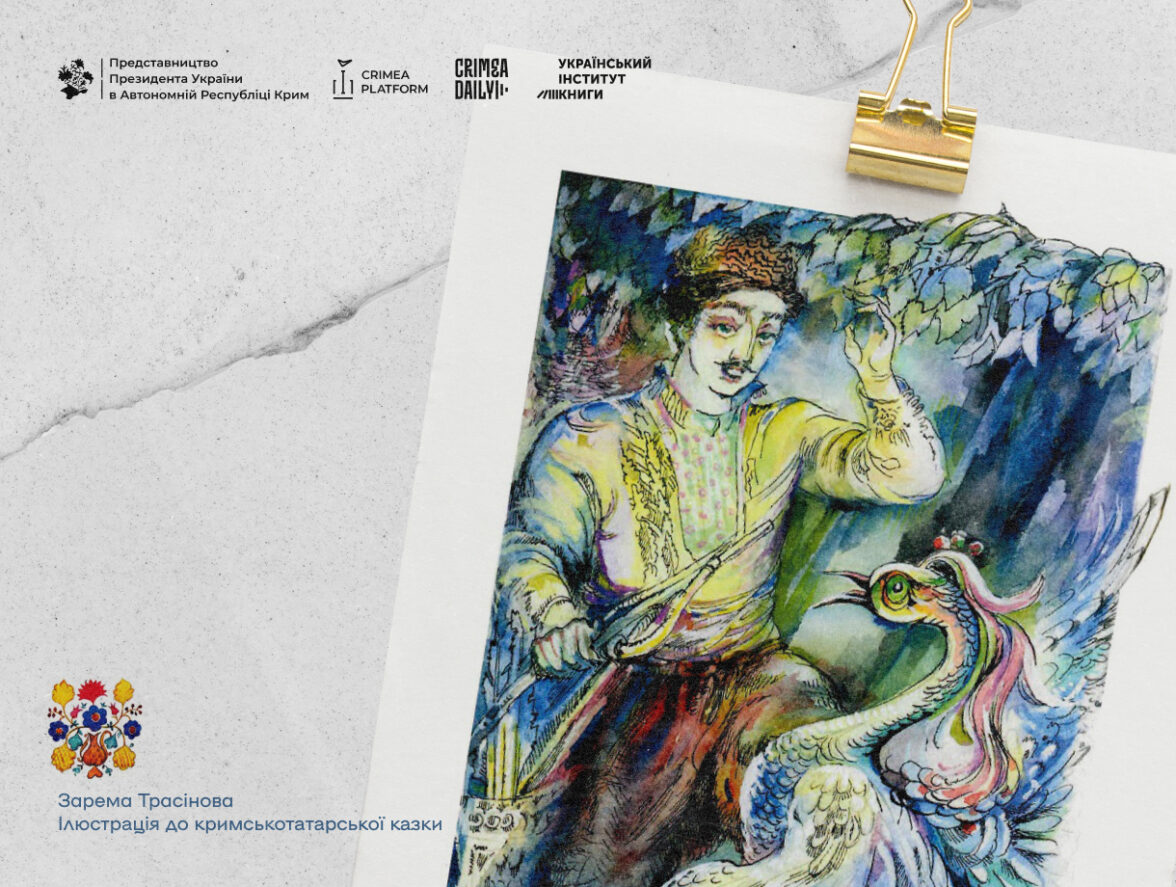
On April 2, the birthday of Hans Christian Andersen, the world traditionally turns to children’s books as sources of imagination, knowledge, and spiritual growth. For the Crimean Tatar people, this day is also an opportunity to highlight the urgent need to preserve their language, culture, and identity under the prolonged conditions of occupation in Crimea. Among the many vulnerable languages in need of support through cultural policy and international solidarity, Crimean Tatar remains one of the most at risk. Its sound, as in the past, continues to be passed down from generation to generation — through songs, legends, proverbs, and folk narratives. But it is the children’s book that becomes a lasting vessel in which the living language anchors itself in time.
Crimean Tatar children’s literature began with the spoken word. Folk storytellers like Mustaba Topal, Khatidzhe Umer, Isliam Khalil Demirdzhi, Emir Ibrahimov, and Fatma Khaibulla preserved folklore and instilled early ideas of virtue in children. Crimean Tatar fairy tales developed along two key paths: the romantic and the realistic. The romantic tales are marked by strong elements of fantasy, adventurous plots, and generalized characters who embody archetypes rather than specific personalities. Their roots lie in ancient myths and legends, sometimes taking on features of heroic epic. In contrast, realistic tales are grounded in everyday life: they contain little to no fantasy, are based on domestic situations, and feature characters with distinct, individualized traits. These stories often rely on humor and satire to convey their messages.
In the 19th century, the oral tradition transitioned into print thanks to the efforts of Ismail Hasprynskyi, who founded the first Crimean Tatar newspaper Terciman and a printing press, along with the children’s publication Alem-i Subyan (The World of Children).
During the 1944 deportation of the Crimean Tatar people and the subsequent decades of forced exile, children’s literature became an act of survival — a means of preserving identity and keeping the memory of home alive. Ervin Umerov, who spent most of his life in exile, wrote poetry that depicted childhood joy persisting despite hardship. He also composed educational poems intended to develop language skills and foster national awareness. Umerov worked for Crimean Tatar newspapers, including Lenin Bayrağı (the predecessor of today’s Yañı Dünya, or New World), and served as a senior editor in the Department of Literature of the Peoples of the USSR at the Children’s Literature publishing house.
Yunus Kandym, who would later become a brilliant poet and translator, grew up immersed in the literature of exile. His work frequently returned to themes of preserving memory and language. In one of his poems, he wrote: “Balalar içinde yaşaydi til, til içinde yaşaydi vatan” — “In children lives the language, and in the language — the homeland.”
In 2010, the Crimean Tatar Fairy Tales collection was presented at a book fair in Kyiv. Actor Akhtem Seitablaiev read excerpts from the book, singer Lenara Osmanova performed traditional Crimean Tatar songs, and the texts themselves were translated into Ukrainian — to make these stories accessible to children across the country. “I dream that, above all, Ukrainian children will read these tales. That way, a new chapter can begin in the relationship between Crimean Tatars and Ukrainians — when all peoples living in Ukraine start learning about one another’s cultures from early childhood,” emphasized Akhtem Seitablaiev.
A touching example of cultural preservation is the story of Alime Kurkchi — a grandmother from the Bakhchysarai district who began writing fairy tales for her 12 grandchildren due to the lack of literature in her native language. Her fairy tale Tılsımcı (The Magician) won first place in the “Children’s Literature about Crimea” category at the Qırım İnciri (Crimean Fig) literary competition.
“When my grandchildren started to be born, they asked me to tell them stories. I couldn’t find any in the Tatar language. But I wanted their first stories to be in their native tongue. So I started making them up myself,” recalls Alime.
The Crimean Tatar theme is increasingly being reflected in Ukrainian children’s literature. Kerim’s Crimea, written by Nataliia Smyrnova and illustrated by Liudmyla Stetskovych, tells the story of a boy named Kerim, born in Crimea among blooming pomegranate trees, the warmth of family, and familiar landscapes. His childhood is filled with carefree adventures, curiosity, and a deep sense of home. But one day, that world is shattered by World War II and, later, by deportation. Still, the memory of home becomes a source of strength for him.
Volodymyr Nikitenko began working on the Kradii Spohadiv story (The Memory Thief) back in 2013 as a screenplay for an animated film. However, after the events of 2014, he reimagined the story, realizing it was ultimately about Crimea. The book introduces an image of the occupied peninsula as a place where truth is forgotten, memories are stolen, and children are forced to fight against darkness in order to preserve their language and memory.
The preservation of the Crimean Tatar language and literature under occupation is a matter of national survival. Since the beginning of Russia’s occupation of the peninsula, the Crimean Tatar language — like Ukrainian — has been pushed out of the public sphere, educational programs, and media. Yet the Crimean Tatar community continues to seek ways to preserve their language — through family traditions, educational initiatives, cultural projects, children’s literature, and folklore on territory controlled by Ukraine. Online platforms, competitions, festivals, and publications beyond Crimea have become new environments where the language is spoken, evolving, and finding new voices.