12 May 2025
Information Exhibition QIRIM İÇÜN / For Crimea Opened on Khreshchatyk Street
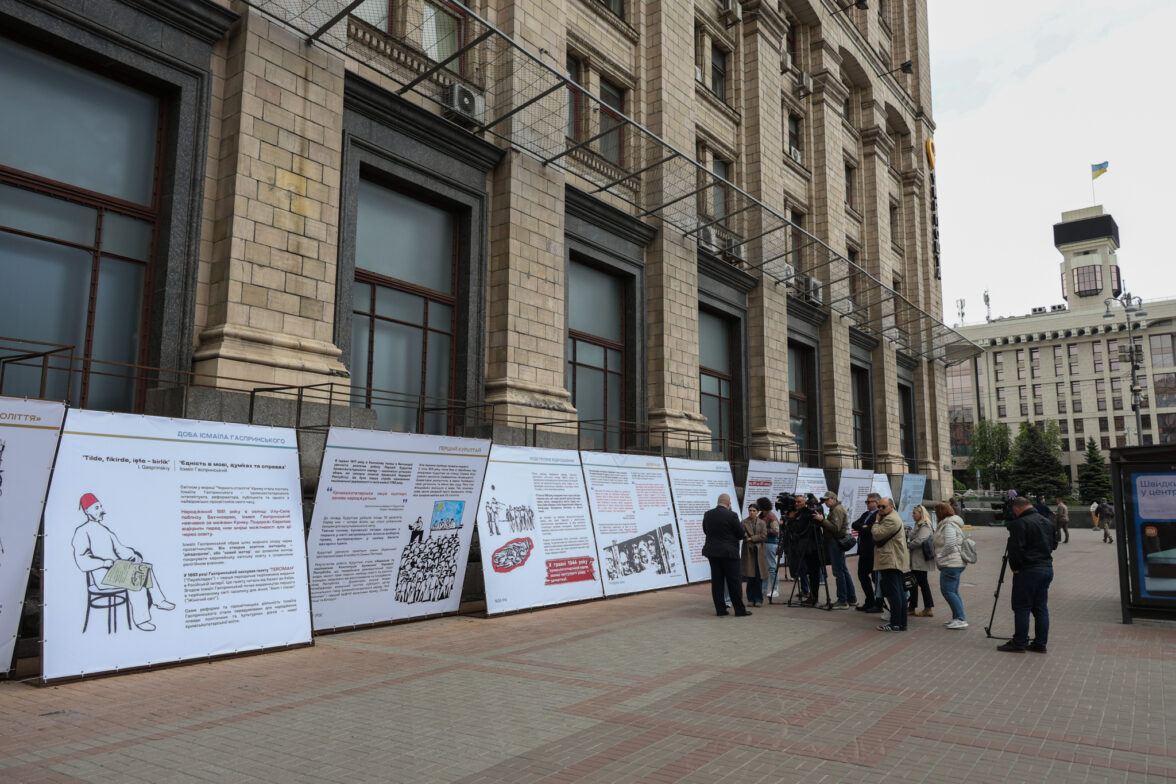
On 12 May, on Khreshchatyk Street in Kyiv, near the Main Post Office, the official opening of the information exhibition QIRIM IÇÜN / For Crimea was held. The exhibition is dedicated to the Day of Remembrance of the Victims of the Crimean Tatar Genocide, observed marked on 18 May, and serves as a public gesture of remembrance and solidarity as well as an open call to society to reflect on the complex history of Crimea as an integral part of Ukraine’s historical, political, and cultural space.
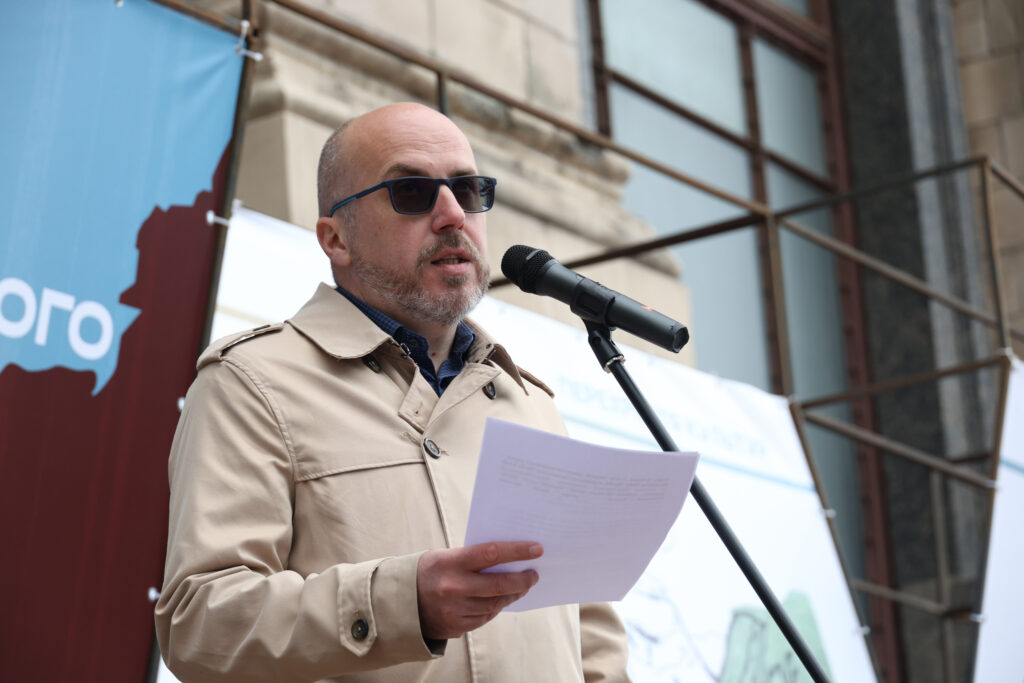
Speakers at the opening included: Denys Chystikov, Deputy Permanent Representative of the President of Ukraine in the Autonomous Republic of Crimea; Refat Chubarov, Chairman of the Mejlis of the Crimean Tatar People; and Martin-Oleksandr Kyslyi, lecturer at the National University of Kyiv-Mohyla Academy and head of its Crimean Studies. The event was moderated by Yevhen Bondarenko, Head of the Information Department of the Mission. First Deputy Minister for Foreign Affairs of Ukraine Serhii Kyslytsia also participated in the official opening.
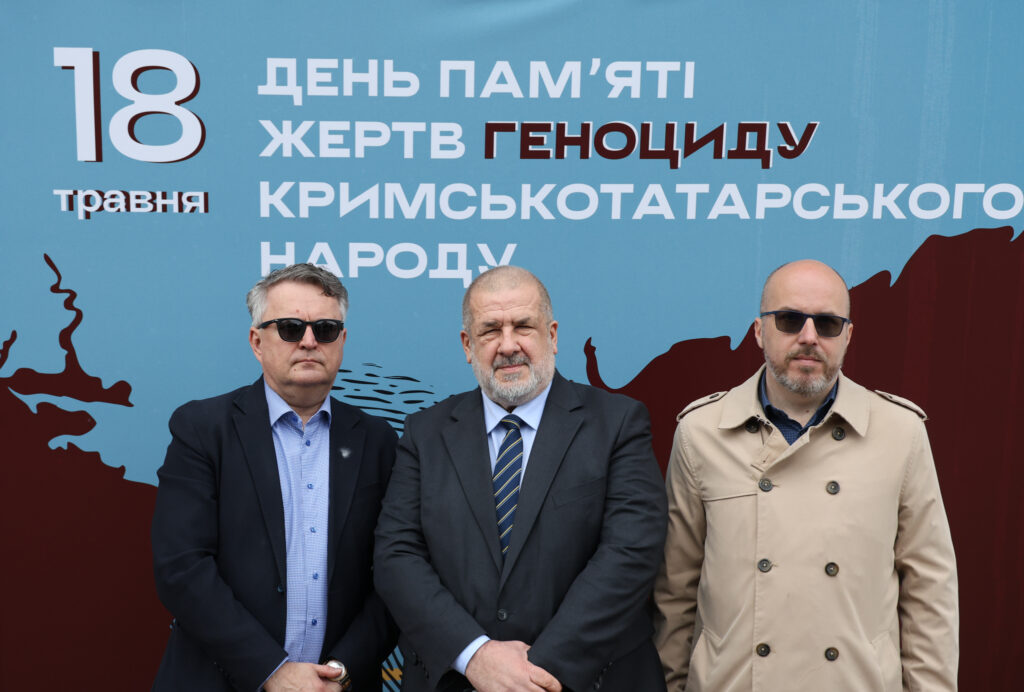
In his remarks, Denys Chystikov, Deputy Permanent Representative of the President of Ukraine in the Autonomous Republic of Crimea, expressed gratitude to the participants of the event, the Mejlis of the Crimean Tatar People, activists, and all those who help communicate the issue of Crimea in the public space. He emphasized that Crimea is an integral part of the Ukrainian state and the homeland of the Crimean Tatar Indigenous people. Denys Chystikov also underlined the importance of preserving the memory of the victims of genocidal practices carried out by the Russian Federation.
“Memory is our weapon against forgetfulness, hopelessness, and falsification. From the 1783 annexation to the 1944 genocide, from Soviet repression to the current occupation, Russia has consistently pursued a colonial policy toward Crimea. But the Crimean Tatar people have endured these trials, preserving their identity, language, culture, and will for freedom,” he stressed.
The Deputy Permanent Representative noted that such informational initiatives help shape a shared space of memory and foster the understanding that the struggle of the Crimean Tatars is part of the broader Ukrainian fight for freedom and dignity.
“Just peace is impossible without the return of Crimea. Respect for democratic values means ensuring the rights and freedoms of Ukraine’s Indigenous peoples, including the Crimean Tatars. The Mission is working on policies aimed at restoring the rights of Indigenous peoples, integrating Crimea into the modern Ukrainian space after de-occupation, preserving culture, and supporting the Crimean community,” he noted.
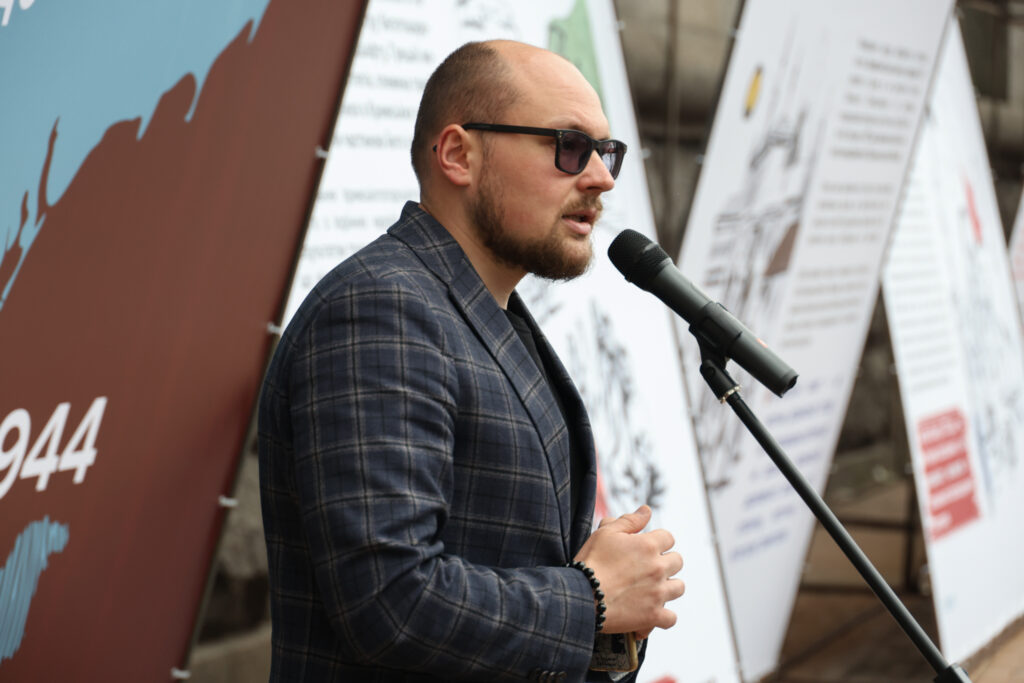
Yevhen Bondarenko, Head of the Information Department of the Mission, announced that the exhibition would run for one month, until 12 June.
“When we speak about the Crimean Peninsula in the public space, we make sure to reflect on the various stages of Crimean Tatar history — from the golden age of the Crimean Khanate to the present-day revival, resistance, and preservation of identity,” Yevhen Bondarenko emphasized.
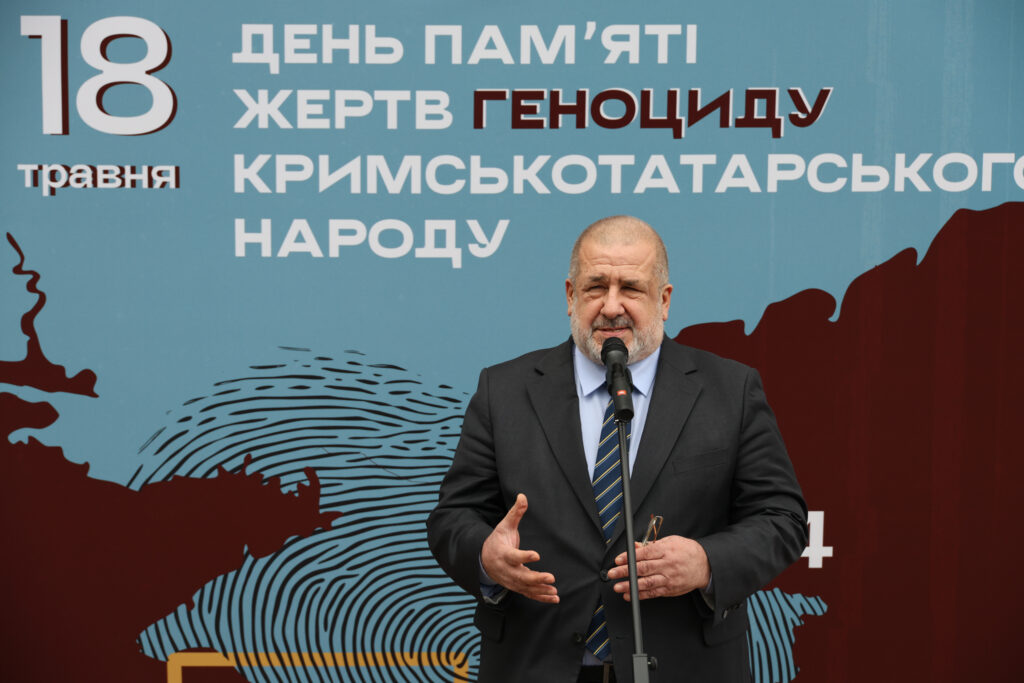
Refat Chubarov, Chairman of the Mejlis of the Crimean Tatar People, expressed gratitude to the countries that have recognized the deportation of the Crimean Tatar people as an act of genocide, and stressed the unacceptability of any compromises involving territorial concessions by Ukraine:
“On the eve of 18 May, the Day of Remembrance of the Victims of the Genocide of the Crimean Tatar People, we remind the international community that it is impossible to achieve a just and lasting peace by appeasing the aggressor. Any proposals involving territorial concessions in exchange for peace are in violation of international law and are unacceptable to both Ukraine and the Crimean Tatar people. Crimea is the homeland of the Crimean Tatar people, it is Ukrainian land, and only the Crimean Tatar people, together with the Ukrainian state, have the right to determine its future,” stated Refat Chubarov.
Martin-Oleksandr Kyslyi, Head of the Crimean Studies center at the National University of Kyiv-Mohyla Academy, emphasized the importance of preserving historical memory even under occupation:
“The crime of genocide-deportation is part of a broader context — the long history of Russian colonialism. For the Crimean Tatars, this is a centuries-long resistance: 1783, 1944, 2014. Until 2014, Crimean Tatars gathered on 18 May in the central squares of their cities. After the Russian occupation, even that was taken from them. Today, remembrance has moved into the home. And we must preserve this memory, even when we can no longer manifest it publicly,” Martin-Oleksandr said.
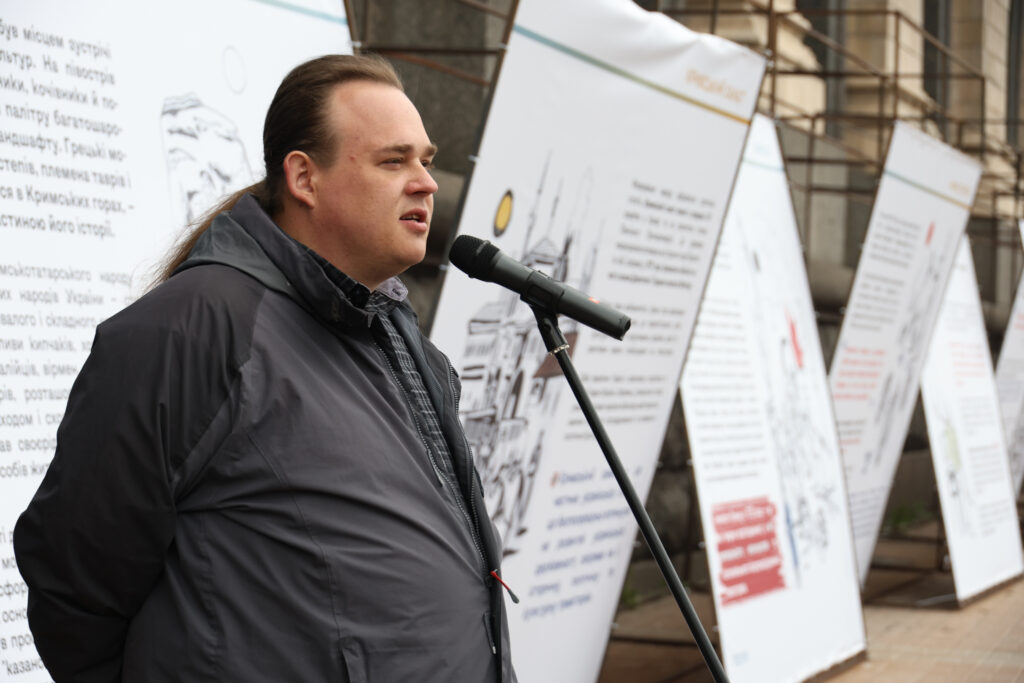
The event brought together representatives of government and educational institutions, journalists, and members of the Crimean Tatar community.
The exhibition QIRIM IÇÜN / For Crimea featured sketches by Anton Logov and a painting by Rustem Eminov. The exhibition texts were authored by journalist and psychologist Mavile Khalil and Martin-Oleksandr Kyslyi, Head of the Crimean Studies center at the National University of Kyiv-Mohyla Academy.
The exhibition was organized by the Mission of the President of Ukraine in the Autonomous Republic of Crimea and the Office of the Crimea Platform, in cooperation with the Mejlis of the Crimean Tatar People, the Crimean Studies Center at the National University of Kyiv-Mohyla Academy, the Crimea Daily media initiative, and with the support of the Partnership Fund for a Resilient Ukraine, funded by the governments of Canada, Estonia, Finland, the Netherlands, Norway, Sweden, Switzerland, the United Kingdom, and the United States of America.