19 September 2025
The face of resistance: the story of activist Ivan Yatskin
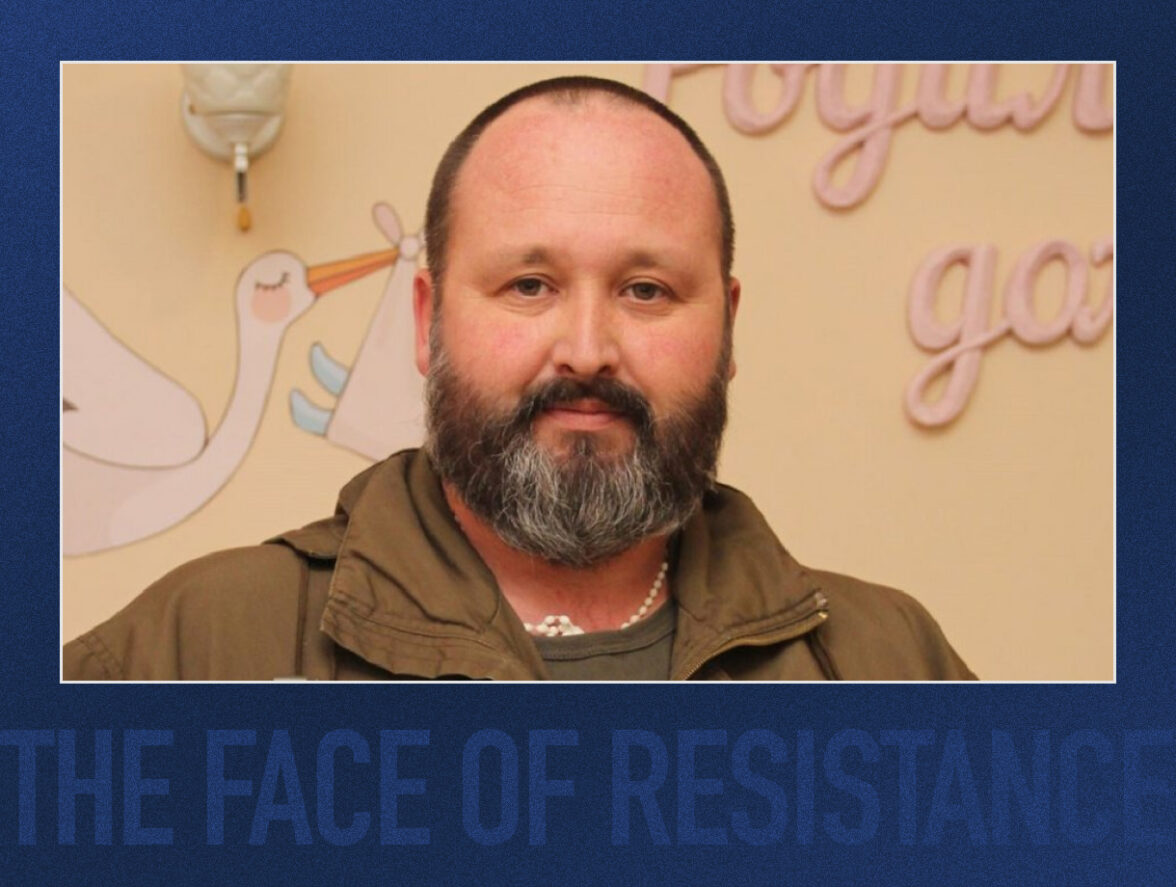
Life before the detention
Ivan Hryhorovych Yatskin was born on October 22, 1978, in the village of Voykovo in the Kurman district of Crimea. Prior to his arrest, he lived in Simferopol, a city where he had access to education, culture, and community initiatives. Here, Ivan was able to participate in public life, attend lectures, artistic events, and volunteer projects, which shaped his beliefs and civic engagement.
Family was of particular importance in Yatskin’s life. His wife is Crimean Tatar, which brought together two cultural traditions and ways of preserving national identity in their home. The couple raised five children, four of whom were minors at the time of his arrest. When Ivan was arrested, his wife was expecting their fifth child. For him, fatherhood was not a formality, but a daily concern, an example of responsibility and moral support.
Human rights activists and lawyers claim that prior to his arrest, Ivan openly and actively defended a pro-Ukrainian position.
Persecution
On October 16, 2019, at around 6:00 a.m., Russian Federal Security Service (FSB) officers conducted an illegal search of Yatskin’s home, seizing Ukrainian documents and a laptop. Ivan himself was arrested before the search. On the same day, the occupation “court” in Simferopol imposed a preventive measure in the form of detention.
The occupation administration accused Yatskin of alleged “treason” and cooperation with the Armed Forces of Ukraine and the transfer of data about the occupation forces. On May 21, 2021, the so-called “Supreme Court of Crimea” announced its verdict on Yatskin and sentenced him to 11 years in a strict regime colony with one year of restricted freedom. The “trial” was held in closed session, the defendant’s mother and wife were not allowed to attend, and the occupiers prohibited the lawyer from commenting on the proceedings.
Behind the bars
After Ivan’s arrest, he was transferred from Crimea to Moscow to the Lefortovo detention center. There he was subjected to pressure and humiliation: he was taken out into the cold in a T-shirt and flip-flops at -14°C, kept outside for over an hour, deprived of winter clothing. The psychological pressure was accompanied by threats that he would not live to see his trial. Already in Lefortovo, health problems began to appear: pain in his teeth, heart, and legs, but no help was provided.
After the verdict, Ivan was transferred to the Krasnodar region and then to a colony in the Saratov region. The period of transfer was accompanied by isolation from his family: letters did not arrive, calls were blocked. Long journeys in “Stolypin” carriages worsened his health and caused exacerbation of pain in his back and legs.
Yatsykina was then sent to Penal Colony No. 44 in Belovo, Kemerovo Region, where he spent 50 days in solitary confinement for fabricated violations. The administration systematically pressured him, emphasizing his Ukrainian citizenship. The conditions of detention were terrible: cold in the cells, lack of food, refusal of parcels. Ivan’s health deteriorated critically: trophic ulcers on his legs, severe toothache, vision and heart problems. Requests from lawyers and relatives for medical examinations were rejected.
His time in prison became a test of endurance – both physical and psychological. However, despite intense pressure, Ivan Yatskin did not renounce his pro-Ukrainian position, which makes him a constant target for repression.