31 October 2025
Face of Resistance: The Story of Crimean Tatar Activist Ayder Dzhapparov
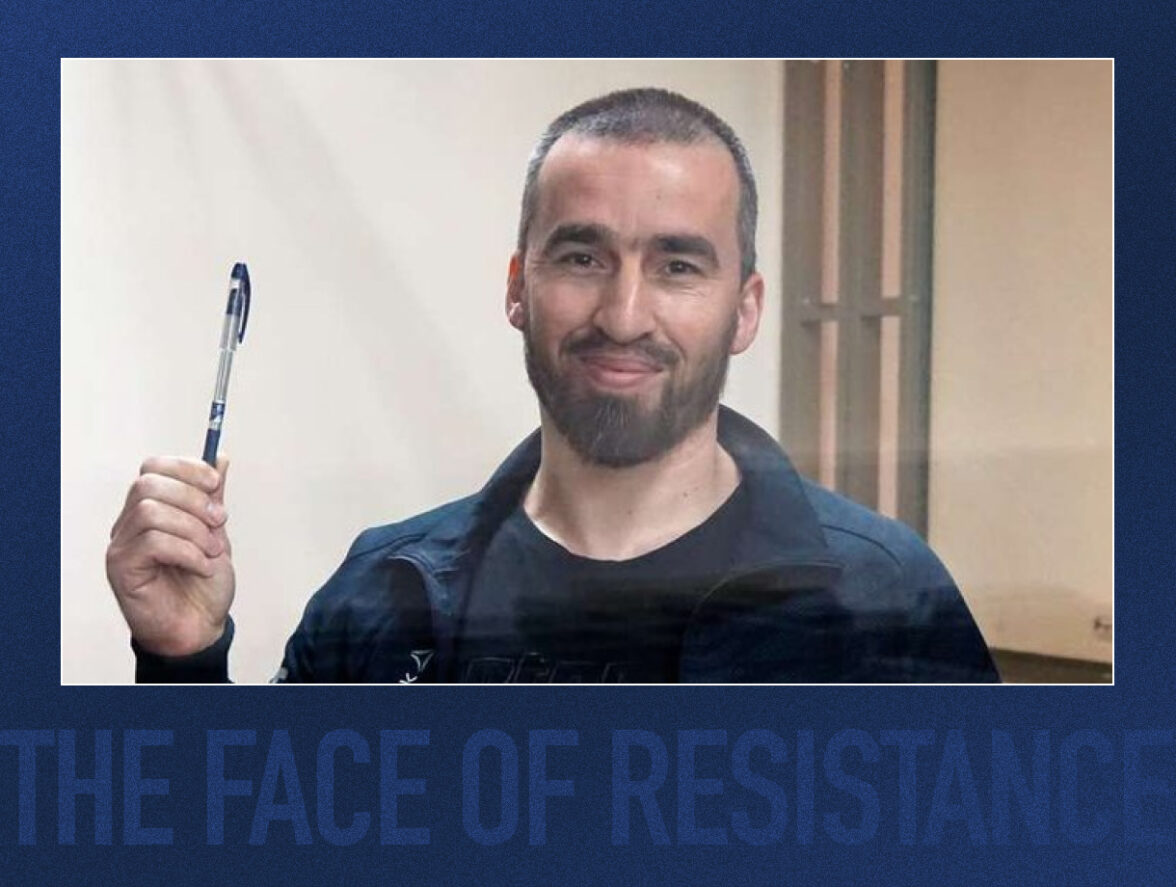
Life Before The Detention
Ayder Enverovich Dzhapparov was born on July 20, 1980, in Tashkent, Uzbekistan. After his family returned to Crimea from deportation, he graduated from Zui Secondary School in 1997. Having obtained vocational training as a cook and earned a red diploma, he continued his studies—first at a theological seminary and later in Lebanon at Al-Jinan University, where he studied Arabic language, literature, and Islamic education.
After returning to Crimea, Ayder worked as an engineer and installer in the fields of energy, heating, ventilation, water supply, and air conditioning. He was a certified specialist in Protherm, Vaillant, Danfoss, Grundfos, and other systems. Colleagues regarded him as one of the best engineers in the Bilohirsk district.
Alongside his professional career, Ayder was actively involved in community life. He organized Quran reading lessons for children and adults, assisted in the construction and maintenance of mosques, filmed religious celebrations, supported the families of political prisoners, and attended the occupiers’ unlawful “court” hearings against Crimean Muslims. His efforts were dedicated to preserving the faith, culture, and solidarity of the Crimean Tatar people.
In 2003, he married his wife, Marharyta, and together they raised eight children.
Persecution
After the occupation of Crimea in 2014, Ayder became a constant target of pressure from the occupation authorities. Every year, district police officers visited his home for “inspections.” In 2015, the police raided his house without warning, when only his wife and young children were present. A year before his arrest, he was placed under systematic surveillance—especially during evening and nighttime hours.
On June 10, 2019, following mass raids on the homes of Crimean Tatars in Bilohirsk, Simferopol district, Ayder Dzhapparov was detained by Russian security forces. Along with him, Enver and Riza Omerov were also arrested. In January 2021, the Southern District Military Court in Rostov-on-Don found them guilty of “terrorist activity” on fabricated charges. Enver Omerov was sentenced to 18 years in prison, Riza Omerov to 13 years, and Ayder Dzhapparov to 17 years in a maximum-security penal colony.
On March 10, 2022, the appeals court in Vlasikha, Moscow region, Russia, upheld the sentence, and in November 2023, the cassation court confirmed it. Human rights organizations and the European Parliament recognized Dzhapparov as a political prisoner and called for his immediate release.
Behind The Bars
Following his conviction, Ayder Dzhapparov spent three years in the detention center of Verkhneuralsk, Chelyabinsk region, Russia. The prison administration repeatedly delayed his transfer to the penal colony, even though the pre-trial detention period had already expired. Only two years later, in 2024, he was transferred to Correctional Colony No. 5 in the city of Koryazhma, Arkhangelsk region.
In February 2024, tragedy struck the Dzhapparov family — their 13-year-old son, Abdullah, passed away from cancer. Due to his unlawful sentence, Ayder was unable to say goodbye to his son or attend the funeral.
Despite years of imprisonment, isolation, the loss of his child, and the distance from his family, Ayder Dzhapparov remains steadfast in his beliefs. His resilience and dignity have become a symbol of the Crimean Tatars’ unbroken spirit in the face of repression.