21 November 2025
The Face of Resistance: The Story of Crimean Tatar Activist Rinat Aliyev
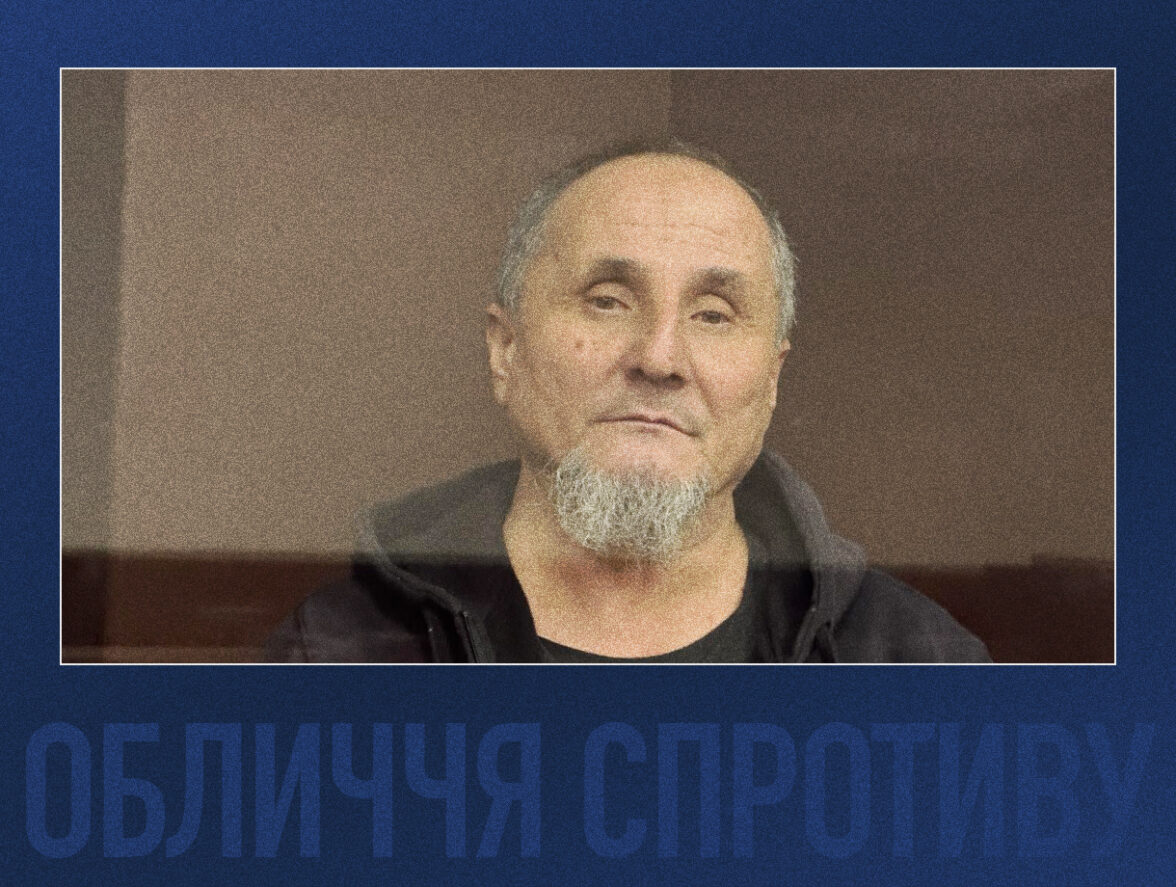
Life before the detention
Rinat Ablyatifovich Aliyev was born on 16 January 1964 at the Karshi station in Uzbekistan. In 1971, the Aliyev family moved to the city of Krymsk in Russia’s Krasnodar Krai, where he started the first grade. After completing the eighth grade, Rinat Aliyev enrolled in the Crimean Vocational School. At the age of 18, he was drafted into the army. Following his military service, he worked as a mechanic in Novorossiysk.
Later, Aliyev returned to Crimea and settled in Yalta, where he conducted tourist trips to the summit of the Crimean Mountains, Ai-Petri.
Persecution
On 11 August 2022, mass searches were carried out in Dzhankoi and the Dzhankoi district of Crimea targeting Crimean Tatar Muslim activists. As a result of the searches, six people were detained — Rinat Aliyev, activist Enver Krosh, civic journalist Vilen Temeryanov, and Crimean Muslims Murat Mustafayev, Seitya Abbozov, and Edem Bekirov.
The occupiers accused them in the so-called “Crimean Muslims case.” The primary “evidence” in the illegal criminal case against Rinat Aliyev and the other detainees consisted of an audio recording of their conversation in a mosque from 2015 and literature seized during the searches.
On 12 August 2022, the first court hearings took place, conducted in a closed session that excluded relatives of the detainees and journalists. At that time, Rinat Aliyev and the other detainees were placed in pre-trial detention.
Behind the bars
Since his illegal detention, Rinat Aliyev has spent three years in pre-trial detention at the detention facility in Rostov-on-Don, Russia, along with the other detainees, while lawyers have been challenging the charges against them.
In February 2025, the defendants submitted to the Russian Investigative Committee the results of an independent examination, which confirmed that the books seized from the detainees during the searches did not bear their fingerprints. This directly indicates that the literature had been planted on the political prisoners. However, the Russian judge refused to accept the motion and did not include the expert report in the case.
In the summer of 2025, several stages of court proceedings took place, during which the detainees, including Rinat Aliyev, and their lawyers testified about violations during the searches, the investigation, and the court proceedings. Nevertheless, the judge refused to consider this testimony, and the prosecutor demanded that the activists be sentenced to imprisonment in a maximum-security penal colony. For Rinat Aliyev, the prosecutor requested a 15-year prison sentence.
Since the occupation of the peninsula, Russia has systematically detained Crimean Tatars and Ukrainians on political grounds, seeking to erase their identity and transform multicultural Crimea into a space of total Russian control.