16 May 2025
The Face of Resistance: The Story of Crimean Tatar Activist: Yashar Shykhametov
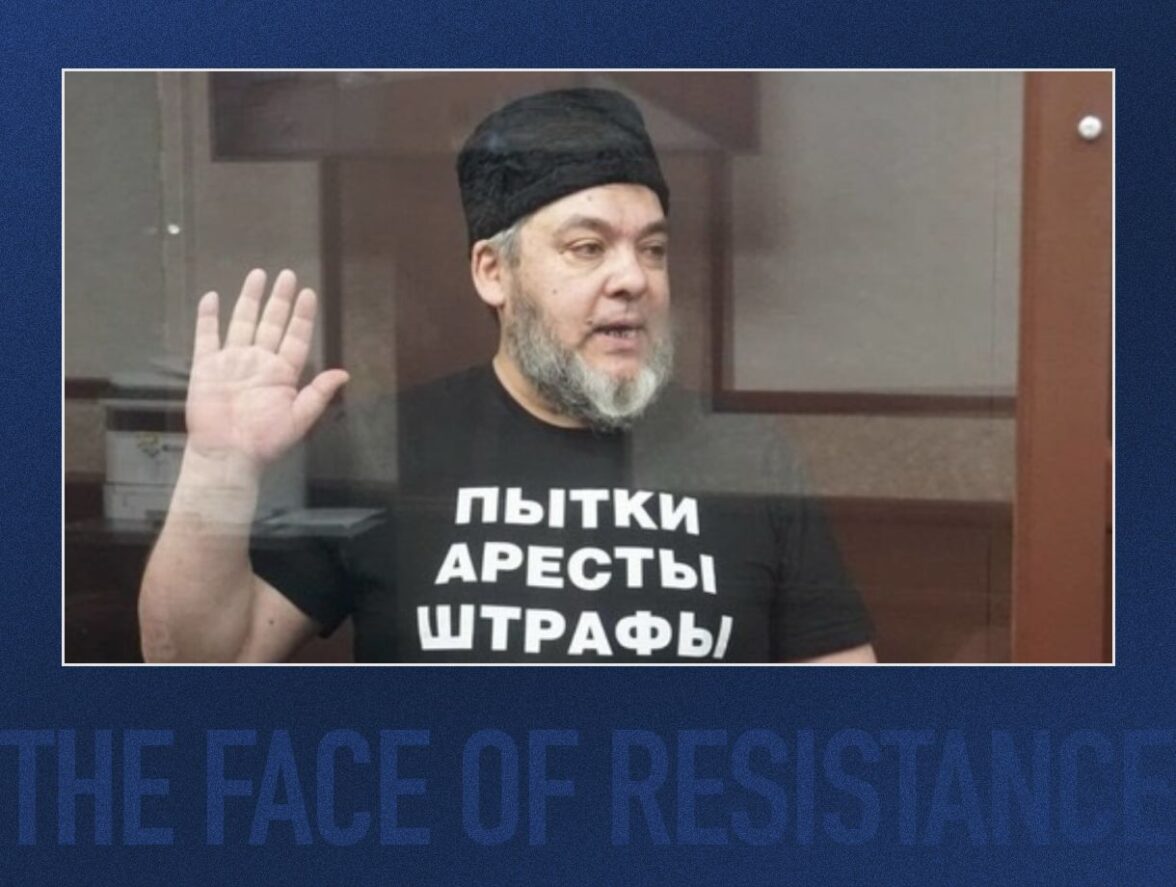
Life before the detention
Yashar Shykhametov was born on 23 June 1970 in the city of Andijan, Fergana region, Uzbekistan, to a family of Crimean Tatars who had been deported from Crimea as a result of the genocidal policies of the Soviet regime in 1944. At an early age, he was orphaned and raised in an orphanage in the city of Namangan. There, he completed nine years of schooling before enrolling in a trade college and working in the retail sector.
In 1998, Yashar married Liliia Shykhametova, and the couple has three children.
In 2006, Yashar returned to Crimea, settling in Sevastopol. The following year, he brought his family to join him.
Persecution
On 17 February 2021, mass searches were carried out across various districts of temporarily occupied Crimea, including Simferopol, Bakhchysarai, Sevastopol, Bilohirsk, and the Feodosiia district. That day, six Crimean Tatars were detained, among them Yashar Shykhametov, along with Azamat Eiupov, Tymur Yalkabov, Lenur Seidametov, Ernest Ibrahimov, and Oleh Fedorov. All detainees were taken by Russian FSB operatives to the FSB office in Simferopol.
On 9 February 2022, a court in Rostov-on-Don, Russia, delivered a guilty verdict against Yashar Shykhametov, sentencing him to 11 years in prison, with the first 4 years to be served in a high-security penal colony.
Behind the bars
In December 2023, the Military Court of Appeal in Vlasikha, Moscow region (Russian Federation), upheld the verdict against Yashar Shykhametov. Due to severe back problems, he had to be carried into the courtroom on a stretcher. During the hearing, he also complained of chest and kidney pain, as well as hearing problems, which made it impossible for him to fully participate in the legal proceedings.
On 9 September 2024, the Supreme Court of the Russian Federation, during the cassation stage, upheld the unlawful sentence against the Crimean Tatar activist.
Yashar Shykhametov is currently held at the Penal Facility in Balashov, Saratov region, located more than 1,000 km from Crimea.
Due to his age, chronic illnesses, and inhumane detention conditions, his health continues to deteriorate. On 22 April 2025, following a sharp decline in his condition, he was transferred to the prison hospital.