25 October 2025
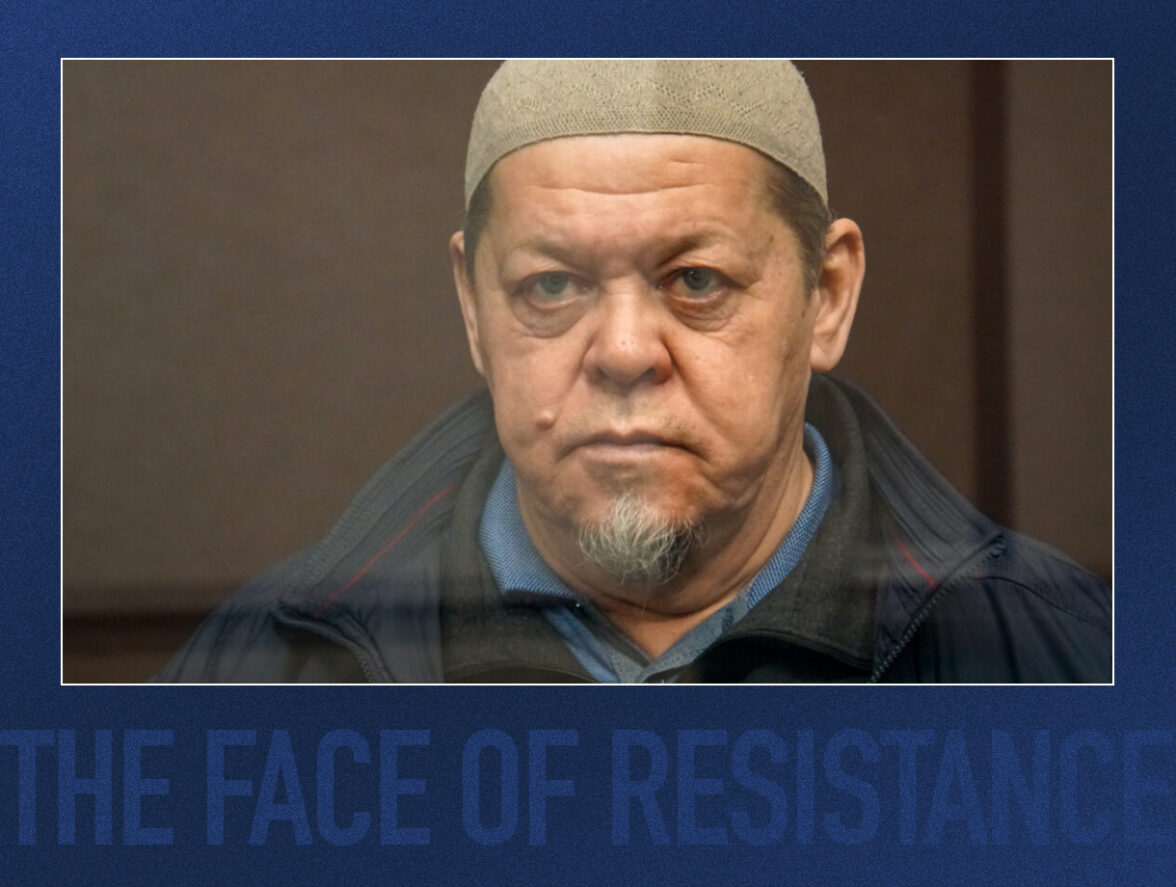
Face of Resistance: The Story of Crimean Tatar Activist Zekirya Muratov
Life Before The Detention
Zekirya Saitovich Muratov was born on June 28, 1957, in the settlement of Pivdenny Alamyshyk, Uzbekistan. Like thousands of other Crimean Tatars, the Muratov family endured deportation by the Soviet totalitarian regime. After completing eight years of secondary school, he obtained a musical education in clarinet performance and later entered the Andijan Music College.
Upon graduation, he was drafted into the army, where he served in a reconnaissance platoon in Krasnoyarsk Krai. During military training in extreme frost, when temperatures dropped to –53°C, he suffered severe frostbite that led to muscle atrophy in his legs. After a long period of treatment at an Interior Ministry hospital, he was discharged from military service due to health reasons in March 1978.
After returning from the army, he entered the Tashkent State Conservatory. In 1982, he married, and the couple had two children — a son and a daughter. Following his studies, he worked as a wind orchestra musician at the Akhunbayev Theatre in Andijan.
In 1989, the Muratov family returned to Crimea and settled in the village of Horikhivka, Kirovskyi district. Due to bureaucratic obstacles with residence registration for Crimean Tatars, Zekirya had to take a job as a tractor driver at a collective farm to register in his own home. Later, he qualified as a third-class film projectionist, and in 1990 he became a clarinet instructor at a music school in the town of Kirovske.
In 2006, he moved to Alushta, where he remarried.
Persecution
After Russia’s occupation of Crimea, Zekirya Muratov actively supported persecuted Crimean Tatars, attended court hearings, assisted the families of political prisoners, and delivered humanitarian packages to detention centers. His human rights activism made him a target for the occupying authorities.
On July 7, 2020, during another wave of unlawful mass searches across Crimea, security forces of the occupation administration detained seven Crimean Tatars. The occupation “court” in Simferopol imposed pre-trial detention on six of them. Among those arrested were Ismet Ibragimov, Zekirya Muratov, Vadym Bektemirov, Emil Ziyadinov, Alim Sufianov, and Seyran Khayreddinov.
In the summer of 2021, while held in a pre-trial detention center, Muratov contracted COVID-19. In serious condition, he was transferred to the prison hospital MOTB-19 in Rostov-on-Don, Russia, with a diagnosis of bilateral pneumonia, with 50% lung damage. Later, in March 2022, he suffered a hypertensive crisis.
Behind The Bars
On February 11, 2022, a court in Rostov-on-Don sentenced Zekirya Muratov to 11 years and 6 months in a strict-regime penal colony.
On September 6, 2022, the Military Court of Appeal in the town of Vlasikha, Moscow Region, upheld the verdict, and on July 11, 2023, the Cassation Court confirmed the final ruling against the political prisoner, who has a third-degree disability.
Following the final court decision, Muratov was transferred from the Balashov prison in Russia’s Saratov Region to Correctional Colony No. 5 in Nizhny Novgorod.
Despite his severe health conditions, disability, and age, Zekirya Muratov remains a symbol of unbroken spirit — a man who has not yielded under the pressure of the occupiers and continues to defend his dignity even in inhumane conditions.