22 November 2024
Panel 5: Russian propaganda narratives in different parts of the world. How it influences the perception of Ukraine and in particular Crimea
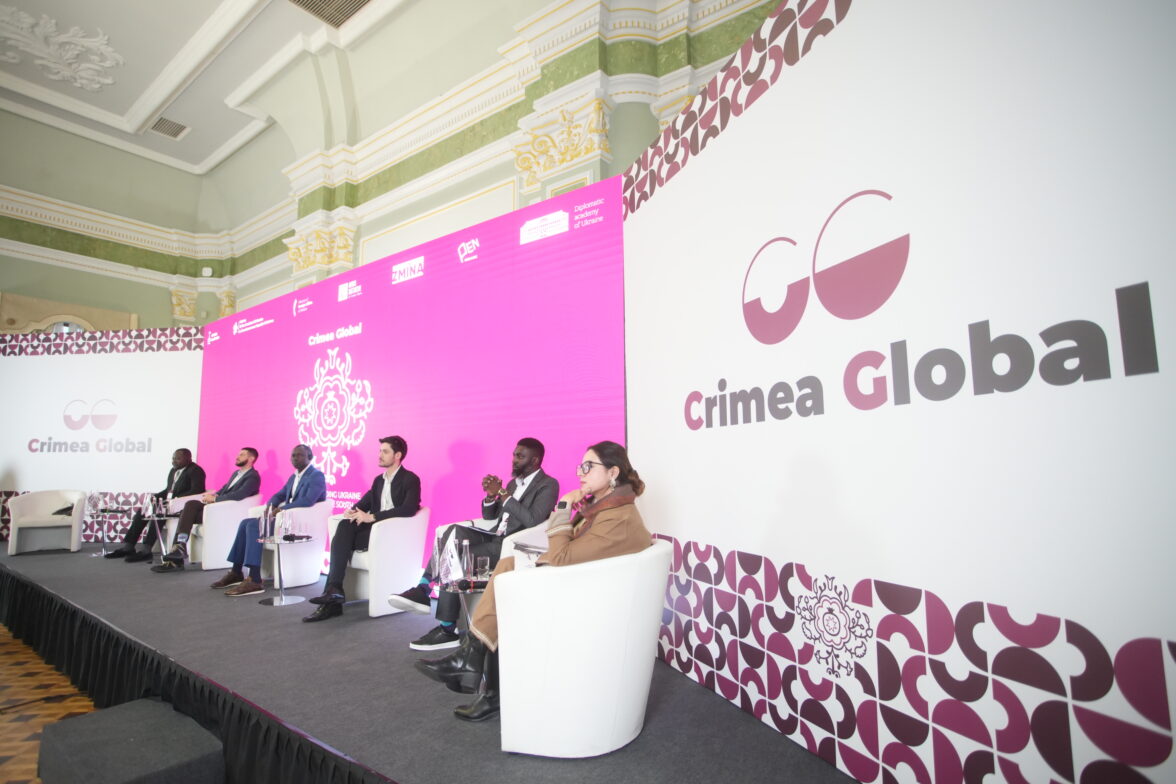
As part of the Second International Conference Crimea Global. Understanding Ukraine through the South, the fifth panel discussion, titled “Russian Propaganda Narratives Across Different Parts of the World: How It Influences the Perceptions of Ukraine and in particular Crimea,” took place.
The panel discussion featured: Alim Aliev, Deputy Director of the Ukrainian Institute; Uriã Fancelli, International Political Analyst and Author, Political Commentator for CNN Portugal, Brazil; Hannia Novell, a Mexican journalist with outlets including El Tepeyac, Claustro de Sor Juana, and Del Valle de México, and a documentary producer; Brian Oruta, Senior Digital Reporter for The Star newspaper, Kenya; Dr. Swasti Rao, Fellow at the Europe and Eurasia Centre, Manohar Parrikar Institute for Defense Studies and Analyses, India; Thierno Amadou Camara, Publishing Director of Guinée114 from Guinea and author of a book on Russia’s war against Ukraine; and Raymond Acquah, Research Director at Multimedia Group Limited, Ghana. The discussion was moderated by Tetiana Pechonchyk, Chair of the Board at the ZMINA Human Rights Center.
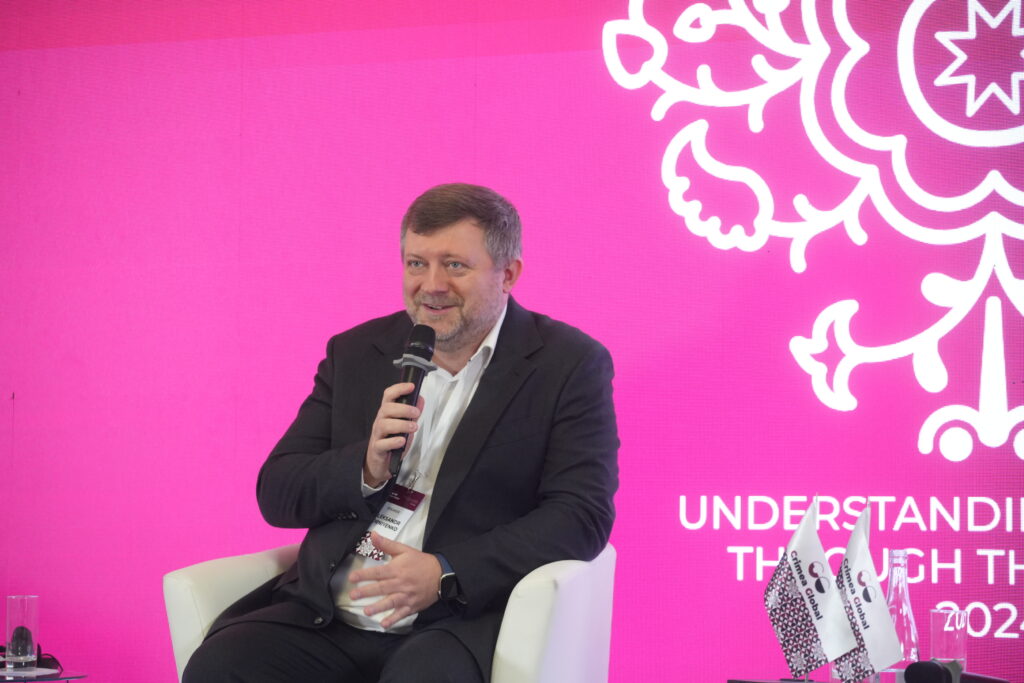
Before the discussion began, Oleksandr Korniienko, First Deputy Chairman of the Verkhovna Rada of Ukraine, delivered a speech:
“It is essential for us to establish and strengthen ties, particularly at the interparliamentary level, with countries of the non-Western world. We have initiated a new strategy and are committed to continuing it. While we lack the resources to engage with the entire world, we do have proposals for many regions. I believe that in the coming years, we will establish more connections and work on many platforms. Thank you for maintaining attention on our country, and for the world’s willingness to know the truth,” emphasized Oleksandr Korniienko.
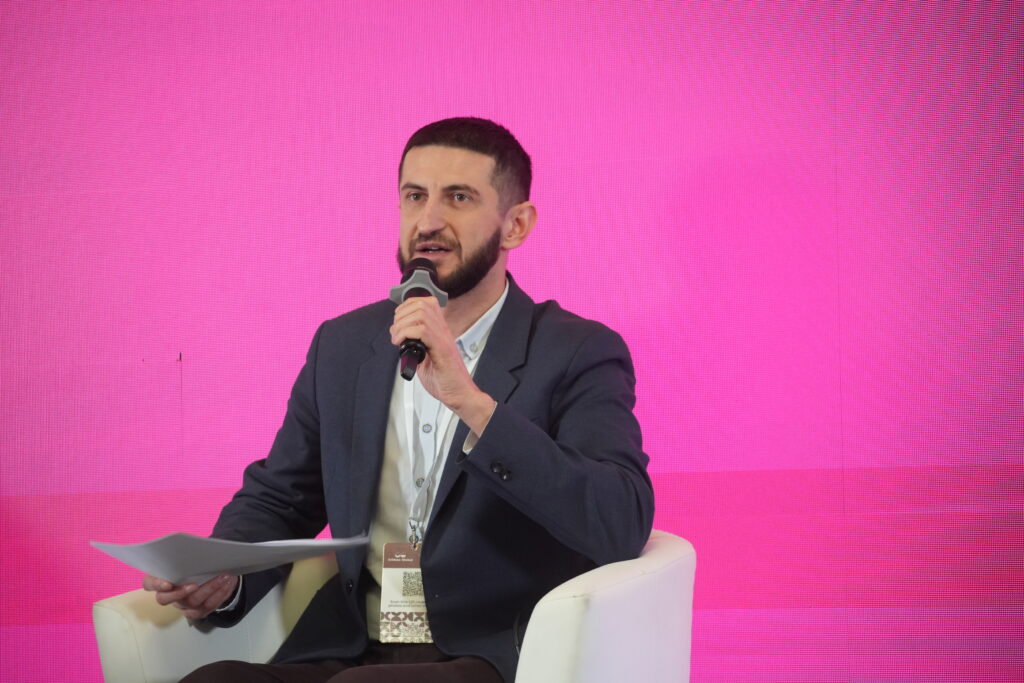
At the start of the discussion, Alim Aliev highlighted the importance of the conference’s context against the backdrop of Ukraine’s engagement with Asia, Africa, and Latin America. He drew attention to the narratives propagated by Russian propaganda in these regions:
“First, there is the claim of so-called anti-Western sentiment in Crimea. Russia portrays the occupation of Crimea as the will of the so-called ‘people of Crimea,’ framing it as an ‘act of self-determination,’ while drawing parallels with anti-colonial movements in African countries. As a representative of Ukraine’s Indigenous People, I can affirm that what is happening in Crimea now is its recolonization, with Russia acting as an imperial power. In its narratives, Russia tries to deny this by presenting itself as an anti-colonial state. Additionally, it attempts to frame the occupation of Crimea not as an international crime but as an internal matter,” said Alim Aliev.
Alim Aliev also emphasized the importance of joint projects between Ukraine and countries in Asia, Africa, North, and Central America. These initiatives include projects addressing ecological issues, multiculturalism, the Crimean Tatars as Ukraine’s Indigenous People, and the plight of Ukrainian children abducted by Russia. Additionally, he stressed the significance of decolonizing knowledge about Ukraine to reshape the global perception of the country, so it is not viewed through the lens of Russia.
Raymond Aqua, a representative from Ghana, noted that the war in Ukraine directly affects the situation in Ghana by increasing food prices:
“Russia spread the narrative in Ghana that the people of Crimea were fighting for independence from Ukraine and that Russia was helping them, which resonated with Ghana’s history of fighting colonialism. Another narrative was that the Russia-Ukraine war is a ‘private matter between relatives,’ and we should not intervene in their relations. We lived with this narrative until our president presented a different view. There was also an anti-Western Russian stance suggesting that Africa should support this position and the ‘reunification’ of the Ukrainian people with Russia. Now, we know the truth about Ukraine and see how much falsehood existed in Russian narratives. However, many people in Ghana still believe Russian propaganda,” said Raymond Aqua.
Thierno Amadou Camara, a representative from Guinea, spoke about his book on Russia’s war against Ukraine:
“We saw that Russia’s aggression in Ukraine also concerns Africa. It is reminiscent of what we experienced in the 1960s when many of us took up arms and fought for independence. In Africa, Ukraine’s fight for independence is well understood. We realize how important it is to make diplomatic efforts and to fight for peace with the help of the international community,” said Thierno Amadou Camara.
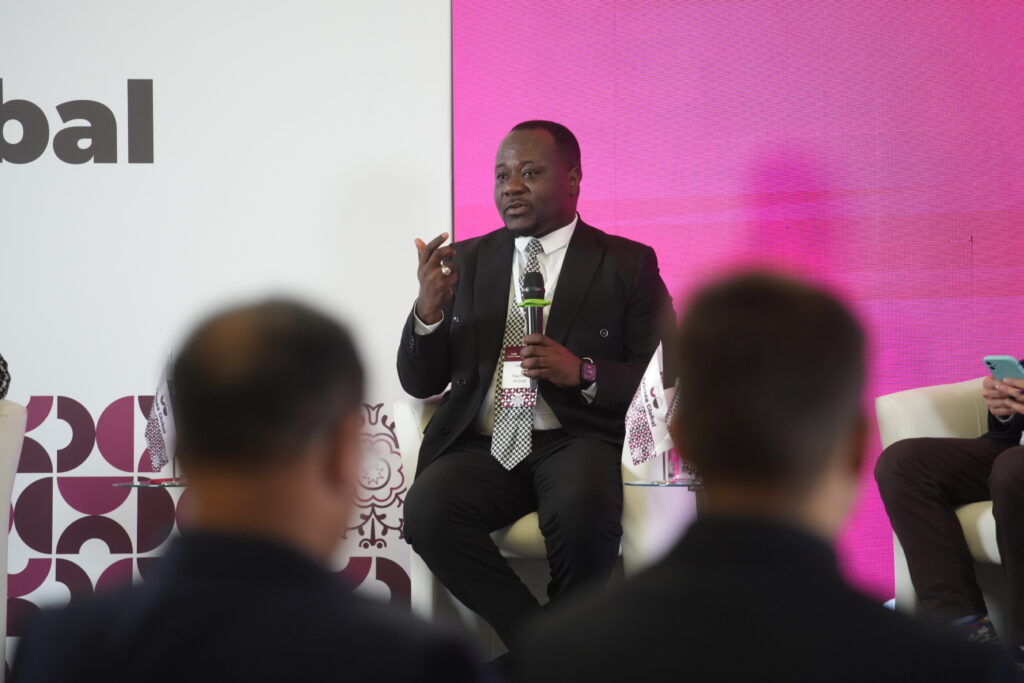
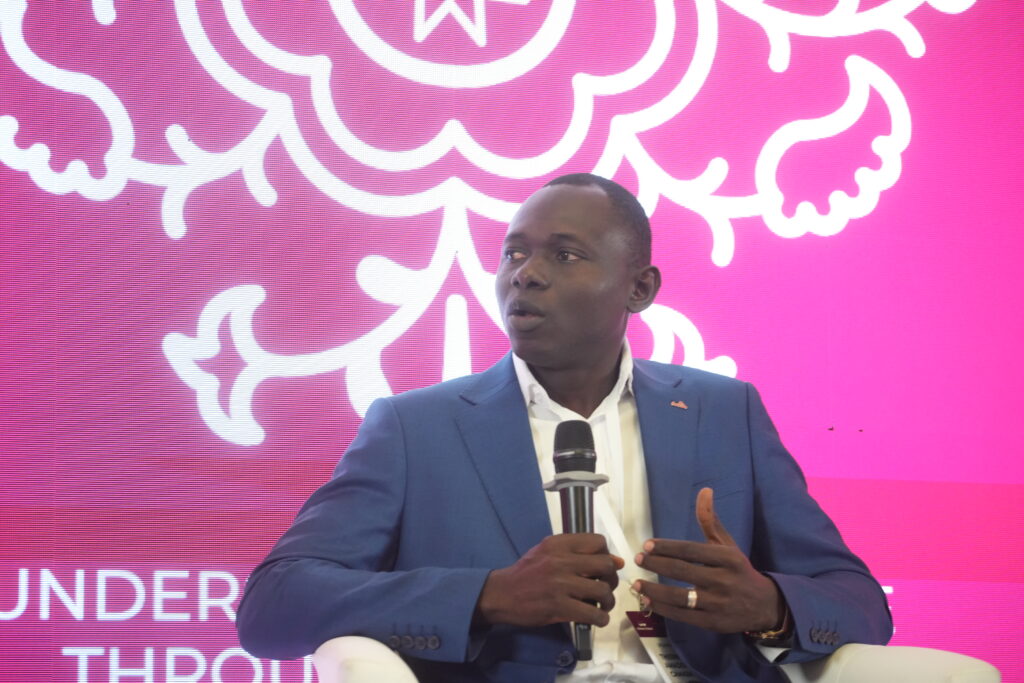
Kenyan representative Brian Oruta emphasized that Russia continues to find new ways to spread its propaganda, often targeting psychological influence: “In our country, the Russians recently invited four thousand students to study the Russian language, and this is being done to later disseminate their narratives through them,” noted Brian Oruta.
“I can read some headlines: ‘Russia will do everything to win,’ ‘Ukraine might lose,’ ‘Russia has the right to strike military facilities,’ and so on. These are headlines from a major Brazilian website, which republishes news from Russia’s Sputnik. This shows how deeply Russian propaganda has infiltrated Brazilian media,” said Uriã Fancelli. He also pointed out that Russia communicates with both political factions in Brazil and exploits this polarization to its advantage. He stressed that equal platforms should not be given to both the aggressor and the victim, as the truth lies on one side, and Ukraine needs greater attention in this war.
“In my state, there are over 15,000 descendants of Ukrainian immigrants—why not mobilize these people to spread Ukrainian narratives? Ukraine must maintain a connection with Brazil because Russia is already doing so,” added Uriã Fancelli.
Indian representative Swasti Rao underscored that the first casualty of Russia’s aggression in Ukraine was the truth, as Russian propaganda distorts reality.
“The same applies to my country, where news from Russia’s Sputnik is often reposted. My experience with Russian propaganda is similar to that of people from other countries. One Russian narrative is that Russia is a victim, Ukrainians are their ‘cousins,’ and Russia simply wants to reunite with its ‘brothers,’ while the West opposes it. Another claim is that Russia’s economy is thriving—although I have personally researched this, and most data is classified, which is telling. The Russian economy is in a deep crisis. Russia also asserts that Crimea has always been Russian, a narrative that finds success in India because Russia draws parallels to the history of Kashmir. These situations are entirely different, like comparing apples to oranges, but Russia uses this analogy to push its propaganda. Ukraine must counter this narrative and show that Crimea is nothing like Kashmir; they are fundamentally different,” said Swasti Rao, highlighting the importance of decolonizing knowledge about Ukraine.
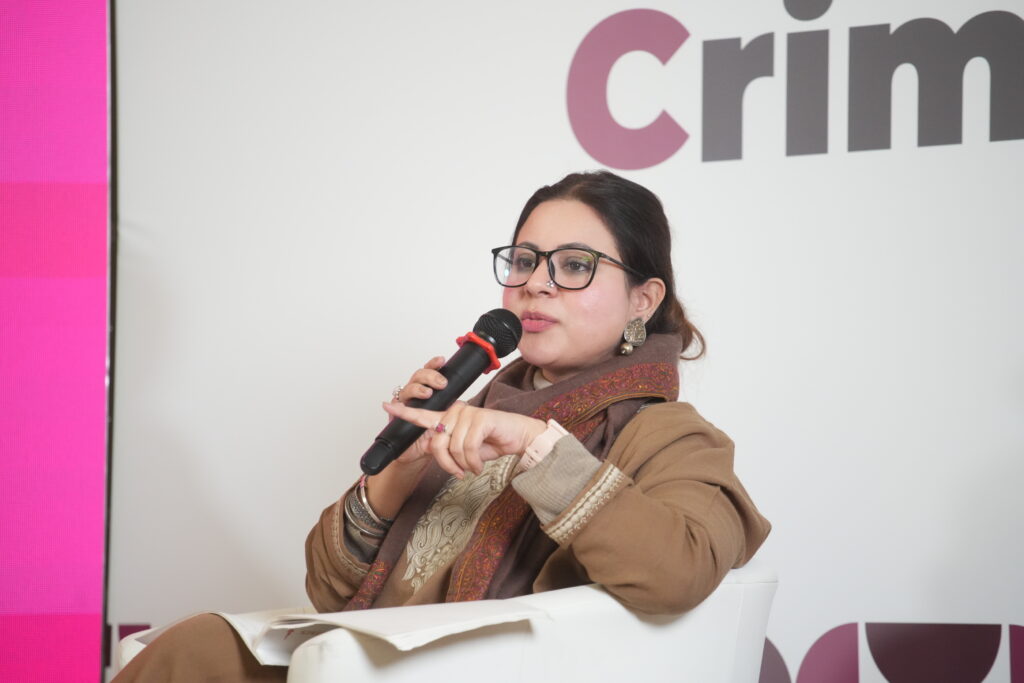
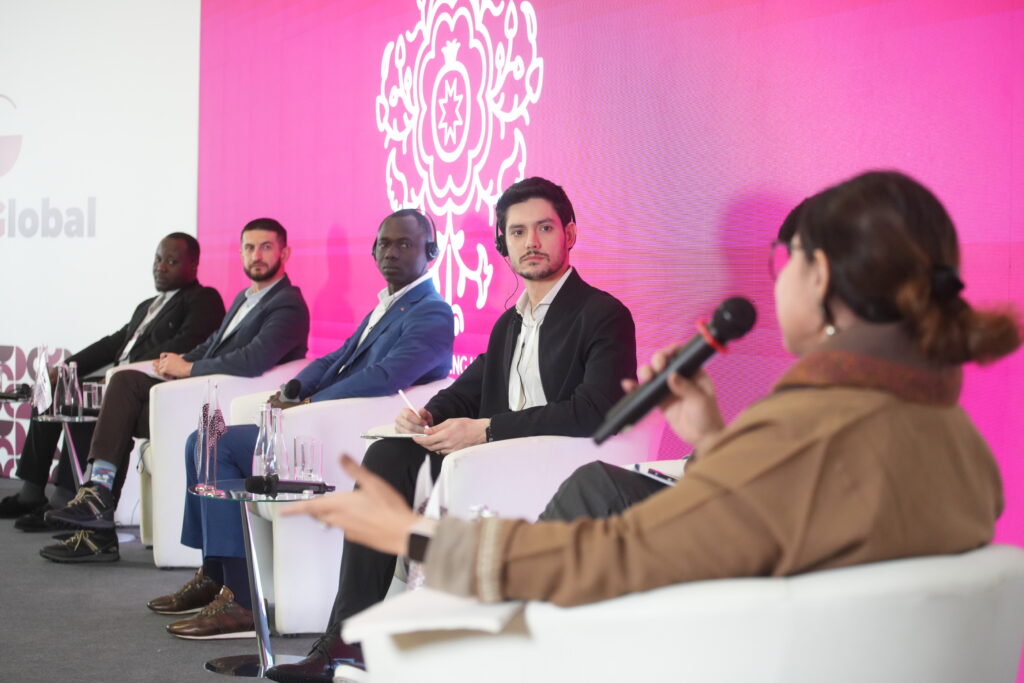
At the conclusion of the discussion, in response to questions from the audience, the speakers emphasized the need to consider how to change the global situation regarding Russian propaganda, particularly in countries traditionally within Russia’s sphere of influence. Alim Aliev highlighted that, unfortunately, Ukraine had not built strong relationships with countries in Asia, Africa, and Latin America over the past 30 years, but noted that this has been changing in recent years.
Thank you to the speakers for their participation in the discussion!
#CrimeaGlobal #CrimeaIsUkraine