26 February 2025
Panel 1: Resistance to Occupation: What Does It Look Like?
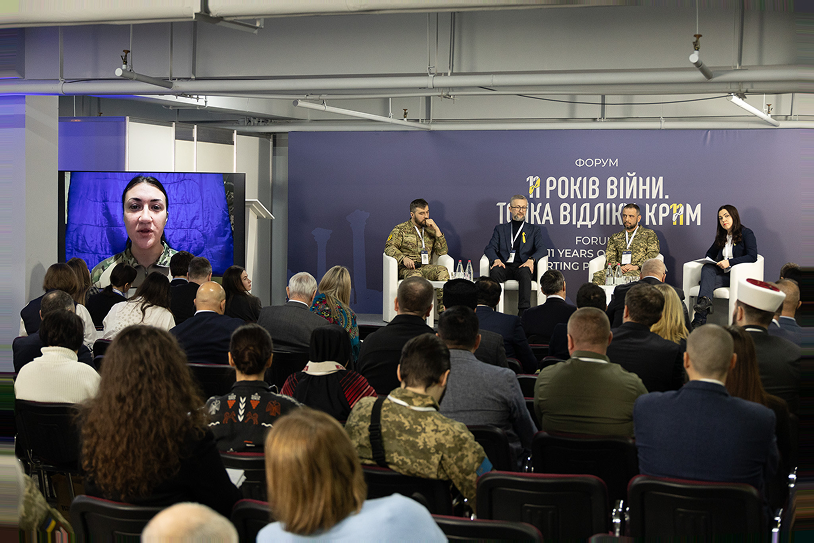
As part of the 11 Years of War. Starting Point: Crimea Forum, the first panel discussion, titled “Resistance to Occupation: What Does It Look Like?” was held.
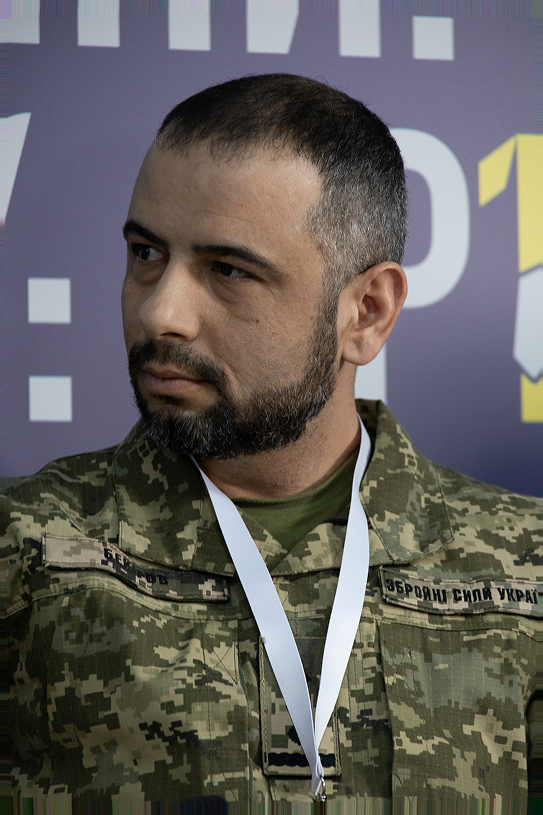
The discussion featured Nariman Dzhelyal, First Deputy Chairman of the Mejlis of the Crimean Tatar People; Ali Bekirov, Colonel of the Armed Forces of Ukraine and Advisor to the Minister of Defense of Ukraine; Khrystyna Krys, Senior Combat Medic of the 112th Territorial Defense Brigade; and Tetiana Pechonchyk, Head of the Board of the ZMINA Human Rights Center.
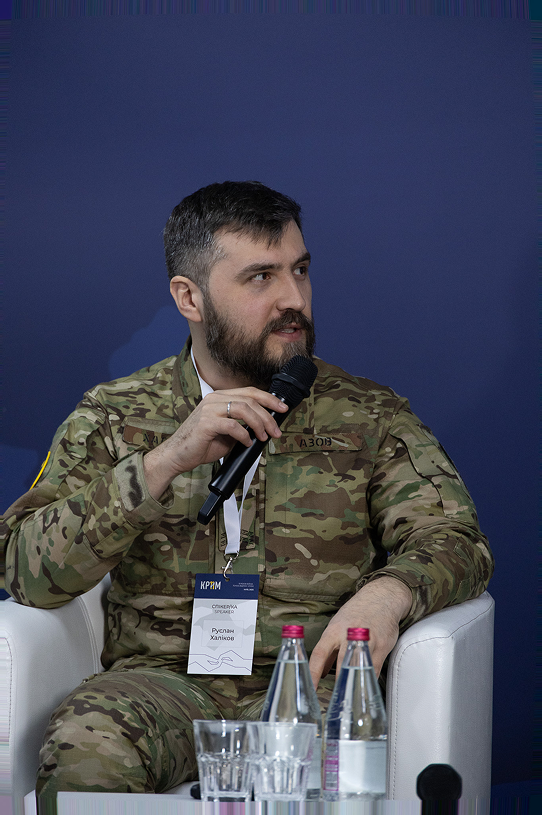
The panel discussion was moderated by Ruslan Khalikov, Head of the Religion on fire project, serviceman of the 12th Brigade of the National Guard of Ukraine Azov.
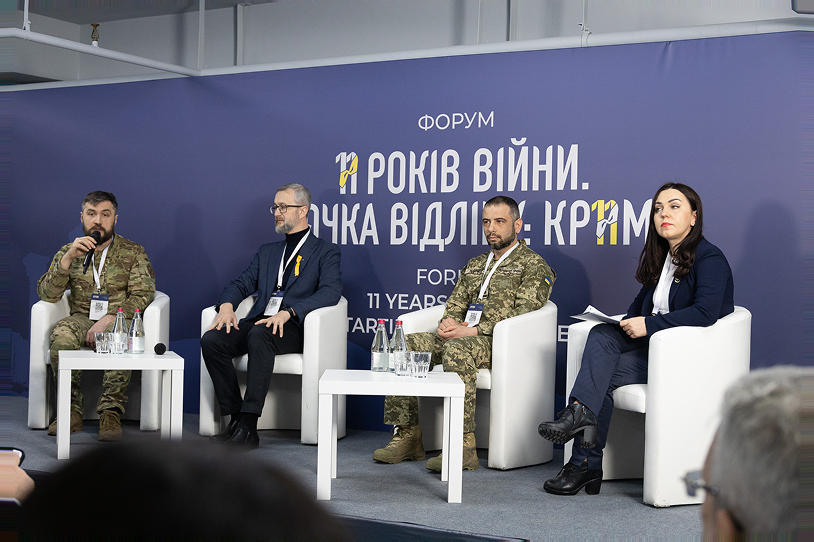
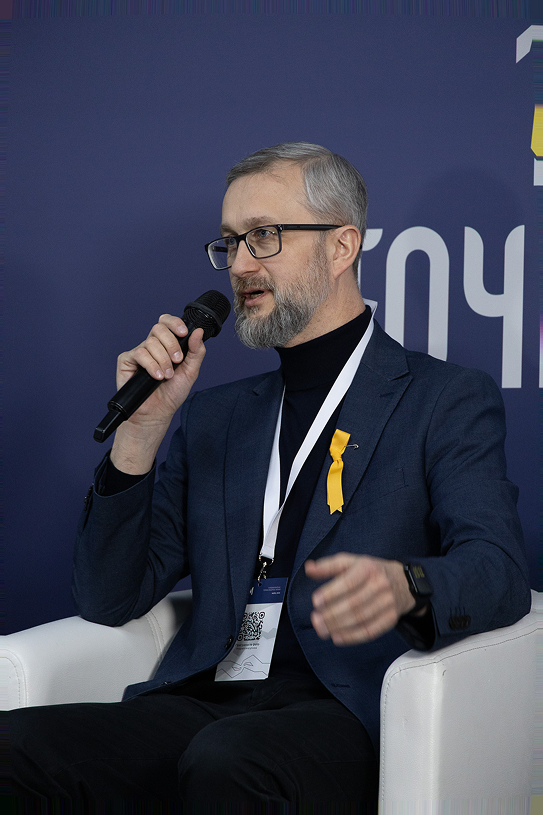
Nariman Dzhelyal spoke about his experience of imprisonment, emphasizing that his arrest was a direct consequence of his steadfast resistance against the occupiers. The First Deputy Chairman of the Mejlis of the Crimean Tatar People noted that in prison, he had to adapt to new conditions, endure severe psychological pressure, and, despite everything, find the strength to continue resisting.He highlighted that the key factor that helped him persevere was the awareness of the righteousness of his struggle and the support of people—this gave him the strength to make the right decisions, set priorities, and continue defending the truth even in captivity. Dzhelyal stressed that the fight for Crimea continues even behind bars, and many political prisoners, despite repression, remain unwavering in their resistance to the occupation.
Ali Bekirov emphasized that protecting the sovereignty and territorial integrity of the state is the duty of every citizen, regardless of nationality. He underscored that the ultimate goal of the struggle is to live in a Crimea free from occupation. Bekirov highlighted that since the start of the Anti-Terrorist Operation (ATO), Crimeans have actively joined the ranks of the Armed Forces of Ukraine, recognizing that the liberation of all temporarily occupied territories is a matter of security, independence, and freedom. According to him, the Crimean Tatars and all Ukrainians fight is aimed at expelling the enemy from Ukrainian territory, fully restoring sovereignty, and ensuring that those responsible for crimes against civilians and war crimes are held accountable.
During her speech, Kristyna Krys shared her personal motivation for resistance, emphasizing that for her, true victory is not only about liberating the temporarily occupied territories but also about ensuring a future of free and peaceful life. She highlighted the importance of support within the community, emphasizing that meeting with fellow Crimeans, mutual encouragement, and a shared goal—Crimea’s liberation—are crucial driving forces.
“We may not know each other closely, but the spirit and motivation that we come from occupied Crimea and must fight for its liberation unite us. Perhaps this is what drives us. It is what has kept me in the military for four years since the full-scale invasion began—not only to one day live in a liberated Crimea but to be part of its liberation,” concluded Kristyna Krys, Senior Combat Medic of the 112th Territorial Defense Brigade.
Tetiana Pechonchyk, Head of the Board of the ZMINA Human Rights Center, emphasized the alarming state of human rights in Crimea. She highlighted that since the beginning of the occupation, the practice of enforced disappearances has been systematically used against “disloyal” citizens, with a worrying trend of normalization over the past three years. Every year, dozens of such cases are documented, and those who manage to return report brutal torture and harsh interrogations. She also pointed out that many political prisoners do not live to see their release due to old age, severe health issues, and the consequences of inhumane treatment.