17 November 2025
First Panel Discussion “Ukraine and the Global World: Successful Practices and How to Scale Them” within the Third International Conference “Crimea Global”
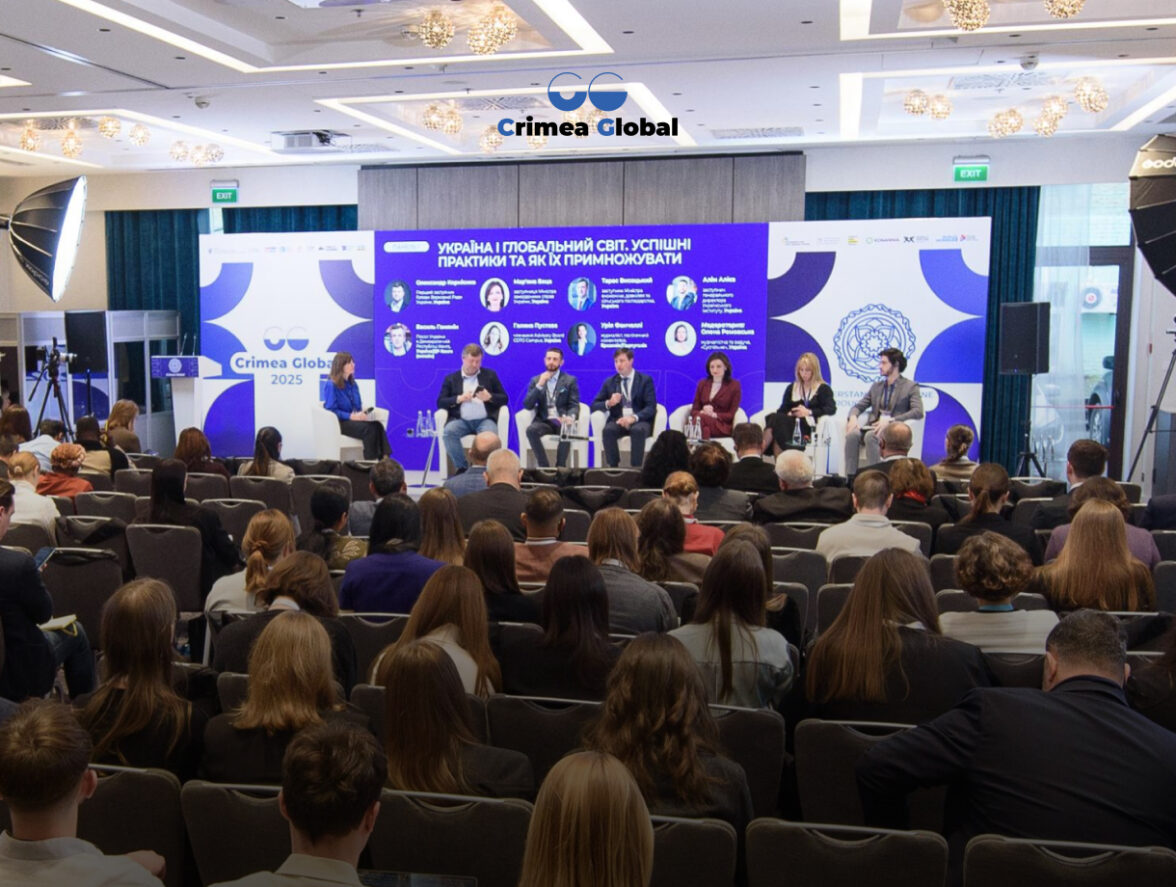
As part of the Third International Conference “Crimea Global. Understanding Ukraine through the South,” the first panel discussion — “Ukraine and the Global World: Successful Practices and How to Scale Them” — took place.
The panel featured: First Deputy Speaker of the Verkhovna Rada of Ukraine Oleksandr Korniyenko; Deputy Minister for Foreign Affairs of Ukraine Mariana Betsa; Deputy Director of the Ukrainian Institute Alim Aliev; Ambassador of Ukraine to the Democratic Republic of the Congo Vasyl Hamianin; Board Member and Director for Digital Transformation at Campus Galyna Pustova; Deputy Minister of Economy, Environment and Agriculture Taras Vysotskyi; and CNN Portugal commentator Uriã Fancelli.
The discussion was moderated by Olena Removska, journalist and presenter at Suspilne.
In his remarks, Oleksandr Korniiyenko thanked international guests for coming to Ukraine despite ongoing shelling and electricity outages, emphasizing the importance of discussing the strategy for Crimea’s liberation. He also noted that comparing the war in Ukraine to conflicts in Africa is often inappropriate; however, it is essential for Ukraine to highlight the anti-colonial nature of Russia’s aggression, which resonates strongly with many African and Latin American countries.
“The war began with Crimea and must end with Crimea’s return under Ukrainian control. We are working to ensure that, in the parliamentary dimension, Ukraine does not limit its engagement to EU countries alone but communicates the truth more broadly. An important component for us is cooperation with the Muslim world, as we understand that the cultural consequences of Russia’s occupation of Crimea affect the entire global community.”
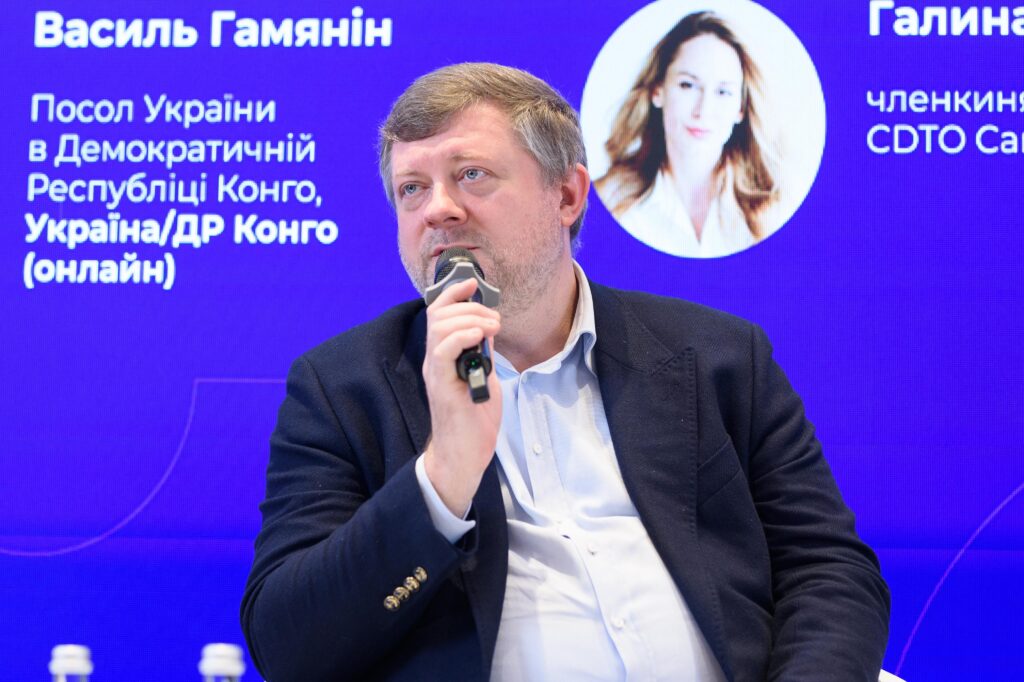
Mariana Betsa emphasized that Russia’s war against Ukraine is a war against the entire democratic world and against the principles of the UN Charter. She underlined that international unity remains the key tool for restraining the aggressor. Betsa noted that Ukraine is strengthening cooperation with countries in Asia, Africa, and Latin America — regions that are increasingly important to global security and often have their own histories of resisting colonialism. Despite the war, Ukraine has opened 10 new embassies in Africa — including in Mozambique, Botswana, Ghana, and Rwanda — expanding international support for Ukraine and increasing partnership opportunities.
“Russia may destroy the entire system of international law and the global security architecture. Despite the efforts of the international community, it has still not been held accountable. We are doing a great deal, yet the war continues.”
Alim Aliev stressed that the Ukrainian Institute works across three key pillars of cultural diplomacy — knowledge, connections, and co-creation. Together with partners and analytical centers, the Institute has presented studies on Mexico, Argentina, Brazil, Kenya, Nigeria, South Africa, India, and Indonesia to deepen understanding of key states with which Ukraine seeks long-term cooperation. He noted that engagement in these regions is aimed at building sustainable partnerships that gradually foster trust, and trust ultimately transforms into support for Ukraine on the international stage.
Vasyl Hamianin underlined that Kremlin propaganda continues to refine its methods of influencing societies, particularly young people. This year, Russia increased funding for scholarship programs for African students, using educational and allegedly humanitarian cooperation to promote pro-Kremlin narratives and expand political influence on the continent. He stressed the need for a creative and sensitive approach to building relations with each country individually, noting that partnership, resource diversification, and tailored engagement are the foundation of Ukraine’s practical cooperation with African states.
Halyna Pustova stated that digitalization is currently a top priority for Ukraine: state processes and legislation evolve daily, and high-tech solutions are actively applied in the defense sector and directly on the battlefield. She emphasized that Ukraine’s experience in digital transformation is valuable for other countries, as Ukraine can share its innovations and expertise with the world.
In his remarks, Uriã Fancelli emphasized that approaches to cooperation with Latin American and African countries must differ. The topic of colonialism, he noted, is significant for Russia, which actively exploits it; however, colonialism should not be the primary framework for Ukraine’s communication with these regions.
“One of the key points I want to stress is that colonialism may open the door, but it does not build long-term relationships. Ukraine must go beyond colonial narratives and demonstrate that pragmatic cooperation — in food security, defense, and other areas — is far more advantageous. The world needs to see clearly that not supporting Ukraine will cost them much more than supporting it.”
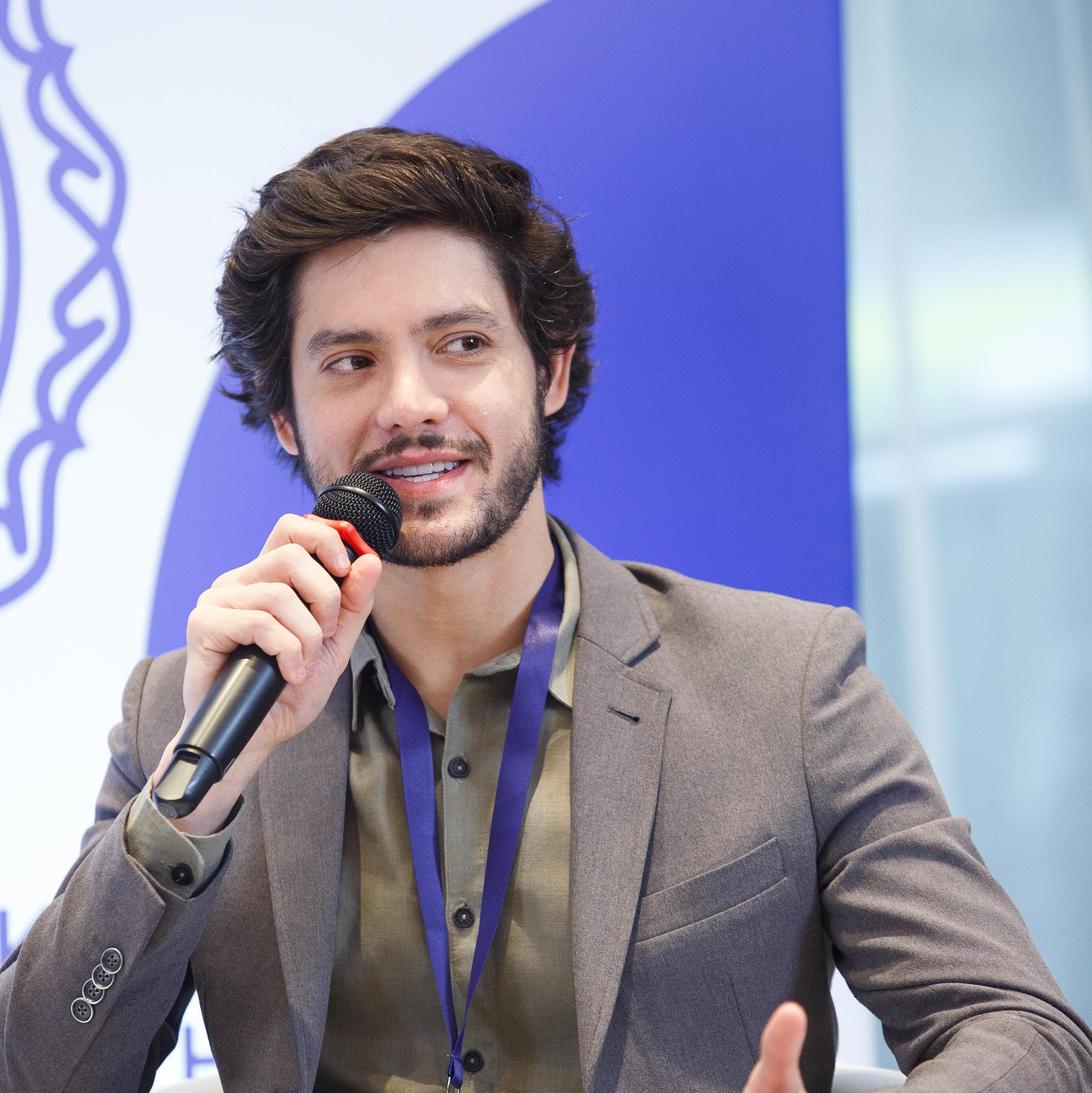
Taras Vysotskyi stressed that Ukraine is a traditionally export-oriented country and has long held a significant share in global humanitarian food production. Today, the loss of grain crops grown on temporarily occupied territories has a substantial impact on the global market, as many countries remain import-dependent. He also outlined the humanitarian initiatives “Grain from Ukraine” and “Food from Ukraine” — state programs delivering Ukrainian grain to famine-affected countries in Africa and Asia — as well as the work of a charitable foundation providing food assistance to vulnerable populations within Ukraine.