24 December 2024
The First Ukrainian-Crimean Treaty: An Alliance at the Crossroads of History
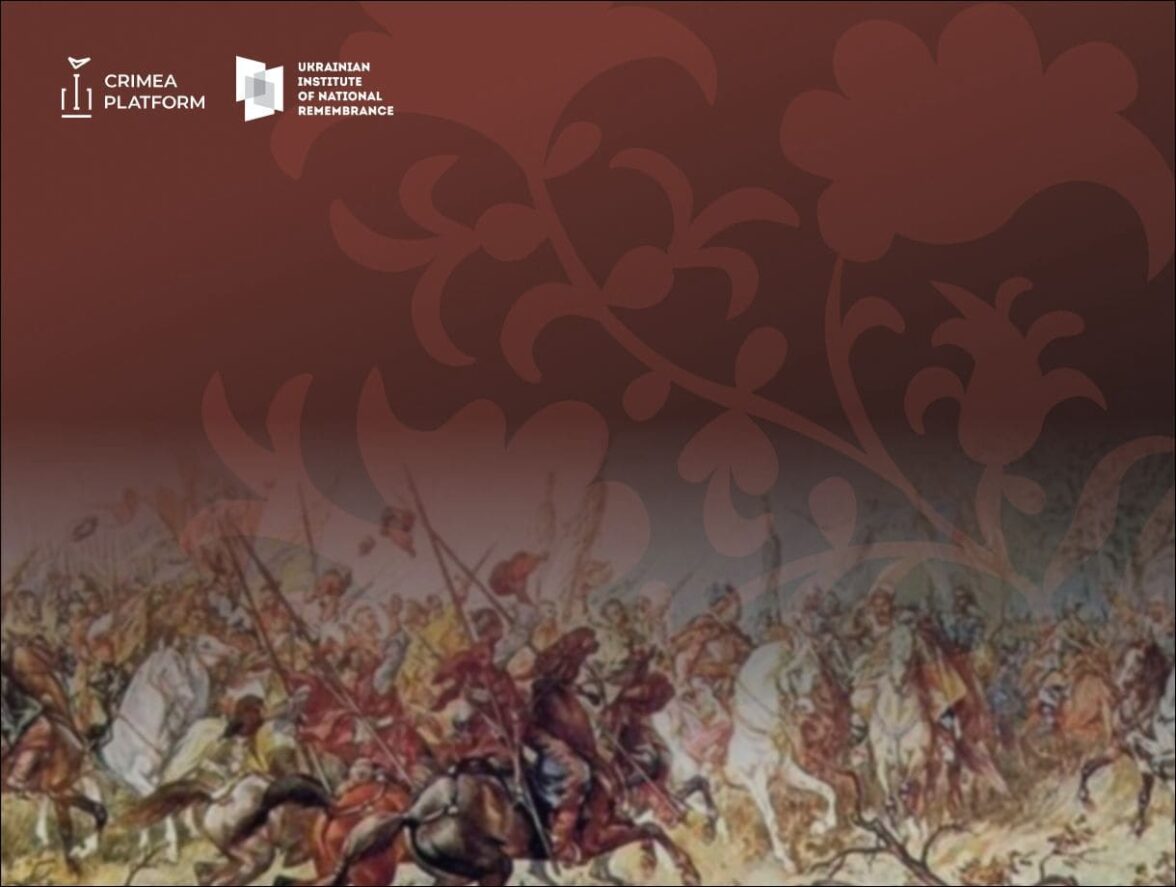
Myth: Ukrainian Cossacks and Crimean Tatars had exclusively hostile relations.
Truth: The relationship between Ukrainian Cossacks and Crimean Tatars was never limited to strict confrontation. Their shared border facilitated close interactions in various spheres, including instances where Cossacks settled in the Crimean Khanate and Crimean Tatars joined the Zaporozhian Host.
- On December 24, 1624, on the Dnipro island of Karayteben, a treaty was signed that became a defining moment in the history of Ukrainian-Crimean relations. On this day, Zaporizhzhian Hetman Mykhailo Doroshenko and the Crimean Kalga Sultan (the second-ranking figure after the Khan) Shahin Gerai signed the first known agreement on mutual non-aggression and a military-defensive alliance between the Zaporizhzhian Host and the Crimean Khanate.
2. This event marked the first attempt to formalize relations between the Cossacks and the Crimean Tatars, who, despite frequent military conflicts, viewed each other as potential allies in their struggle against powerful adversaries such as the Ottoman Empire, the Polish-Lithuanian Commonwealth, and the Tsardom of Moscow.
3. The groundwork for the treaty was laid in the summer of 1624. The Ottoman Empire sought to tighten its control over the Crimean Khanate by exploiting internal disputes among Crimean rulers. In this critical moment, Shahin Girai turned to the Zaporizhzhian Cossacks for assistance. The Ukrainian Cossacks, traditionally engaged in their own struggle for autonomy, saw this as an opportunity to weaken the Ottoman Empire’s influence along the Black Sea coast. Joint efforts by the Cossacks and Crimean Tatars halted the Ottoman incursion, and their naval campaigns even forced the Sultan to focus on defending Istanbul. However, for such alliances to endure, clear agreements were necessary.
4. The treaty signed at the end of the year included two key provisions: both parties committed to refraining from attacking one another and to punishing violators of the peace among their subjects. Additionally, they agreed to provide military assistance in the event of an attack on either side. It is noteworthy that the agreement was signed not by the Crimean Khan himself but by Kalga Sultan Shahin Girai, the Khan’s brother. This limited the treaty’s validity, making it dependent on Shahin Girai’s political status.
5. The significance of this agreement extended beyond purely military and political interests. Firstly, it marked the recognition of the Zaporizhzhian Host as a subject of international relations. Secondly, the treaty demonstrated that the Cossacks sought to secure autonomy not only through warfare but also through diplomacy. At the same time, this agreement initiated a tradition of alliances with the Crimean Khanate, which was later strengthened by Bohdan Khmelnytsky during the National Liberation War.
6. Reality, however, proved more complex. In the autumn of 1625, during Hetman Marko Zhmaylo’s uprising, the Cossacks, under pressure from Polish forces, did not receive the promised assistance from the Crimean Tatars due to internal political circumstances. This caused disappointment among the Cossacks but did not deter them from continuing cooperation in the future. In May 1628, adhering to the terms of the treaty, Mykhailo Doroshenko led a campaign into Crimea to assist Mehmed III Girai and Shahin Girai in their struggle against the Ottoman-backed claimant, Dzhanibek Girai. The battle near Bakhchysarai, which involved heavy artillery, ended in victory for the allies, but Doroshenko himself was killed by a Janissary bullet.
7. This alliance was not without its contradictions. Shahin Girai, in signing the treaty with the Cossacks, aimed to strengthen his power in Crimea and resist Ottoman domination. On the other hand, the Cossacks’ interests lay in preserving their autonomy and weakening hostile neighbors. The need to balance the alliance with their own interests led to tensions: the Crimean Tatars occasionally conducted raids on Ukrainian lands, while the Cossacks raised complaints about violations of the treaty’s terms.
8. Despite these challenges, the 1624 treaty marked a significant milestone in Zaporizhzhian diplomatic practice, serving as a watershed moment and the beginning of further interactions between the Cossacks and the Crimean Tatars. Moreover, the treaty dismantles the notion of exclusively hostile and antagonistic relations between Zaporizhzhia and Crimea. While their relationship was indeed complex and shifting, influenced by numerous external factors, a shared desire to resist invaders and imperial powers drove both states toward alliance. Ultimately, it was Crimean support for Bohdan Khmelnytsky’s uprising that ensured its success.