24 November 2025
Summary of the Fourth Parliamentary Summit of the International Crimea Platform
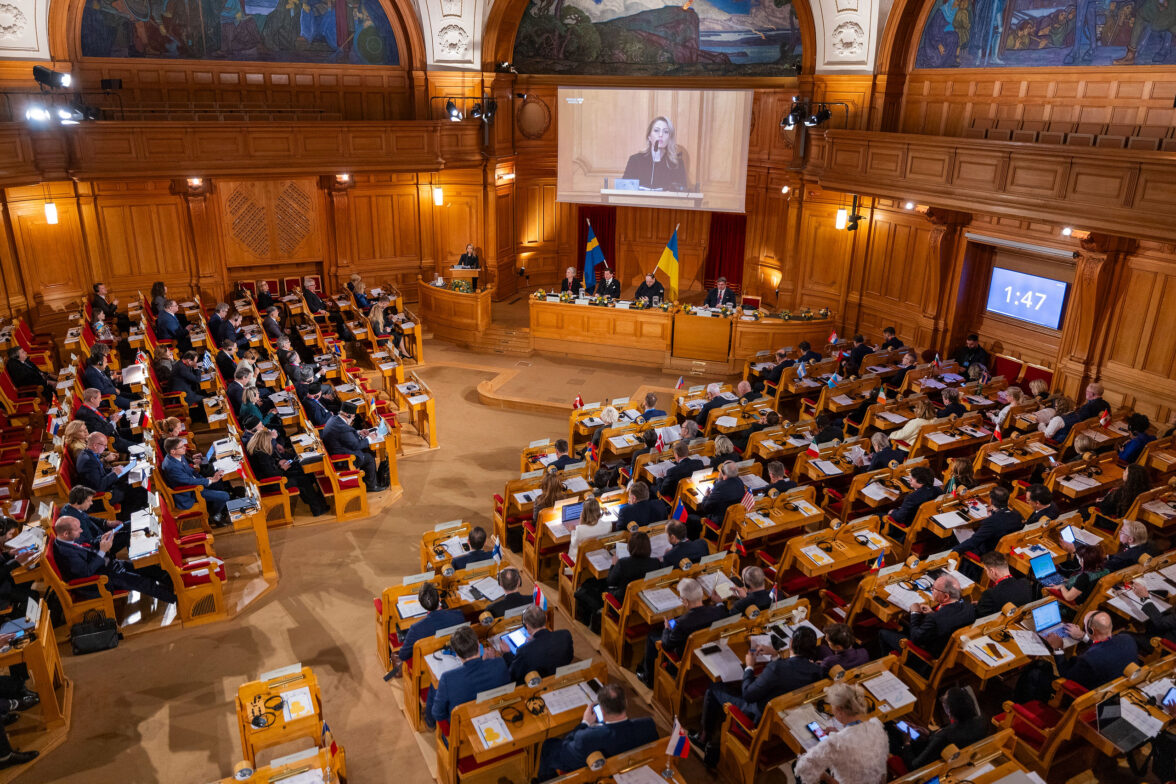
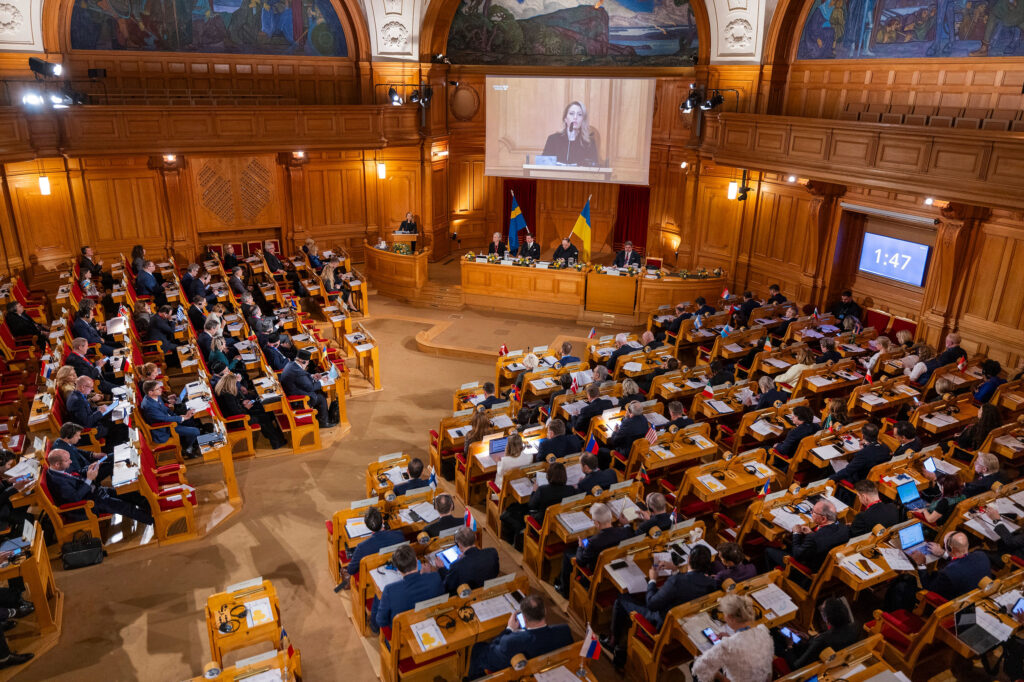
On November 24, 2025, the Fourth Parliamentary Summit of the International Crimea Platform took place in Stockholm, the capital of Sweden. The event gathered approximately 70 delegations, both online and offline, from nearly 50 countries, including representatives of international parliamentary institutions.
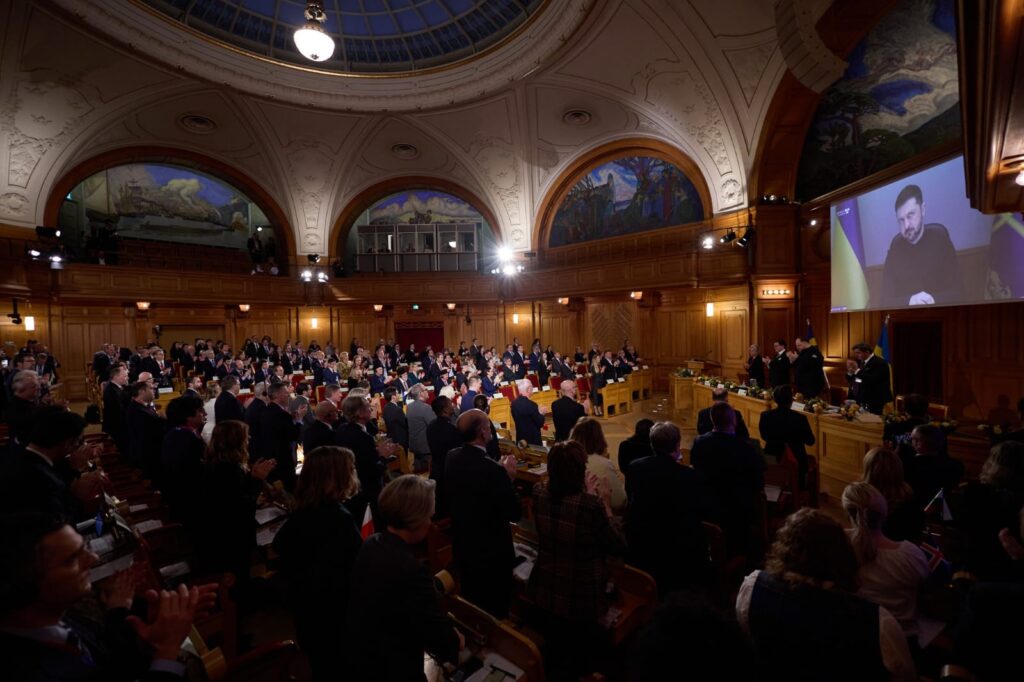
Among the participants were delegations from Belgium, Bulgaria, Estonia, Spain, Latvia, Lithuania, Liberia, Liechtenstein, Moldova, Germany, Norway, Romania, Serbia, Finland, Croatia, Switzerland, as well as Albania, Austria, Bosnia and Herzegovina, the United Kingdom, Greece, Denmark, Ireland, Iceland, Italy, Luxembourg, North Macedonia, Poland, Portugal, Slovakia, Slovenia, France, Czechia, Montenegro, Armenia, Argentina, the Democratic Republic of the Congo, the Netherlands, Paraguay, and Peru. Video addresses were delivered by Australia, Guatemala, Canada, Costa Rica, Malaysia, Malta, New Zealand, the USA, and Japan.
The Summit was attended by representatives of the Parliamentary Assembly of the Council of Europe, the OSCE Parliamentary Assembly, the NATO Parliamentary Assembly, the Nordic Council, the Inter-Parliamentary Union, and the European Parliament.
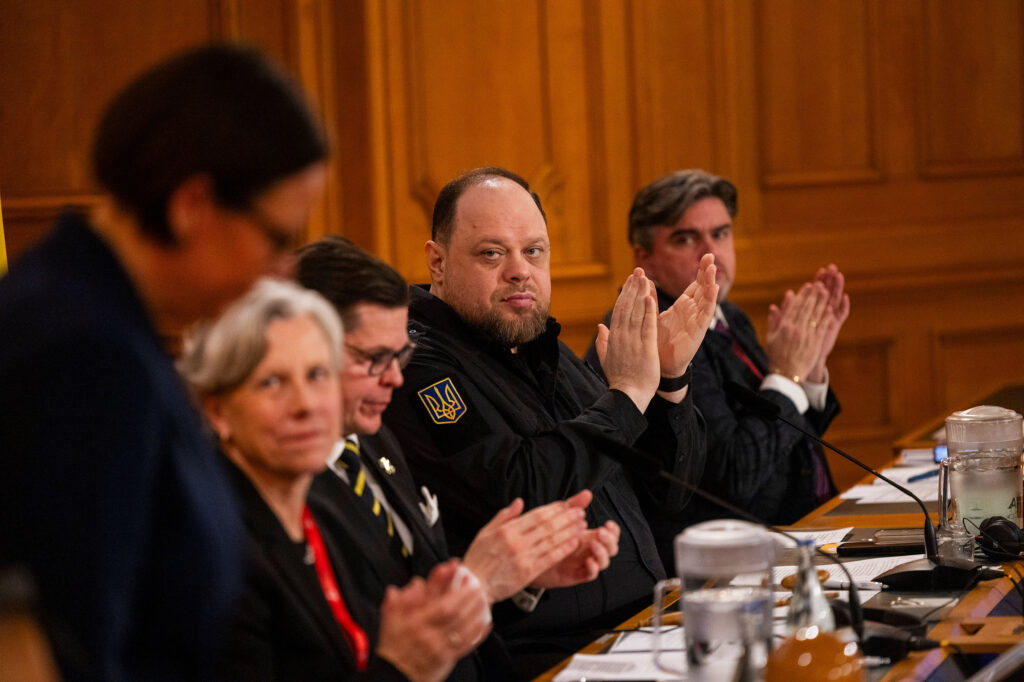
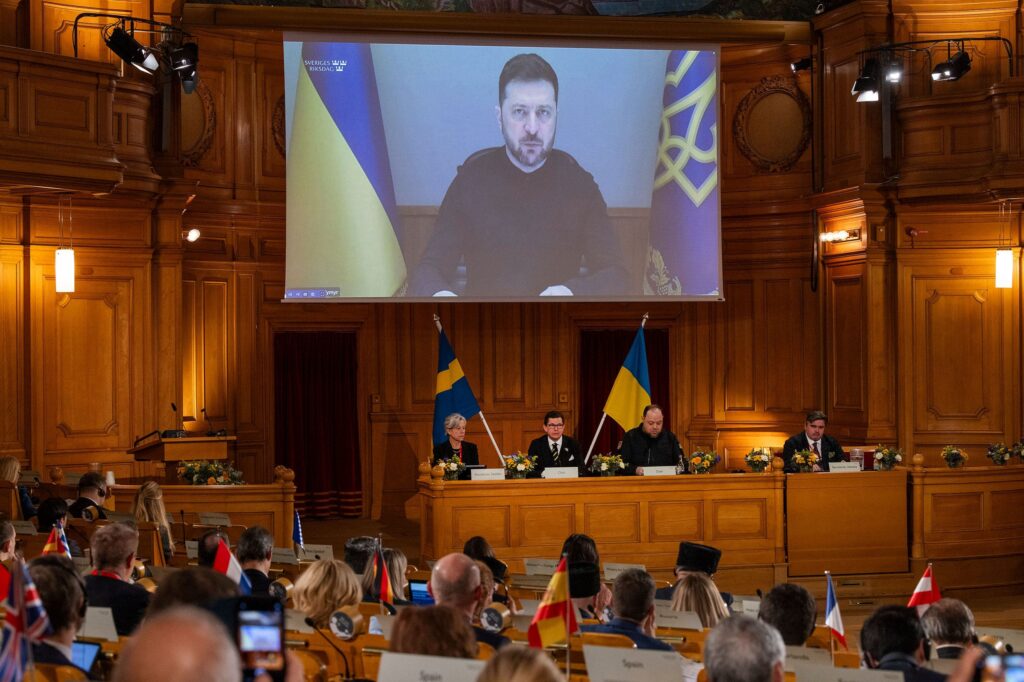
The opening ceremony of the Fourth Parliamentary Summit of the International Crimea Platform was attended by the Speaker of the Swedish Riksdag, Andreas Norlén, the President of Ukraine, Volodymyr Zelenskyy, and the Chairman of the Verkhovna Rada of Ukraine, Ruslan Stefanchuk.
Andreas Norlén emphasized that democracy and freedom ultimately prove stronger than their enemies due to moral superiority and the readiness of free societies to fight. He highlighted the indomitability of the Ukrainian people, the historic solidarity between Ukraine and Sweden, and the need for constant readiness to defend not only Ukraine but all of Europe against Russian aggression, which threatens the territorial integrity of European states.
In his address, President of Ukraine Volodymyr Zelenskyy emphasized that the Crimea Platform continues to draw attention to a simple truth: every nation and every state must be respected, and the principles that ensured peace in Europe must be protected. Volodymyr Zelenskyy specifically focused on the need to implement the “all for all” formula for the release of Ukrainian prisoners of war, civilian hostages, and children abducted by Russia. The President of Ukraine stressed that true peace is possible only through the inevitable accountability of the aggressor and the return of all occupied territories, including Crimea.
Chairman of the Verkhovna Rada of Ukraine Ruslan Stefanchuk emphasized that a decisive moment in the struggle is now approaching — for Ukraine, for Europe, and for a lasting and just peace. He drew attention to the pressure Ukrainian society feels due to losses, propaganda, and fatigue, but underscored that there is another, stronger pressure — the pressure of conscience, the memory of victims, and responsibility for the future, which does not allow the struggle to stop. Stefanchuk recalled that any genuine peace process must be based on the principle “nothing about Ukraine without Ukraine, nothing about Europe without Europe” and cannot allow for any legal recognition of the Russian occupation or restrictions on Ukraine’s defense forces.
Minister for Foreign Affairs of Sweden Maria Malmer Stenergard emphasized that the reality of life in the temporarily occupied territories is one of intimidation, fear, and repression: journalists are silenced, families are separated, children are raised under ceaseless propaganda, and Crimean Tatars are persecuted for their language and faith. She specifically addressed the fate of Ukrainian children forcibly deported to Russia, separated from their parents, and placed in institutions where they are subjected to ideological pressure.
During the plenary discussion, participants emphasized the inadmissibility of changing borders by force and the danger of attempts to appease the aggressor. They stressed that support for Ukraine strengthens common security and called for increasing sanctions, working on the confiscation of Russian assets, strengthening Europe’s energy resilience, and ensuring Russia’s accountability for war crimes and deportations.
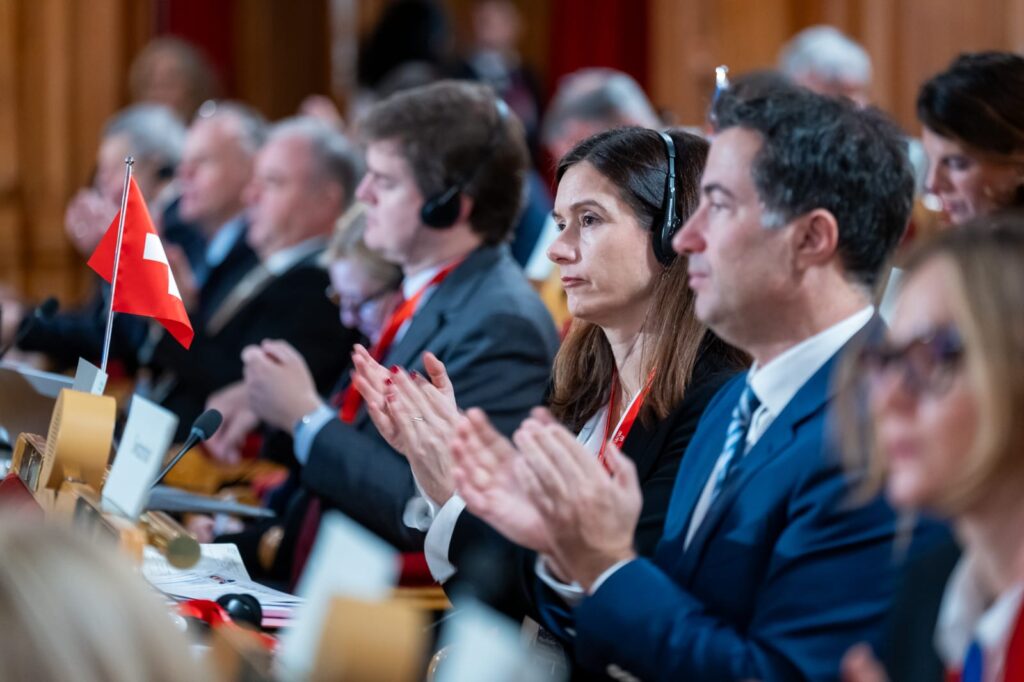
Participants also noted that the return of occupied territories is directly linked to the rule of law and international security. They warned against illusions regarding Russia’s intentions and underscored that any agreements must guarantee Ukraine long-term security.
Throughout the discussion, the systematic nature of Russian aggression was highlighted, along with the significance of sanctions packages, the need for humanitarian and recovery support, and crimes such as the illegal deportation of Ukrainian children. Representatives of international institutions drew attention to issues of human dignity, political imprisonment, prisoners of war, and civilian hostages.
Chairman of the Mejlis of the Crimean Tatar People, Refat Chubarov, emphasized that the status of Crimea cannot be viewed as an abstract geopolitical issue detached from Ukraine’s territorial integrity and the rights of the indigenous Crimean Tatar people. He stressed that Crimea is the only home, heart, and soul of the Crimean Tatars, and called on the international community to realize that genuine de-occupation of the peninsula must include the restoration of historical justice, guarantees of the indigenous people’s rights to self-determination within Ukraine, and the release of all political prisoners persecuted by the Russian occupation regime.
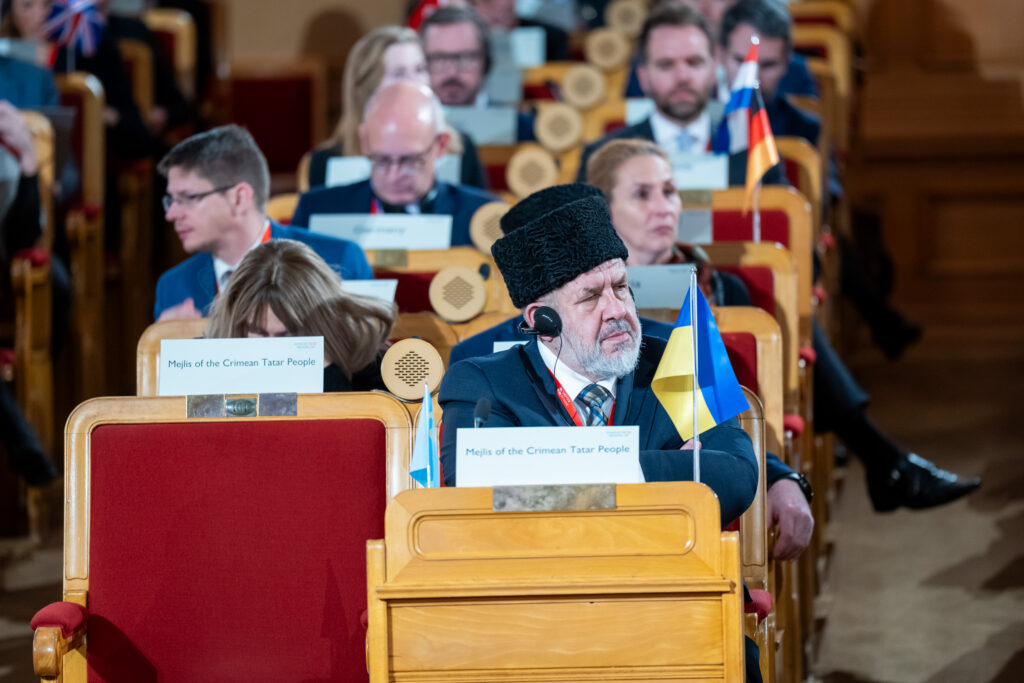
Furthermore, participants noted that the world did not take the events of 2014 seriously enough, and that decisive action is now needed, including support for long-term assistance programs for Ukraine. Statements also touched upon the risks of the militarization of Crimea, growing threats in the Black Sea region, and Russia’s use of advanced technologies.
Separate delegations emphasized that concessions to the aggressor create dangerous precedents and only provoke further aggression. They stressed the need to document crimes, counter attempts to destroy Ukrainian and Crimean Tatar identity, and ensure accountability for deportations, torture, and destruction.
Participants also noted that no peace formula can be adopted without Ukraine. Calls were made to counter disinformation and cyber threats, strengthen energy security, and reduce dependence on Russian resources. The expert community emphasized the importance of non-recognition of the occupation, adherence to the UN Charter, and the complete withdrawal of Russian troops from Ukrainian territory, as freezing the lines of occupation only encourages the aggressor.
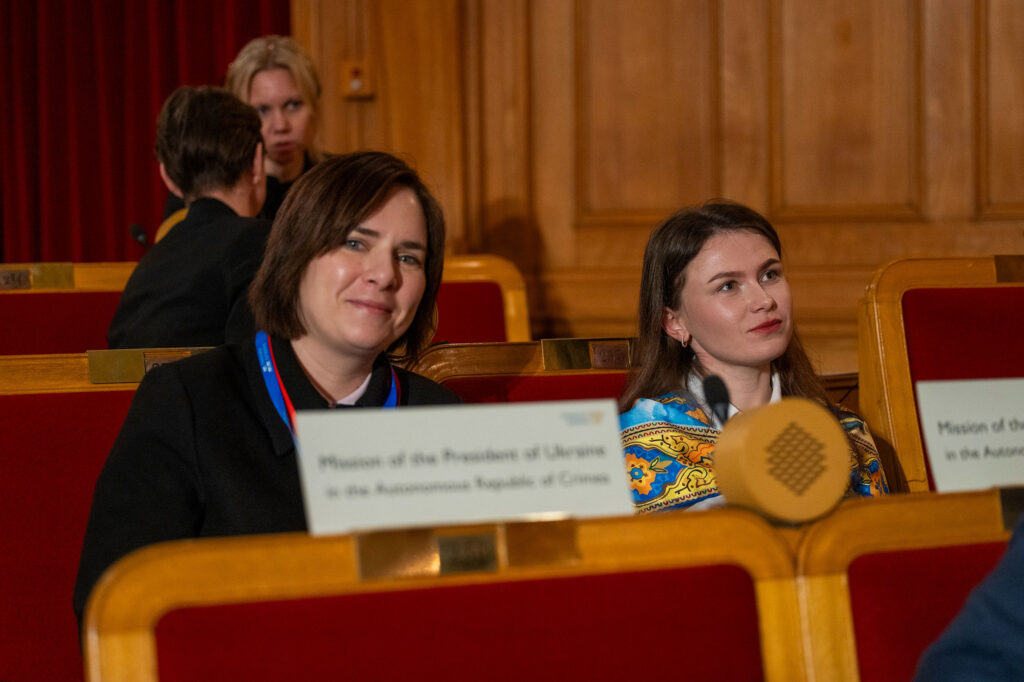
Permanent Representative of the President of Ukraine in the Autonomous Republic of Crimea, Olha Kuryshko, emphasized that Crimea has turned into a space of systemic repressions, where torture, enforced disappearances, and political persecution continue. She stressed that international partners must intensify efforts to release all political prisoners and support the residents of the occupied peninsula.
On the sidelines of the Fourth Parliamentary Summit of the Crimea Platform, a separate seminar dedicated to stolen Ukrainian children was held. Participants included Nathaniel Raymond (Yale University); Thórdís Kolbrún Reykfjörð Gylfadóttir, member of the Icelandic Althing and Special Envoy of the Council of Europe; Carina Ödebrink, member of the Swedish Riksdag and OSCE PA Special Representative; Olena Khomenko, Member of the Ukrainian Parliament and Vice-President of PACE; and Markus Wiechel, member of the Riksdag. They discussed the systematic nature of abductions, the tearing apart of Ukrainian families, attempts at forced “re-education” of children, and their militarization. Presented research from Yale University confirmed the existence of an extensive network of institutions controlled by the Russian government to which Ukrainian children are transferred.
In addition, on the sidelines of the fourth Parliamentary Summit of the Crimea Platform, the exhibition “Crossroads – Sweden’s and Ukraine’s history through 1000 years” was presented. It was dedicated to the history of intersections between Ukraine and Sweden, showing how political alliances, wars, diplomacy, and cultural contacts shaped the shared space of the two countries. Among the exhibits were original archival documents, including materials on the alliance between Mazepa and Charles XII, a letter from the Crimean Khan to the Queen of Sweden, early evidence of Ukrainian-Swedish relations, and artifacts highlighting their mutual historical influence.
Following the summit, the participating countries adopted a Joint Statement. It confirms unwavering support for the territorial integrity of Ukraine, condemns Russian aggression, and outlines the necessity for the de-occupation of all Ukrainian territories, the release of political prisoners, the strengthening of sanctions, the establishment of a Special Tribunal for the crime of aggression, and the launch of an international compensation mechanism. The statement also calls for ensuring Ukraine’s participation in any peace processes and continuing global efforts to protect human rights, cultural heritage, and environmental safety in Crimea.