20 August 2026
Representatives from Central Asia visited the Mission
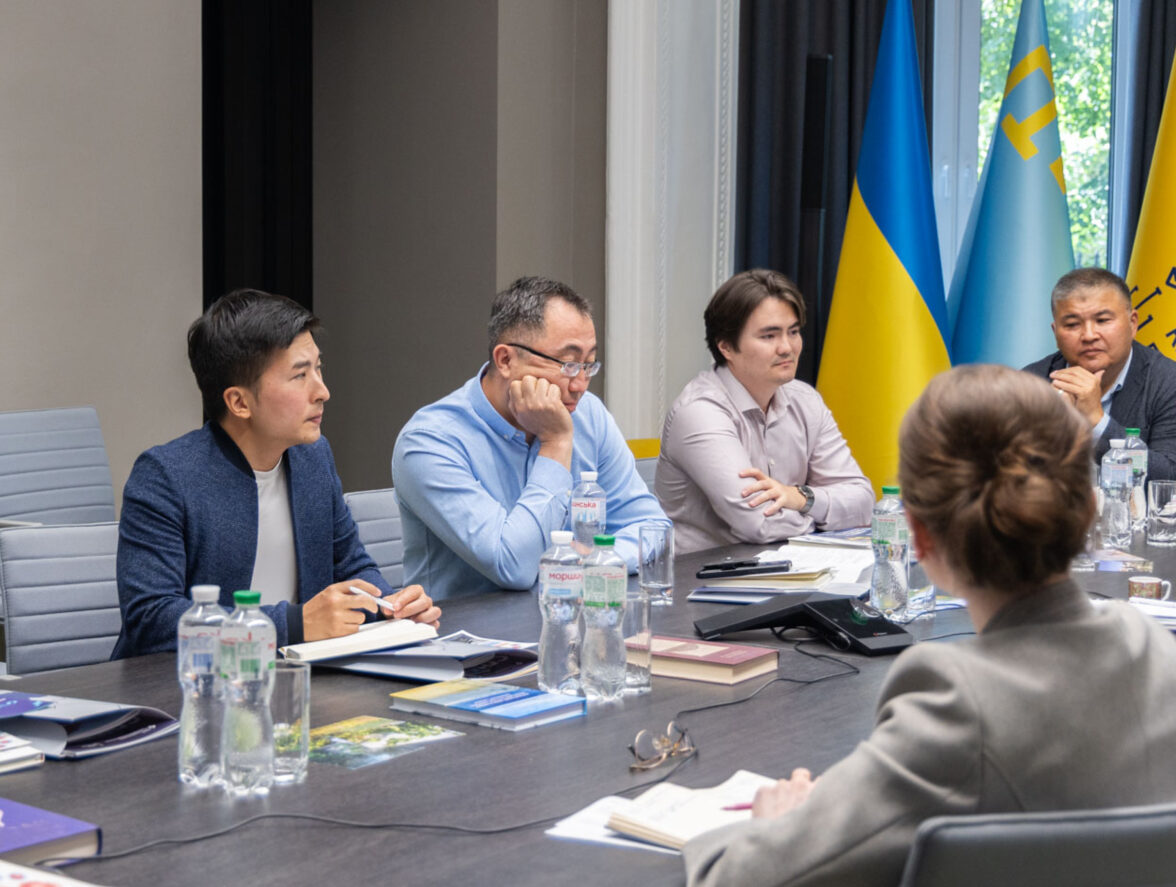
On August 19, Permanent Representative Olha Kuryshko met with professors, scholars, analysts, and human rights defenders from Kazakhstan, Kyrgyzstan. The meeting was attended by representatives of KIMEP University, the Central Asia Policy Studies Centre (CAPS Unlock) think tank, the human rights organization Bir Duyno – Kyrgyzstan, Goodwill AqNiet, and the Foundation for Civil Diplomacy.
During the meeting, the Permanent Representative spoke about the consequences of more than 12 years of Russian occupation of Crimea, including the militarization of the peninsula, systematic human rights violations, the persecution of Crimean Tatars and other indigenous peoples of Ukraine, and forced Russification.
Nelia Hrynyshyn, head of the Crimea Platform Department, spoke about the advocacy mentorship program for Crimean political prisoners, as well as about the upcoming international conference Crimea Global 2026 that will take place in Kyiv.
The Permanent Representative spoke about the pressure being exerted on religious communities in occupied Crimea, particularly the forced re-registration of religious organizations under Russian law.
An important part of the meeting was a discussion about the future of Crimea after de-occupation, including approaches to restoring state governance, issuing documents to citizens, and restoring justice following the liberation of the peninsula.
Significant attention was devoted to countering Russia’s propaganda, as well as an importance of creating information materials about Crimea in different languages of the world disinformation policy in the region. Participants noted that a lot of people in Central Asia still obtain information about international developments from Russian-speaking sources, which disseminate Russian propaganda. Therefore, a potential area of cooperation could be spreading informational materials about Crimea in Kazakh, Kyrgyz, Uzbek, and other languages of the region.
The sides agreed to continue exchanging information and to seek practical formats for cooperation in the fields of education, human rights protection, public diplomacy, and countering Russian propaganda.