23 October 2025
Blind crimean political prisoner Oleksandr Sizikov detained again by russian occupiers
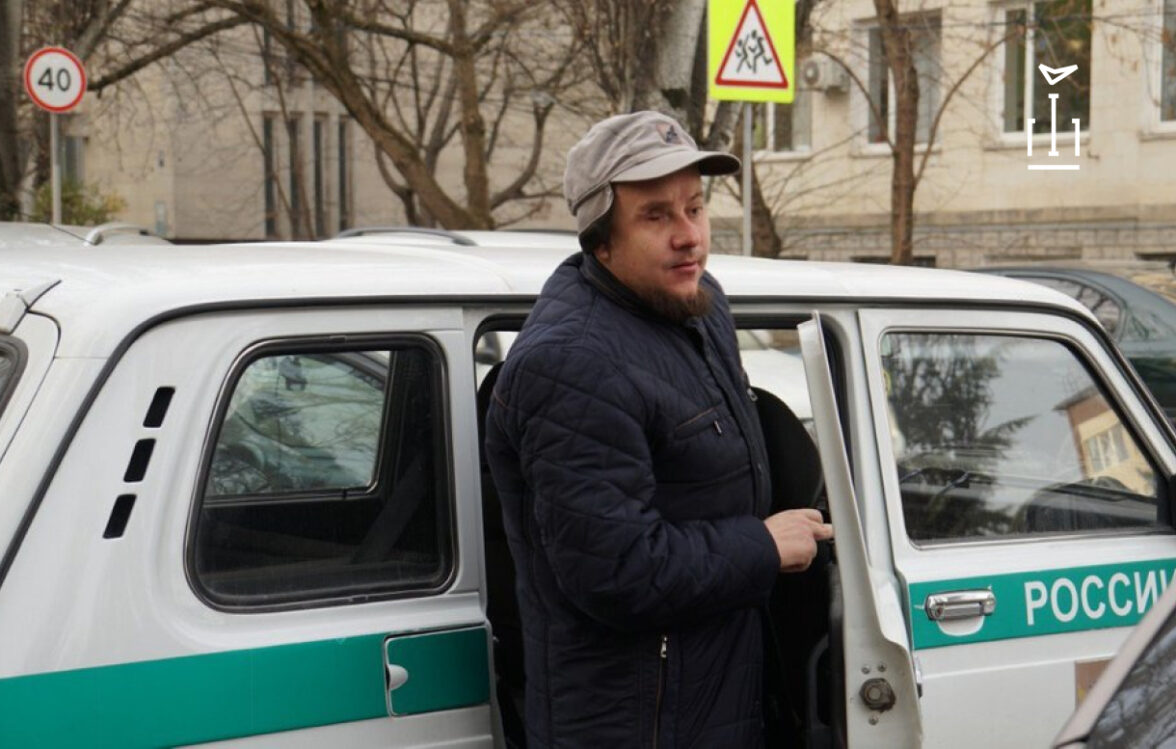
On the night of October 23, officers of the so-called occupation “police” searched the home of Oleksandr Sizikov, a completely blind political prisoner, in the temporarily occupied Bakhchysarai district and detained him.
According to his mother, around 11 p.m., about twenty Russian security officers arrived in several vehicles, broke into the house, read out a warrant, and stated that a certain “police lieutenant” had filed a complaint against Sizikov. After that, they detained him. The woman said she barely managed to pack the essentials for her son, as the officers were agitated and urged her to hurry. During the search, they seized two laptops and all the mobile phones belonging to the Sizikov family.
Oleksandr Sizikov has repeatedly staged solo pickets in Crimea, protesting against the arbitrariness of the occupation authorities and the unlawful arrests of Muslims. He attended court hearings and supported the families of political prisoners. His participation in civic activities defending the rights of Muslims and other expressions of his public position have made him a target of persecution by the Russian occupation regime.
On July 7, 2020, Russian security forces in occupied Crimea carried out another wave of mass searches, during which seven people were detained, including Sizikov. The occupiers planted Islamic literature in his home, later using it as fabricated “evidence” of so-called “extremist activity.” On May 17, 2023, a Russian court in Rostov-on-Don unlawfully sentenced Oleksandr Sizikov to 17 years in a high-security penal colony.
In May 2025, the Minusinsk City Court in Russia’s Krasnoyarsk region released Sizikov from imprisonment due to his serious health condition.
The re-arrest of Oleksandr Sizikov constitutes a gross violation of international humanitarian law and human rights. Under the Fourth Geneva Convention, an occupying power has no right to apply its criminal legislation on occupied territory, to persecute individuals for their political or religious beliefs, or to subject civilians to arbitrary detention.
International organizations, foreign governments, and human rights institutions are urged to intensify pressure on Russia to end its systematic human rights violations in the temporarily occupied peninsula and to secure the release of all Ukrainian political prisoners unlawfully held in Crimea and on Russian territory.