01 April 2025
WEEKLY UPDATE ON THE SITUATION IN OCCUPIED CRIMEA ON APRIL 1, 2025
Main news of the week
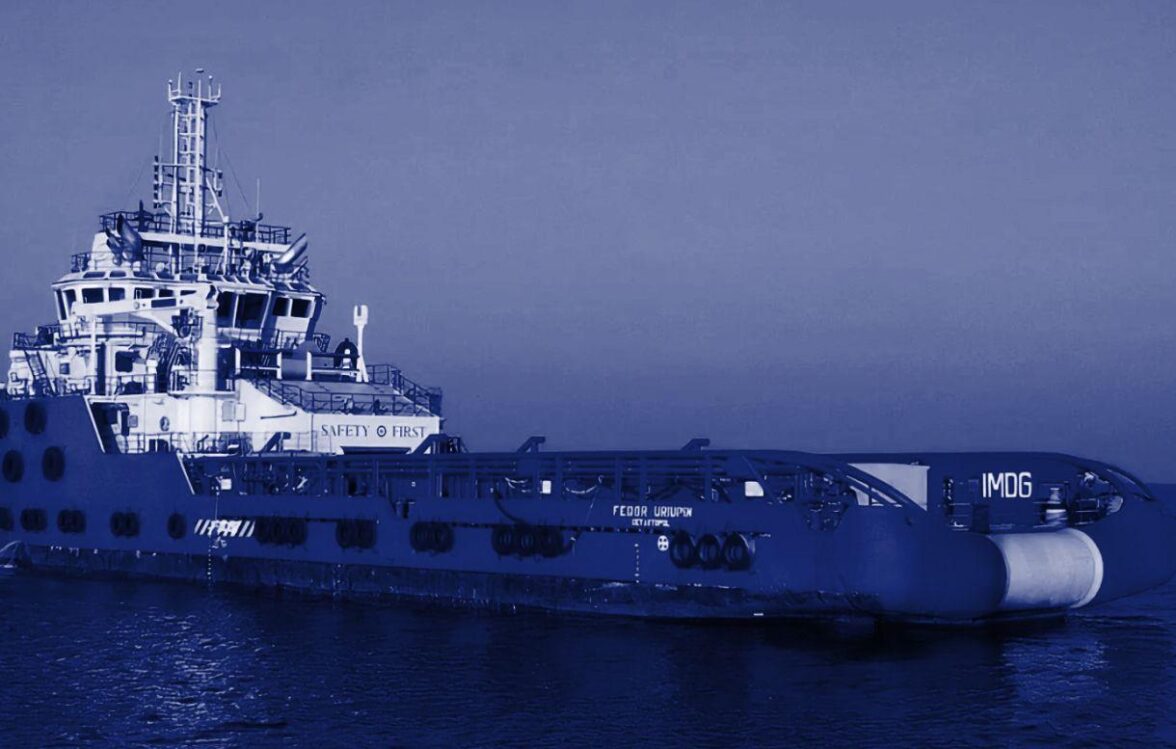
▶ On 27 March, the Main Intelligence Directorate of the Ministry of Defense of Ukraine conducted strikes on Russian military targets in temporarily occupied Crimea. As a result, the Russian tugboat Fyodor Urupin, a KamAZ truck, and several high-value Russian radar systems were destroyed, including the 48Ya6-K1 Podlyot, CP BRLS RM-10M1E, 9S32 Imbir, CP radar ST-68, and 39N6 Kasta-2E2.
▶ On 1 April 2025, the 21st illegal conscription campaign into the Armed Forces of the Russian Federation began in occupied Crimea. Russia, as an occupying power, is flagrantly violating the provisions of the Fourth Geneva Convention on the protection of civilians during wartime by applying its military conscription laws to the temporarily occupied territory. The conscription of Ukrainian citizens residing in Crimea into the Russian army constitutes a war crime.
Crimes committed by the Russian Federation
▶ As of April 2025, Russia has illegally imprisoned 224 people in occupied Crimea on ethnic, religious, and political grounds, including 137 Crimean Tatars.
▶ In temporarily occupied Novooleksiivka, Kherson region, Russian occupation forces detained—and in fact abducted—47-year-old Crimean Tatar Eldar Karamurza on fabricated charges, which in reality appear to be motivated by his ethnic and national identity. Karamurza is a person with a disability (cerebral palsy) and a father of four. His family has had no information about his whereabouts for over a month.
▶ On the morning of 25 March, in the village of Sofiivka, Simferopol district, Russian occupation forces conducted an unlawful search and illegally detained Crimean Tatar Susanna Ismailova, taking her to an unknown location. It was later revealed that the occupation “court” fined her 50,000 rubles for her openly pro-Ukrainian stance.
▶ The occupation “court” has extended the unlawful detention of members of the so-called “sixth Bakhchysarai group”—Aziz Azizov, Memet Liumanov, Rustem Osmanov, and Mustafa Abduramanov—until 7 July. The Russian administration continues to fabricate criminal cases against unlawfully detained residents of occupied Crimea.
▶ The health of Crimean Tatar Appaz Kurtamet, unlawfully convicted by a Russian occupation “court” and currently held in a high-security colony in Russia’s Pskov region, remains in danger due to psychological and emotional pressure, harsh detention conditions, and torture inflicted by Russian security forces.
▶ The occupiers have unlawfully transferred Crimean political prisoner Servet Haziiev to a penal colony in Petropavlovsk-Kamchatskyi, more than 8,000 kilometers from Crimea. This transfer poses a serious threat to his life. Haziiev, an elderly man, has suffered a minor stroke and torture in Russian custody. He has also been diagnosed with coordination issues, problems with his right hand, and gastrointestinal disorders.
▶ In occupied Yevpatoriia, Russian security forces unlawfully detained four Ukrainian citizens—Tetiana Maliar, her brother Valentyn, her son Anatolii, and her daughter Olha—on unsubstantiated and illegal charges of “state treason.” Olha’s two young children were left at home. There is suspicion that the detainees were subjected to torture. Their persecution may be linked to their pro-Ukrainian stance.
The use of occupied Crimea as a springboard for attacks on Ukraine and the militarization of the peninsula
▶ Agents of the ATESH movement report that due to significant losses on the Kherson front, Russian occupiers are urgently redeploying air defense and electronic warfare systems from Crimea, including the Pole-21 complex, to defend against Ukrainian drones, artillery, and aviation. ATESH agents note panic among Russian troops, caused not only by the destruction of equipment but also by high soldier mortality rates. The precision of Ukrainian strikes has been made possible thanks to coordinates provided by partisans and local residents who assist in targeting enemy warehouses and command posts.
▶ Monitoring groups report that Russia is transporting North Korean military equipment through occupied Crimea to support its war of aggression against Ukraine. At a railway station in the north of the occupied peninsula, a military train was observed carrying North Korean-made Koksan self-propelled artillery units. The platforms held 7–8 such systems along with military trucks.
▶ According to the Air Force of the Armed Forces of Ukraine, Russian occupiers carried out a series of attacks on Ukrainian territory over the past week. In particular, they launched 649 strike UAVs, including Shahed drones and unidentified types, some of which originated from occupied Crimea and the Black Sea region.
Since Russia launched a full-scale invasion and spread its armed aggression throughout Ukraine, occupied Crimea has been used by Russia as a military base for spreading aggression in various forms. From the peninsula, the occupiers continue to launch attacks on the territory of Ukraine, including on civilian infrastructure.
The resistance movement of Ukrainian citizens in occupied Crimea
▶ Russia has already prosecuted 1279 people in occupied Crimea for expressing solidarity with Ukraine, who are being subjected to administrative penalties in the form of illegal fines and arrests.
▶ A resident of occupied Simferopol was detained by Russian occupiers after posting criticism of Russian President Vladimir Putin and the occupying army on social media. The administration filed unlawful administrative charges against him for allegedly “discrediting the Russian army.”
▶ Another resident of the Simferopol district was sentenced to 15 days of administrative arrest by a Russian occupation “court” for criticizing the Russian president, occupation forces, and illegal settlers in Crimea, as well as for expressing support for the Armed Forces of Ukraine.
▶ Activists of the Yellow Ribbon movement distributed patriotic stickers across the streets of occupied Simferopol, Sevastopol, Yalta, Sudak, Bakhchysarai, and Armiansk. They also reported that the occupation administration in Crimea has intensified efforts to establish gambling zones, particularly in Yalta, where old, abandoned sanatoriums and hotels are being hastily converted into casinos. While the administration promotes gambling as a “promising investment,” critical issues such as water supply, healthcare, and infrastructure remain neglected.
▶ Activists of the Crimean Combat Seagulls movement continue to monitor the actions of Russian occupation forces in Crimea.
▶ The Zla Mavka resistance movement continues to publish updates about daily life under occupation. They report that in recent weeks, the occupiers have stepped up conscription efforts, plastering streets with propaganda posters and pressuring citizens at employment centers and public institutions to sign military contracts. Men without permanent jobs are particularly targeted, being promised “payments,” “benefits,” and “housing.”
The full-scale invasion was marked by a rapid increase in solidarity and resistance actions by residents of occupied Crimea against the Russian occupiers. Residents of occupied territories unite in resistance movements, such as the above-mentioned Yellow Ribbon, Crimean Combat Seagulls, Zla Mavka, and ATESH, or act individually. To suppress the resistance movement of residents in the temporarily occupied territory of Crimea after February 24, 2022, the occupiers actively began to prosecute and bring to administrative responsibility Ukrainian citizens under the article on the so-called “discrediting the Russian army.”
De-occupation of Crimea is integral to ending the war and restoring peace. Ukrainians are doing everything they can to stop the aggressor and protect the entire world from Russia’s criminal actions. This is not a local or regional issue but a threat to the world and international order.