01 July 2025
WEEKLY UPDATE ON THE SITUATION IN OCCUPIED CRIMEA ON JULY 1, 2025
Main news of the week
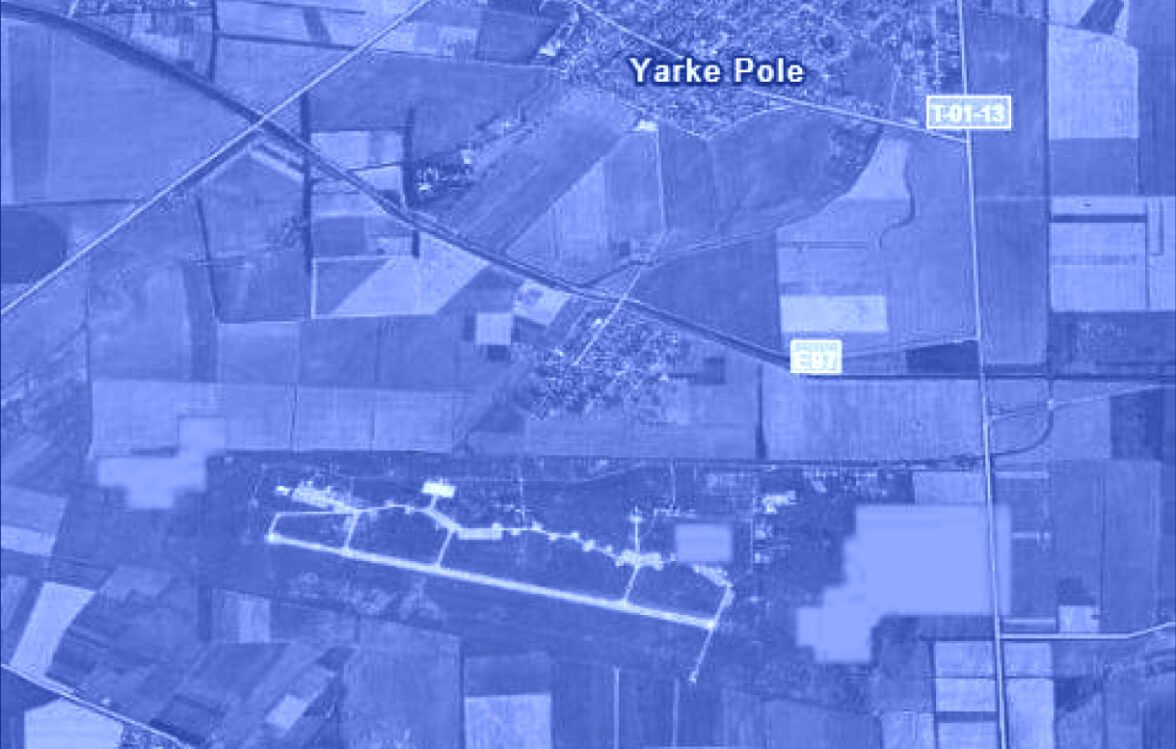
▶ On the night of 28 June, the Security Service of Ukraine carried out a strike on the Russian military airfield Kirovske in temporarily occupied Crimea. As a result of the attack, three Russian helicopters were destroyed, along with a Pantsir-S1 missile system. The strike also hit ammunition depots, air defense assets, as well as reconnaissance and strike drones.
Crimes committed by the Russian Federation
▶ As of July 2025, Russia has illegally imprisoned 221 people in occupied Crimea on ethnic, religious, and political grounds, including 133 Crimean Tatars.
▶ In the city of Kerch, occupation security forces have charged a local resident with participating in the activities of the religious organization Jehovah’s Witnesses, which had previously been banned by an occupation “court” on fabricated charges of “extremism.” The man is accused of continuing religious practices, and the case has been transferred to the so-called “court.” Such actions violate the fundamental right to freedom of religion, enshrined in Article 18 of the International Covenant on Civil and Political Rights, and constitute a form of religious persecution.
▶ Crimean political prisoner Enver Mamutov, unlawfully sentenced by Russian occupation administration to 16 years and 9 months, has been forcibly transferred from a penal colony in Stavropol Krai to Colony No. 3 in Chuvashia, Russia — over 2,000 kilometers from Crimea. In May, he was twice placed in a punitive isolation cell, a clear example of cruel and inhuman treatment.
▶ The health of Crimean political prisoner Zaur Abdullaiev is rapidly deteriorating: he has only 12 teeth, suffers from diabetes and hypertension, and has a growth on his leg. He is not receiving adequate medical care, communication with his family is severely restricted, letters are rarely delivered, and visits are allowed only once a year. Denial of medical assistance and isolation from family members constitute further violations of human rights.
▶ 57-year-old Crimean Tatar political prisoner Yashar Muedinov, unlawfully convicted in 2022, has been transferred to Penal Colony No. 5 in the city of Koryazhma, Arkhangelsk region, Russia — more than 2,500 km from Crimea. He is currently held in a quarantine block. Such transfers deep into the territory of the occupying state complicate contact with family, legal representation, and access to healthcare. They constitute a form of psychological pressure and violate the principle of humane treatment.
▶ The occupation “courts” have extended the unlawful detention of Crimean Tatar activists Rustem Mustafaiev, Abibulla Smedliaiev, Emir Kurtnezirov, and Mirzali Tadzhybaiev — members of the so-called “Fourth Dzhankoi Group” — until 4 October 2025. The same applies to Memet Liumanov, Mustafa Abduramanov, and citizen journalists Rustem Osmanov and Aziz Azizov — defendants in the so-called “Sixth Bakhchysarai Group” — whose detention has been extended until 7 October 2025. These arrests represent political persecution and systemic discrimination against Crimean Tatars on the grounds of ethnicity in the temporarily occupied territory, in violation of international humanitarian law.
▶ According to monitoring sources, a dry cargo vessel approximately 175 meters in length is currently anchored in Yalta Bay, awaiting entry into port for loading with Ukrainian grain, likely looted from temporarily occupied territories. Satellite data confirms that such ships frequently anchor near the Avlita grain terminal in occupied Sevastopol.
▶ Crimean political prisoner Raif Fevziev, who is unlawfully held in a Russian penal colony under a politically motivated sentence, saw his wife for the first time in four years. According to her, his health has significantly deteriorated: his varicose veins and hypertension have worsened, and access to medical care is limited.
▶ 59-year-old Crimean Tatar political prisoner Ruslan Mesutov has been held in a punishment isolation cell in Colony No. 1 in Yakutsk since November 2024. He reports severe leg pain, heart problems, and high blood pressure but is not receiving adequate medical treatment. Three months ago, he lost consciousness due to chest pain, was hospitalized, but was returned to the colony a week later without proper care.
The use of occupied Crimea as a springboard for attacks on Ukraine and the militarization of the peninsula
▶ Activists of the resistance movement ATESH conducted reconnaissance of the main military compound of the 12th Anti-Aircraft Missile Regiment in Sevastopol. The unit is part of the 31st Air Defence Division of the Air and Space Forces of the Russian Federation and is equipped with S-400 missile systems. According to ATESH, following recent Ukrainian drone strikes, security checks and precautionary measures at the site have been intensified. Activists also observed suspicious activity near Balaklava Bay, at the site of the former underground submarine base in temporarily occupied Sevastopol. They reported that the area has been cleared, the entrance to the tunnel is open, and signs of activity in nearby buildings may indicate preparations for reuse — potentially as a munitions depot, a naval drone launch point, or a command center. Additionally, mobile signal jamming has been reported near Saky, in the vicinity of the military airfield. According to members of the movement, these measures are driven by fears of information leaks amid concerns over possible strikes by Ukraine’s Armed Forces.
▶ In occupied Yevpatoriia, Russian security forces conducted raids at six locations as part of a campaign targeting labor migrants who had obtained Russian citizenship but failed to register for military service. One of the searches took place in a dormitory housing more than 50 individuals, including citizens of Kazakhstan, Kyrgyzstan, and Uzbekistan. Some detainees were taken to the so-called “military enlistment office” for potential forced conscription. Similar operations have previously been recorded at construction sites across the peninsula. According to Ukrainian intelligence, Russia systematically recruits migrants from Central Asia by luring them with promises of short-term contracts and high pay. However, the majority of them die at the front. Those who survive may face criminal prosecution in their home countries for participating in foreign armed formations. This practice constitutes a gross violation of international humanitarian law and the Geneva Conventions, which prohibit the forced conscription of civilians in occupied territories.
▶ According to the Air Force of the Armed Forces of Ukraine, Russian occupation forces carried out a series of large-scale combined attacks across Ukraine over the past week. The assaults included 719 strike UAVs of the Shahed, Shahed-Geran, and Herbera types, 7 ballistic missiles of the Iskander-M/KN-23 type, and 5 Kalibr cruise missiles. As a result of these mass attacks, residential and industrial facilities in several regions of Ukraine sustained damage.
Since Russia launched a full-scale invasion and spread its armed aggression throughout Ukraine, occupied Crimea has been used by Russia as a military base for spreading aggression in various forms. From the peninsula, the occupiers continue to launch attacks on the territory of Ukraine, including on civilian infrastructure.
The resistance movement of Ukrainian citizens in occupied Crimea
▶ Russia has already prosecuted 1435 people in occupied Crimea for expressing solidarity with Ukraine, who are being subjected to administrative penalties in the form of illegal fines and arrests.
▶ A resident of temporarily occupied Simferopol allegedly provided Ukrainian intelligence with information about the movement of a train carrying petroleum products for the Russian army near Feodosiia. The occupation forces detained the man, accusing him of “state treason.”
▶ A 30-year-old resident of Crimea posted anti-Russian content on social media. He was detained by the occupying administration and fined 50,000 rubles on charges of alleged “disrespect towards the state symbols of Russia.”
▶ Activists of the Yellow Ribbon resistance movement placed symbols of resistance in Simferopol, Sevastopol, and Yalta. Stickers, ribbons, and posters appeared at bus stops, in building entrances, and on city streets. On Constitution Day of Ukraine, the activists also held an action in temporarily occupied Crimea. In Simferopol, Sevastopol, Yalta, Yevpatoriia, Bakhchysarai, and Armiansk, hundreds of leaflets and stickers were distributed featuring quotes from the Constitution of Ukraine about rights and freedoms.
▶ Activists from the Crimean Combat Seagulls continue to expose the personal data of collaborators and Russian war criminals in occupied Crimea.
▶ The Zla Mavka continues to publish daily logs reporting on life in the occupied territories. In addition, the activists distributed poems by Ukrainian authors in occupied Simferopol to remind locals that this is and remains Ukraine.
The full-scale invasion was marked by a rapid increase in solidarity and resistance actions by residents of occupied Crimea against the Russian occupiers. Residents of occupied territories unite in resistance movements, such as the above-mentioned Yellow Ribbon, Crimean Combat Seagulls, Zla Mavka, and ATESH, or act individually. To suppress the resistance movement of residents in the temporarily occupied territory of Crimea after February 24, 2022, the occupiers actively began to prosecute and bring to administrative responsibility Ukrainian citizens under the article on the so-called “discrediting the Russian army.”
De-occupation of Crimea is integral to ending the war and restoring peace. Ukrainians are doing everything they can to stop the aggressor and protect the entire world from Russia’s criminal actions. This is not a local or regional issue but a threat to the world and international order.