10 June 2025
WEEKLY UPDATE ON THE SITUATION IN OCCUPIED CRIMEA ON JUNE 10, 2025
Main news of the week
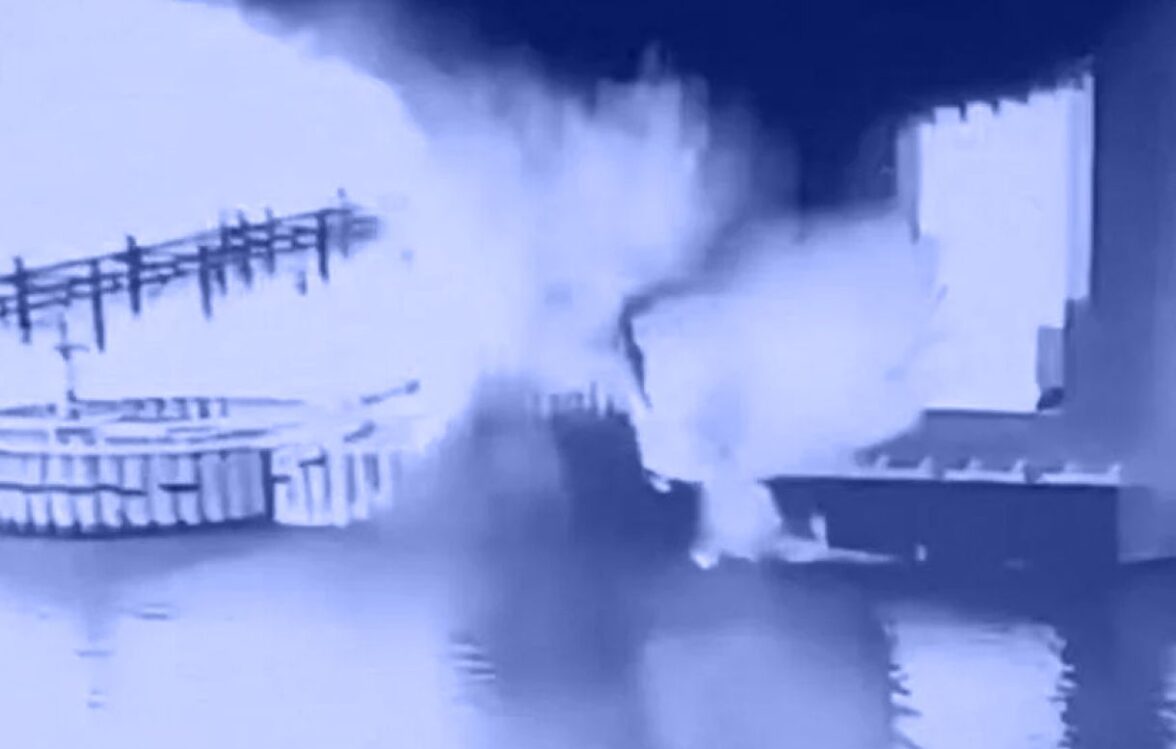
▶ On June 3, the Security Service of Ukraine struck the illegally constructed “Crimean Bridge” for the third time — this time underwater. SSU agents planted explosives on the supports of the structure, causing significant damage at the seabed level. According to the head of the SSU, the bridge is now in an emergency condition, and such Russian structures are legitimate targets for Ukraine.
Crimes committed by the Russian Federation
▶ As of June 2025, Russia has illegally imprisoned 222 people in occupied Crimea on ethnic, religious, and political grounds, including 133 Crimean Tatars.
▶ The occupiers are demanding sentences ranging from 11 to 17 years of imprisonment for six Crimean Tatar activists in the so-called “case of the first Dzhankoi group.” The longest sentence — 17 years in a colony — is being sought for Enver Krosh. Fifteen years each are demanded for Edem Bekirov and Rinat Aliiev; 13 years for journalist Vilen Temeriianov; and 11 years for Seitiah Abbozov, who is currently under house arrest. The defense highlights the lack of evidence of intent to commit violent acts, the denial of access to examinations, and the falsification of material evidence. The occupation “court” refused to conduct an independent review.
▶ On June 4, 21-year-old Sidamet Sitmemetov disappeared in temporarily occupied Simferopol. He went missing after leaving the entrance of his building, and his car remained parked near his home. It was not until June 6 that he was able to contact his family and inform them that his freedom is currently restricted.
The use of occupied Crimea as a springboard for attacks on Ukraine and the militarization of the peninsula
▶ In temporarily occupied Crimea, students are being recruited into military training under the guise of participation in so-called “grant projects.” In particular, more than a thousand individuals have been involved in supposed “tactical medicine training,” which in reality consists of assembling first aid kits for Russian military personnel. Approximately 800 students are being forced to paint kindergartens in Simferopol with images of Vladimir Putin, Russian Armed Forces symbols, and battle scenes, all under the pretext of so-called “volunteer work.”
▶ Resistance movement activists from ATESH reported that following the massive Ukrainian drone attacks on June 1, Russian commanders have strengthened security at military airfields on the temporarily occupied peninsula. Activists also report that in occupied Sevastopol, the seized Ukrainian large landing ship Kostiantyn Olshanskyi is being dismantled for spare parts. According to reports, the ship is being used as a “donor” for other units of Russia’s Black Sea Fleet. This practice indicates the critical technical condition of the fleet amid international sanctions, regular strikes by the Ukrainian Armed Forces, and disrupted supply logistics. In addition, the floating workshop PM-138 and the hospital ship Yenisei have been observed in Sevastopol Bay. According to agents, these assets are under observation and could become targets for future strikes.
▶ According to the Ukrainian Air Force, Russian occupiers carried out a series of massive combined attacks on the territory of Ukraine over the past week. Specifically, they launched 811 strike UAVs of the types Shahed, Shahed-Geran, and Herbera, 2 Iskander-K cruise missiles, 3 Kh-31P anti-radiation missiles, 1 Oniks anti-ship missile, 3 Kh-22 cruise missiles, and 1 Kh-35 cruise missile, including from the territory of occupied Crimea and the waters of the Black Sea. Due to these massive attacks, residential and industrial facilities in several regions of Ukraine sustained damage.
Since Russia launched a full-scale invasion and spread its armed aggression throughout Ukraine, occupied Crimea has been used by Russia as a military base for spreading aggression in various forms. From the peninsula, the occupiers continue to launch attacks on the territory of Ukraine, including on civilian infrastructure.
The resistance movement of Ukrainian citizens in occupied Crimea
▶ Russia has already prosecuted 1382 people in occupied Crimea for expressing solidarity with Ukraine, who are being subjected to administrative penalties in the form of illegal fines and arrests.
▶ A resident of Yalta published so-called “Russophobic” comments on social media and expressed support for the Ukrainian Armed Forces. The occupiers detained the man, accusing him of allegedly “inciting extremism.” A criminal case was unlawfully initiated against him, and he faces up to 5 years in prison.
▶ A 39-year-old resident of Sevastopol left comments on social media stating that Russia uses negotiations only to continue its aggression against Ukraine and that more radical measures are needed to stop Russia’s war on Ukraine. Russian occupation security forces unlawfully detained the woman and accused her of so-called “discrediting the Russian army.” She was fined 48,000 rubles.
▶ Activists of the Yellow Ribbon movement placed stickers with pro-Ukrainian slogans in Simferopol, Sevastopol, and Yevpatoriia, reminding everyone that Crimea is Ukraine. Additionally, according to the movement, the occupation administration of Crimea is discussing the possible restriction of access to parts of the beaches in Alushta to create a closed recreation area for Russian security forces and officials. One of the arguments presented is the need to isolate these areas from locals and the press to avoid being captured on camera.
▶ Activists of the Crimean Combat Seagulls continue to expose the personal data of collaborators and Russian war criminals in occupied Crimea.
▶ The resistance movement Zla Mavka continues to maintain its diaries, reporting on life under occupation.
The full-scale invasion was marked by a rapid increase in solidarity and resistance actions by residents of occupied Crimea against the Russian occupiers. Residents of occupied territories unite in resistance movements, such as the above-mentioned Yellow Ribbon, Crimean Combat Seagulls, Zla Mavka, and ATESH, or act individually. To suppress the resistance movement of residents in the temporarily occupied territory of Crimea after February 24, 2022, the occupiers actively began to prosecute and bring to administrative responsibility Ukrainian citizens under the article on the so-called “discrediting the Russian army.”
De-occupation of Crimea is integral to ending the war and restoring peace. Ukrainians are doing everything they can to stop the aggressor and protect the entire world from Russia’s criminal actions. This is not a local or regional issue but a threat to the world and international order.