10 December 2024
WEEKLY UPDATE ON THE SITUATION IN OCCUPIED CRIMEA ON DECEMBER 10, 2024
Main news of the week
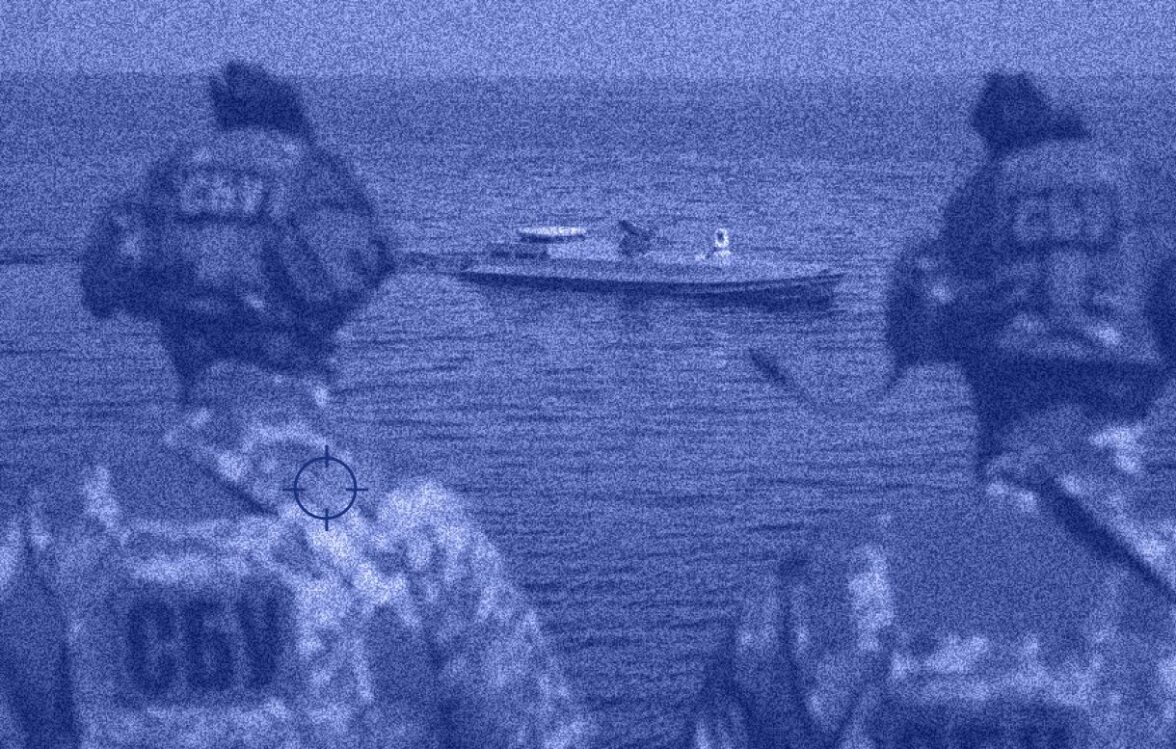
▶ During the night of December 5-6, 2024, the Security Service of Ukraine (SBU) conducted a successful operation in the area of the Kerch Strait. The SBU’s Sea Baby maritime drones successfully struck Russian helicopters and aircraft, which now require major repairs. Additionally, the SBU drones hit a barge transporting enemy military equipment and repair materials for the illegally constructed “Crimean Bridge,” which the occupiers continue to unsuccessfully attempt to restore after previous attacks.
Crimes committed by the Russian Federation
▶ As of December 2024, the Russian Federation has illegally imprisoned 218 people in occupied Crimea on ethnic, religious, and political grounds, 132 of whom are Crimean Tatars.
▶ An illegal “court” of the occupation administration sentenced a 45-year-old resident of Kerch to 15 years of imprisonment for alleged cooperation with Ukrainian intelligence services. The man was accused of allegedly using a messenger app in September 2023 to send the Security Service of Ukraine (SBU) coordinates of Russian air defense system locations in Kerch.
▶ In occupied Crimea, a so-called “trial in absentia” has been initiated against a resident of Yalta, who was accused of providing information to the SBU regarding Russian security forces operating in the occupied peninsula. Later, he reportedly joined the ranks of the Armed Forces of Ukraine. Under international law, an occupying state is prohibited from imposing its own laws on occupied territories, and prosecuting the military personnel of another state is strictly forbidden.
▶ The abducted mayor of Kherson, Ihor Kolykhaiev, is being held by Russian occupiers in a secret prison under the FSB building in temporarily occupied Simferopol. The conditions of his detention are inhumane, as there are no toilets, sinks, or basic sanitary facilities. Interrogations are regularly conducted by Russian security forces. It is also reported that detainees are transferred to local pre-trial detention centers where they are subjected to torture, including electric shocks, during interrogations. There are currently three pre-trial detention centers in Simferopol, and a fourth is under construction, whereas prior to the full-scale invasion, there was only one. Russian occupiers systematically transfer Ukrainian citizens from newly occupied territories to Crimea, where they are subjected to systematic torture.
▶ Teimur Abdullaiev, who was illegally sentenced by Russian occupiers in Crimea to 16 years and 6 months as part of the so-called “Crimean Muslims case,” continues to suffer from ear pain and inflammation. Despite these health issues, the occupiers continue to hold him in harsh detention conditions in a Russian penal colony. Prolonged unjust imprisonment has also led to stomach pain, liver issues, dental problems, hypertension, and severe headaches.
▶ A crime against humanity is being committed against Asan Akhtemov, a Crimean Tatar man who was illegally sentenced to 15 years in prison by an occupation “court.” He is rapidly losing his eyesight in a Russian prison due to harsh and inadequate detention conditions. His dental health has also deteriorated significantly — most of his teeth have crumbled or fallen out. Additionally, he suffers from malnutrition, and he has developed knee problems this year due to the inhumane prison environment.
▶ Aider Jepparov, who was illegally sentenced to 17 years of imprisonment as part of the so-called “Bilohirsk case of Crimean Muslims,” is experiencing severe health issues. His time in a Russian penal colony, located thousands of kilometers from Crimea, has taken a toll on his heart and digestive system. Despite these health problems, he is denied medical assistance. Moreover, Aider is held in a barrack with mold dating back to World War II, living in harsh conditions.
▶ Vadym Siruk, a Crimean political prisoner who was illegally sentenced to 12 years, has reported ongoing issues with his teeth and frequent hypothermia while in a Russian penal colony. The penal facility also fails to provide adequate nutrition, worsening the health of detainees like Vadym.
The use of occupied Crimea as a springboard for attacks on Ukraine and the militarization of the peninsula
▶ Activists of the ATESH movement have identified multiple defensive fortifications built by Russian occupiers in strategically important locations within the Yevpatoriia district. These fortifications include both active combat positions equipped with large-caliber weapons to combat drones and decoy structures designed to divert attention. Additionally, the occupiers have intensified inspections of Ukrainian citizens in Crimea. Russian military forces are also bolstering their positions along the Yevpatoriia coastline, allegedly to counteract partisan activity.
Since the start of the full-scale invasion and the expansion of Russian military aggression against Ukraine, occupied Crimea has been used as a military base for launching various forms of aggression. The peninsula serves as a launchpad for strikes on Ukrainian territory, including civilian infrastructure.
The resistance movement of Ukrainian citizens in occupied Crimea
▶ 1,093 people in occupied Crimea have faced persecution by the Russian Federation for showing solidarity with Ukraine. They have been subjected to illegal administrative punishments, such as fines and arrests.
▶ Activists from the Yellow Ribbon movement continue their peaceful resistance by distributing pro-Ukrainian leaflets and homemade Ukrainian flags in the occupied cities of Yalta, Simferopol, Alushta, and Sevastopol. On December 6 — the Day of the Armed Forces of Ukraine, activists in Sevastopol, Simferopol, Yevpatoriia, Yalta, Kerch, and Dzhankoi distributed greeting leaflets and reminded occupiers that Crimeans await the Ukrainian Armed Forces to liberate their homeland.
▶ Activists of the Crimean Combat Seagulls movement continue to expose the personal data of collaborators and Russian war criminals operating in occupied Crimea.
▶ The Zla Mavka resistance movement continues to share daily accounts of life under occupation. On St. Nicholas Day, activists left “gifts” for Russian soldiers stationed in Crimea in the form of garbage bags with messages reminding them that they are not welcome in Crimea.
The full-scale invasion was marked by a rapid increase in solidarity and resistance actions by residents of occupied Crimea against the Russian occupiers. Residents of occupied territories unite in resistance movements, such as the above-mentioned Yellow Ribbon, Crimean Combat Seagulls, Zla Mavka, and ATESH, or act individually. To suppress the resistance movement of residents in the temporarily occupied territory of Crimea after February 24, 2022, the occupiers actively began to prosecute and bring to administrative responsibility Ukrainian citizens under the article on the so-called “discrediting the Russian army”.
De-occupation of Crimea is integral to ending the war and restoring peace. Ukrainians are doing everything they can to stop the aggressor and protect the entire world from Russia’s criminal actions. This is not a local or regional issue but a threat to the world and international order.