11 February 2025
WEEKLY UPDATE ON THE SITUATION IN OCCUPIED CRIMEA ON FEBRUARY 11, 2025
Main news of the week
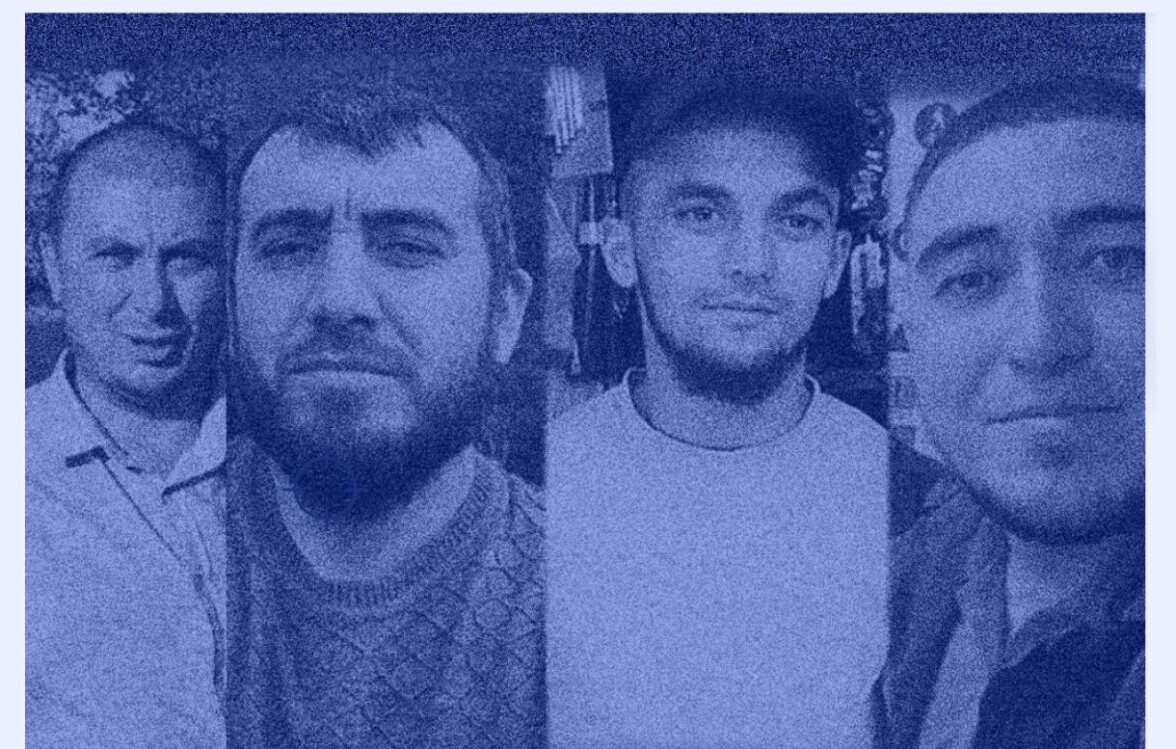
▶ On February 5, at 4 a.m., Russian occupation security forces conducted illegal searches in the homes of Crimean Tatars in the villages of Istochne, Novokrymske, and Lobanove in the Dzhankoi district, as well as in the village of Yarke Pole in the Feodosiia district of occupied Crimea. As a result of these raids, five individuals were detained: Emir Kurtnezirov, Abibulla Smedliaiev, Rustem Mustafaiev, Myrzaali Tazhybaiev, and Bakhtiiar Ablaiev. The occupation “court” unlawfully placed them under arrest until April 4, 2025.
▶ On February 6, in the village of Rodnikove, Simferopol district of occupied Crimea, Russian security forces conducted an unlawful search of the home of Crimean Tatar activist and respected elder Seitnebi Ramazanov, the father of former political prisoner Ismail Ramazanov.
Crimes committed by the Russian Federation
▶ As of February 2025, Russia has illegally imprisoned 218 people in occupied Crimea on ethnic, religious, and political grounds, including 132 Crimean Tatars.
▶ The Russian occupiers have extended the unlawful detention of the defendants in the so-called “Fifth Bakhchysarai Group.” Activists from Bakhchysarai—Remzi Nimetulaiev, Ruslan Asanov, Seidamet Mustafaiev, Abdulmedzhyt Seitumerov, Ametkhan Umerov, and Eldar Yakubov—will remain under illegal arrest until May 23. The political prisoners’ lawyer noted that during each successive “court” hearing, the Russian occupiers ignored the defense’s arguments.
▶ Rustem Seitkhalilov, a Crimean Tatar unlawfully sentenced by Russia to 14 years in prison, is being denied the right to perform his morning prayer in a correctional colony in Petrozavodsk, Russia. The restrictions extend not only to the morning prayer but to all five daily prayers. Additionally, he suffers from severe headaches and lower back pain.
▶ Crimean Tatar political prisoner Servet Haziiev, unlawfully sentenced to 13 years in prison, was illegally transferred from Russia’s Detention Center No. 2 in the Vladimir region to an unknown location in December 2024. His family last contacted him in early December; since then, his whereabouts remain unknown.
▶ Russian security forces have arbitrarily detained 64-year-old Bekir Huhuryk, a resident of the Kherson region and the brother of 53-year-old Crimean Tatar political prisoner Rustem Huhuryk, whom Russia unlawfully sentenced to 8.5 years in a high-security colony. The Russian occupation regime systematically uses fabricated charges as a tool of intimidation and repression against the Crimean Tatar people. Human rights defenders also emphasize that Rustem Huhuryk has lost hearing in his left ear while in Russian captivity. Additionally, he suffers from severe shortness of breath but is denied necessary medical care.
▶ The occupation “court” has unlawfully sentenced a Sevastopol resident to 12 years in prison for allegedly donating to the Armed Forces of Ukraine. The man had left occupied Crimea and was living in Spain with his family. In 2024, he returned to Sevastopol to sell his property, after which he was detained by the occupation security forces and falsely accused of “treason.” This action constitutes a violation of the Geneva Conventions, which prohibit the occupying state from imposing its own laws and persecuting civilians in occupied territories.
The use of occupied Crimea as a springboard for attacks on Ukraine and the militarization of the peninsula
▶ Activists from the ATESH movement report that the command of the Russian occupation army has begun withdrawing certain surface-to-air missile units from Crimea to Russian territory. This decision was made in response to systematic strikes by Ukraine’s Armed Forces on oil depots and military infrastructure within Russia, as well as domestic public pressure inside the aggressor state. Some systems, including installations from the 31st Air Defense Division, have already been redeployed from the peninsula to new positions in Russia. As a result, Russian military airfields, ammunition depots, and the illegally built so-called “Kerch Bridge” in occupied Crimea remain vulnerable to Ukrainian strikes.
Since Russia launched a full-scale invasion and spread its armed aggression throughout Ukraine, occupied Crimea has been used by Russia as a military base for spreading aggression in various forms. From the peninsula, the occupiers continue to launch attacks on the territory of Ukraine, including on civilian infrastructure.
The resistance movement of Ukrainian citizens in occupied Crimea
▶ Russia has already prosecuted 1203 people in occupied Crimea for expressing solidarity with Ukraine, who are being subjected to administrative penalties in the form of illegal fines and arrests.
▶ A resident of occupied Bakhchysarai declared in an online chat that Crimea is Ukraine, that the so-called “referendum” of 2014 never took place, and that Russia had occupied the peninsula. He also used strong language when referring to the Russian occupation army and regime, expressing his hope for the arrival of Ukraine’s Armed Forces. In response, Russian security forces detained him, and he now faces potential criminal charges.
▶ Activists of the Yellow Ribbon movement continue distributing leaflets and stickers across various cities in occupied Crimea, reinforcing the message that Crimea is Ukraine. This time, symbols of resistance appeared near the railway station in Yevpatoriia, along Alexander Suvorov Avenue, and in residential areas of Simferopol. Additionally, in Simferopol, yellow ribbons and patriotic stickers were placed on elevated spots near Petrovski Rocks and in the heart of the city—on the main embankment of the Salhyr River. In Yalta, the message “Crimea is Ukraine” has now even been stamped on banknotes in circulation within the occupied city.
▶ Activists of the Crimean Combat Seagulls movement continue to expose personal data of Russian war criminals and collaborators, as well as to gather intelligence on the locations of Russian military facilities in occupied Crimea.
▶ The Zla Mavka resistance movement continues documenting the daily realities of life under occupation through their diaries. Additionally, the activists have spread Ukrainian symbols in the center of Simferopol, reminding Russian occupiers that the city remains Ukrainian.
The full-scale invasion was marked by a rapid increase in solidarity and resistance actions by residents of occupied Crimea against the Russian occupiers. Residents of occupied territories unite in resistance movements, such as the above-mentioned Yellow Ribbon, Crimean Combat Seagulls, Zla Mavka, and ATESH, or act individually. To suppress the resistance movement of residents in the temporarily occupied territory of Crimea after February 24, 2022, the occupiers actively began to prosecute and bring to administrative responsibility Ukrainian citizens under the article on the so-called “discrediting the Russian army.”
De-occupation of Crimea is integral to ending the war and restoring peace. Ukrainians are doing everything they can to stop the aggressor and protect the entire world from Russia’s criminal actions. This is not a local or regional issue but a threat to the world and international order.