12 November 2024
WEEKLY UPDATE ON THE SITUATION IN OCCUPIED CRIMEA ON NOVEMBER 12, 2024
Main news of the week
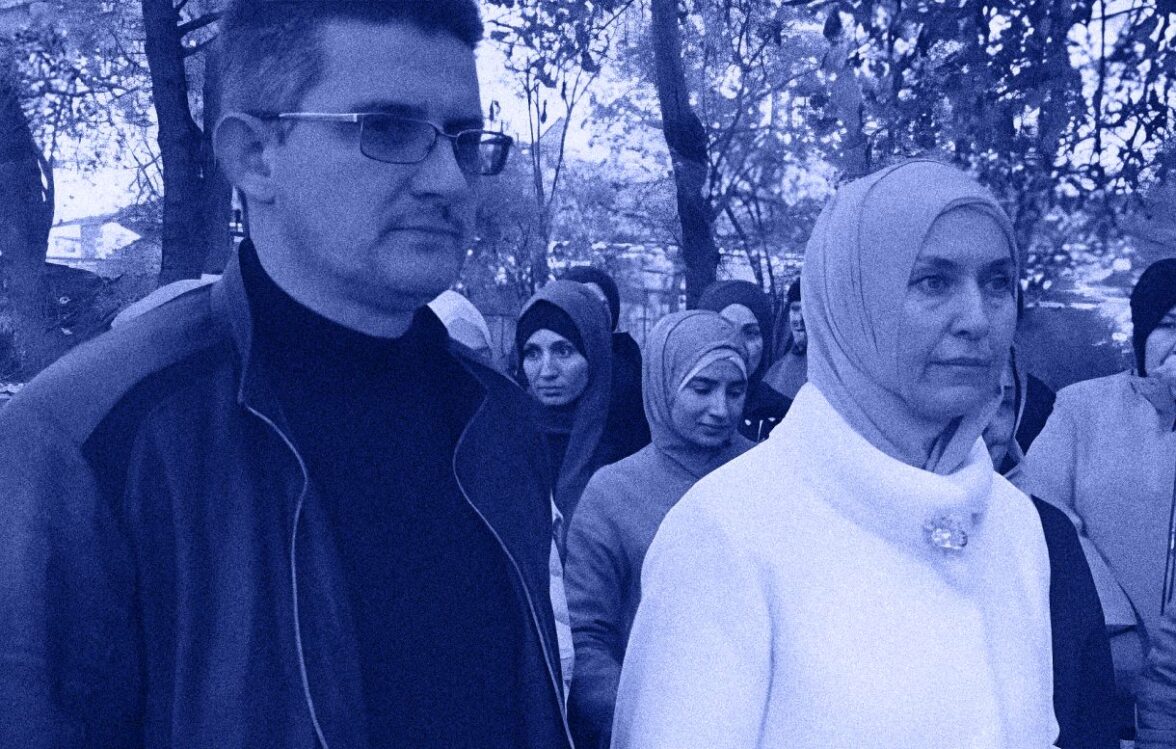
▶ On November 7, Russian security forces unlawfully entered the home of lawyers Lilia Hemedzhy and Rustem Kiamiliev in occupied Crimea, conducting an illegal search. The occupiers detained Rustem Kiamiliev for ten days and fined him 50,000 rubles for alleged “discrediting of the Russian armed forces.” This charge was based on a 2017 repost that criticized the involvement of the Russian army in the Syrian war.
Crimes committed by the Russian Federation
▶ As of November 2024, Russia has illegally imprisoned 218 people in occupied Crimea on ethnic, religious, and political grounds, including 132 Crimean Tatars.
▶ An occupation “court” sentenced a 35-year-old resident of the Kerch district on the peninsula to 13 years in a maximum-security penal colony on charges of alleged collaboration with Ukrainian intelligence services and sharing information about the movements of occupation forces. These trials by the occupation administration targeting residents of occupied regions are illegal and violate the Geneva Conventions.
▶ Wrongfully convicted Crimean Murat Kadyrov is being held under harsh conditions in a Russian prison. Kadyrov, who suffers from osteochondrosis, is forced to work despite his condition. Because he is unable to complete all tasks, the prison administration continuously punishes him. Additionally, all his medications have been confiscated. Reports indicate that Kadyrov currently shares a cell with 17 people. Due to constant pressure, he is unable to sit or lie down during the day and is unlawfully taken to a psychologist and interrogations.
▶ Aziz Akhtemov, unlawfully sentenced to 13 years in prison by an occupation “court,” was illegally transferred to Penal Colony No. 10 in Rubtsovsk, Altai region, Russia, over 4,000 kilometers from his native Crimea. Such unauthorized transfers of Ukrainian citizens from occupied territories constitute a violation of international law and exemplify so-called “silent deportation.”
▶ In Crimea, an occupation “court” fined visually impaired local resident Ihor Nikitenko 10,000 rubles for a YouTube video in which he criticized the neglect of the occupation administration and the closure of the pedestrian section of a bridge. The occupiers detained Nikitenko, who holds a Group 1 disability status, beat him, tore his jacket, and confiscated his phone. At the station, security forces mocked him: they forced him to lie on the floor, made offensive jokes about his late wife, and, when he requested to go to the restroom, told him to “use his pants.” On November 14, the occupiers are planning to hold a hearing in another administrative case against Nikitenko, accusing him of alleged “disobedience” to the police. Nikitenko believes he is being persecuted because he publicly exposed the abuses by security forces during his detention. He has posted a video on his YouTube channel showing his arrest and the events at the station.
The use of occupied Crimea as a springboard for attacks on Ukraine and the militarization of the peninsula
▶ According to the Ukrainian Air Force, Russian occupiers launched a series of massive attacks across Ukraine throughout the week. These included one Iskander-M ballistic missile, two guided Kh-59/Kh-31P aviation missiles, and 410 Shahed-type and unidentified drones from occupied Crimea and the Black Sea area. A ballistic missile hit a residential building in Kryvyi Rih, resulting in the deaths of at least four people, including three children aged 10, 2, and a two-month-old infant.
▶ Activists from the ATESH movement reported detecting the operation of a “Podlet” radar system near Sevastopol Bay. Additionally, occupation administrations have increased fortified security on railway facilities in Yevpatoriia, with an expanded presence of patrols to prevent sabotage. At the Kozachyi training ground in the Haharin district of Sevastopol, agents observed mercenaries from African countries and the Republic of Cuba arriving by military trucks for training. Occupation forces are also conducting “training” of youths from the militarized Yunarmiia organization at this site, using them as “human shields” to protect against potential attacks by the Ukrainian Armed Forces.
▶ Local residents of occupied Crimea report that occupiers are actively constructing fences along railway tracks on the peninsula. This is part of the measures implemented by the occupiers to protect railway infrastructure, used for military purposes by Russian forces, from potential sabotage by partisans.
▶ Activists report that in Sevastopol, on the Fedyukhina heights, occupiers have installed a Pantsir-S1 air defense system and a radar station within the grounds of a historic park. This setup is intended to shield the Sevastopol thermal power plant, located about a kilometer to the northwest.
Since Russia launched a full-scale invasion and spread its armed aggression throughout Ukraine, occupied Crimea has been used by Russia as a military base for spreading aggression in various forms. From the peninsula, the occupiers continue to launch attacks on the territory of Ukraine, including on civilian infrastructure.
The resistance movement of Ukrainian citizens in occupied Crimea
▶ Russia has already prosecuted 1047 people in occupied Crimea for expressing solidarity with Ukraine, who are being subjected to administrative penalties in the form of illegal fines and arrests.
▶ In Sevastopol, a resident working in advertising posted Ukrainian symbols and allegedly materials “criticizing the actions of the Russian army” on his social media. The man was detained by the occupation administration and arrested for five days. A criminal case is currently being considered regarding the unlawful opening of a criminal case.
▶ A resident of occupied Armyansk posted images of Ukrainian soldiers on a social media site with the caption “Glory to Ukraine” and statements in support of the Ukrainian Armed Forces. The man was unlawfully prosecuted for allegedly “discrediting the Russian army” and fined 30,000 rubles.
▶ A resident of occupied Simferopol posted Ukrainian songs and statements in support of the Armed Forces of Ukraine on social media. The case file was sent to the occupation “court”.
▶ In Feodosiia, Russian security forces detained a local resident for having a tattoo in the form of a Ukrainian trident. An administrative report was illegally drawn up against the man, and the materials were sent to the “court” for further consideration.
▶ Activists of the Yellow Ribbon Movement held another protest in Crimea: in Simferopol, Bilohirsk and Alupka, people distributed ribbons, stickers, leaflets and banknotes with Ukrainian slogans. In addition, the activists once again reminded the occupiers that the struggle continues: more than a hundred patriotic posters and ribbons appeared in the Primorskyi Park of Yalta, at the entrances of Simferopol, on the streets, in squares, near the occupation administrations.
▶ Activists of the Crimean Combat Seagulls movement continue to expose the personal data of collaborators and Russian war criminals operating in occupied Crimea. In addition, activists have distributed a recent cartoon about Crimea by the Ukrainian project “Travelbook”.
▶ The Zla Mavka resistance movement continues to keep its diaries, where it informs about the realities of life in the occupied territories. In addition, the activists distributed over a hundred stickers with messages in occupied Simferopol: “Crimea is Ukraine”, ‘ Let the occupiers go’, ‘Glory to the Armed Forces!
The full-scale invasion was marked by a rapid increase in solidarity and resistance actions by residents of occupied Crimea against the Russian occupiers. Residents of occupied territories unite in resistance movements, such as the above-mentioned Yellow Ribbon, Crimean Combat Seagulls, Zla Mavka, and ATESH, or act individually. To suppress the resistance movement of residents in the temporarily occupied territory of Crimea after February 24, 2022, the occupiers actively began to prosecute and bring to administrative responsibility Ukrainian citizens under the article on the so-called “discrediting the Russian army”.
De-occupation of Crimea is integral to ending the war and restoring peace. Ukrainians are doing everything they can to stop the aggressor and protect the entire world from Russia’s criminal actions. This is not a local or regional issue but a threat to the world and international order.