12 August 2025
WEEKLY UPDATE ON THE SITUATION IN OCCUPIED CRIMEA ON AUGUST 12, 2025
Main news of the week
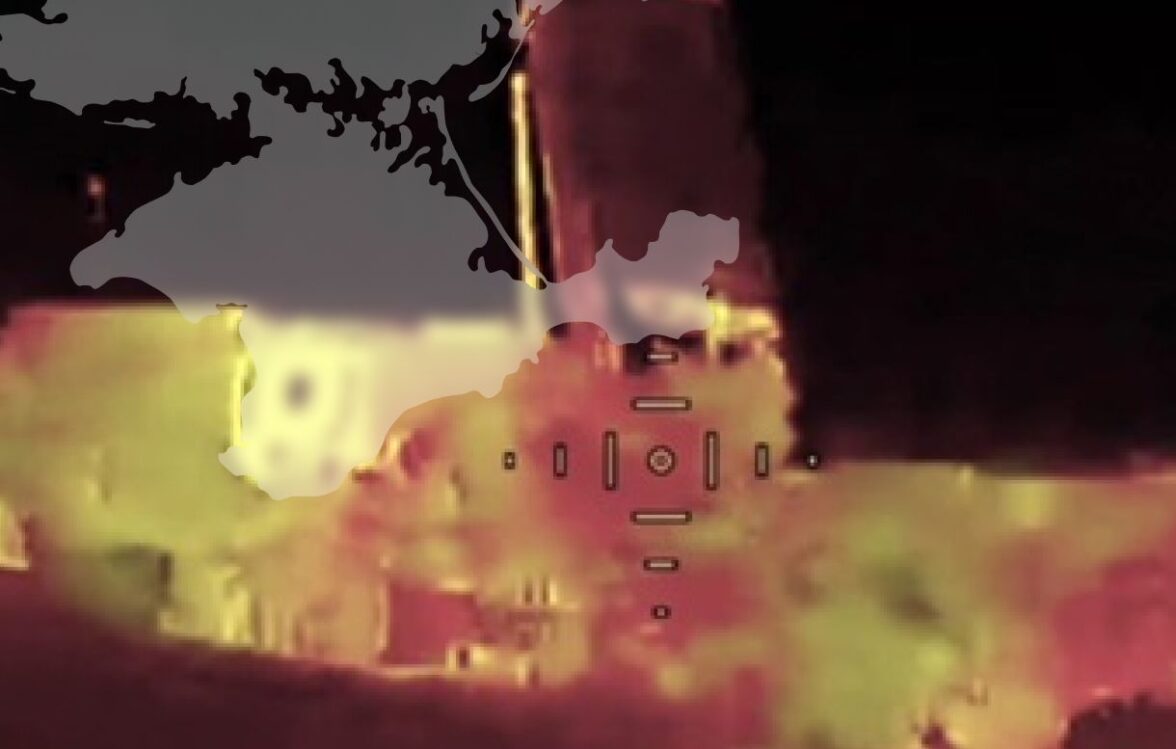
▶ On 7 August, the Main Directorate of Intelligence of the Ministry of Defence of Ukraine reported that combat drones had struck, in occupied Crimea, an enemy Project 02510 BK-16 assault boat, as well as Russian radar stations: Nebo-SVU, Podlet K-1, 96L6E, and one of the occupiers’ most valuable radar systems — Yenisei from the S-500 complex. In addition, special forces of Ukraine’s military intelligence struck a Russian air defence base of the 3rd Radio-Technical Regiment (military unit 85683-A) on Mount Ai-Petri.
Crimes committed by the Russian Federation
▶ As of August 2025, Russia has illegally imprisoned 220 people in occupied Crimea on ethnic, religious, and political grounds, including 133 Crimean Tatars.
▶ Crimean Tatar activist Memet Belialov was transferred from Correctional Colony No. 9 in Parfino, Novhorod region, to Pre-Trial Detention Centre No. 1 in Velikyi Novhorod; however, his final destination remains unknown.
▶ After serving eight years of unlawful imprisonment, the Russians have illegally sentenced Crimean political prisoner Hennadii Lymeshko to two years in a high-security penal colony. He was accused of allegedly “calling for violence on national grounds.” Following the completion of his eight-year prison term in February this year, he was considered missing.
▶ Crimean Tatar political prisoner Appaz Kurtamet has, for the second time in the past two months, been placed in a punishment cell of a Russian penal colony without explanation and in violation of procedure. The young man is being held by the Russian administration on politically motivated charges.
▶ The occupation “court” has once again extended the period of unlawful detention for four defendants in the so-called “fourth Dzhankoi group” — Rustem Mustafaiev, Abibulla Smedliaev, Emir Kurtnezirov, and Mirzali Tazhibaiev — until 4 October. All of them are currently being held in Pre-Trial Detention Centre No. 2 in Simferopol.
▶ Crimean Tatar human rights defender Riza Izetov, sentenced to 19 years of imprisonment, has been unlawfully transferred from Russian Correctional Colony No. 1 in Yakutsk to an undisclosed location.
▶ Citizen journalist Amet Suleimanov, sentenced to 12 years’ imprisonment in the “Muslim case,” has suffered a second hypertensive crisis while in detention at the “Vladimir Central” penal colony. According to his wife, he feels weak, complains of chest pain, deteriorating vision, and struggles to tolerate the heat. He has been diagnosed with retinal angiopathy, which without treatment may lead to blindness. Unexplained spots are also appearing on his body. Despite severe illnesses included on the list of conditions incompatible with detention, the courts have refused to grant his release. The heart surgery he has been awaiting since 2020 has still not been performed — the request to the Moscow centre has gone unanswered. His lawyers consider the sentence to be a death sentence given Suleimanov’s critical state of health.
▶ Human rights defender and journalist Server Mustafaiev, sentenced to 14 years within the so-called “second Bakhchysarai group” case, has been held for a second year under harsh conditions in Russian Correctional Colony No. 1 in Tambov. After being placed in a punishment cell in August 2023, the colony administration transferred him to a strict detention regime, citing the “seriousness of the charge.” This decision came into force in February 2024. Mustafaiev complains of lower back pain; however, despite being prescribed an X-ray and injections, no treatment has been provided, and he receives necessary medicines only through parcels from his family.
▶ Political prisoner Iryna Horobtsova, sentenced by the occupation administration to 10.5 years’ imprisonment on fabricated charges, reported that in the colony she lives in a room with 45 women, works in a sewing brigade, and suffers from tachycardia, headaches, and a general deterioration in health. She requires constant medical supervision — even before the full-scale invasion, she had been diagnosed with a brain aneurysm.
▶ Enver Khalilaiev, one of the defendants in the so-called “third Dzhankoi group” case, has reported a significant deterioration in his health while in custody. He is experiencing hearing loss, headaches, and exacerbation of chronic conditions, including otitis, cardiovascular diseases, and an umbilical hernia. Khalilaiev is currently being held in Pre-Trial Detention Centre No. 1 in Rostov-on-Don. Despite the urgent need for surgical intervention, the operation cannot be carried out due to the current stage of the court proceedings.
The use of occupied Crimea as a springboard for attacks on Ukraine and the militarization of the peninsula
▶ Activists of the resistance movement ATESH conducted reconnaissance of a large oil depot in temporarily occupied Sevastopol. The facility is located in the area of Cape Manganari in Kozacha Bay and belongs to the Yugtorsan enterprise. The oil terminal is situated near the deployment site of the 810th Separate Marine Brigade and other military units responsible for its security. According to the movement, it is one of the main supply bases for petroleum products for Russia’s Black Sea Fleet, used for storing fuel oil, crude oil, and other petroleum products. The facility has previously been struck, causing large-scale fires; at present, the terminal continues to operate.
▶ According to the Air Force of the Armed Forces of Ukraine, over the past week Russian occupiers have carried out a series of large-scale combined attacks on the territory of Ukraine — including 361 strike UAVs of the Shahed, Shahed-Heran, and Gerbera types, as well as 4 high-speed (jet) drones, launched in part from the territory of occupied Crimea.
Since Russia launched a full-scale invasion and spread its armed aggression throughout Ukraine, occupied Crimea has been used by Russia as a military base for spreading aggression in various forms. From the peninsula, the occupiers continue to launch attacks on the territory of Ukraine, including on civilian infrastructure.
The resistance movement of Ukrainian citizens in occupied Crimea
▶ Russia has already prosecuted 1508 people in occupied Crimea for expressing solidarity with Ukraine, who are being subjected to administrative penalties in the form of illegal fines and arrests.
▶ A resident of occupied Sudak produced a licence plate bearing the Crimean Tatar flag in place of the Russian tricolour. A protocol was drawn up against the man, and his vehicle was impounded.
▶ Activists of the Yellow Ribbon movement congratulated the Air Force of the Armed Forces of Ukraine on their professional holiday using symbols of semantic resistance. In their address, they named Yalta, Sevastopol, Simferopol, Yevpatoriia, Bakhchysarai, Saky, and Kerch as cities awaiting the arrival of Ukrainian aviation, underscoring the steadfastness of resistance across the entire peninsula.
▶ Activists of the Crimean Combat Seagulls continue to expose the personal data of collaborators and Russian war criminals in occupied Crimea.
▶ The Zla Mavka resistance movement distributed over 100 leaflets on the beaches of Yevpatoriia, calling for resistance to the occupation. The campaign was held under the slogan: “The resistance will continue even when the world trembles.”
The full-scale invasion was marked by a rapid increase in solidarity and resistance actions by residents of occupied Crimea against the Russian occupiers. Residents of occupied territories unite in resistance movements, such as the above-mentioned Yellow Ribbon, Crimean Combat Seagulls, Zla Mavka, and ATESH, or act individually. To suppress the resistance movement of residents in the temporarily occupied territory of Crimea after February 24, 2022, the occupiers actively began to prosecute and bring to administrative responsibility Ukrainian citizens under the article on the so-called “discrediting the Russian army.”
De-occupation of Crimea is integral to ending the war and restoring peace. Ukrainians are doing everything they can to stop the aggressor and protect the entire world from Russia’s criminal actions. This is not a local or regional issue but a threat to the world and international order.