15 April 2025
WEEKLY UPDATE ON THE SITUATION IN OCCUPIED CRIMEA ON APRIL 15, 2025
Main news of the week
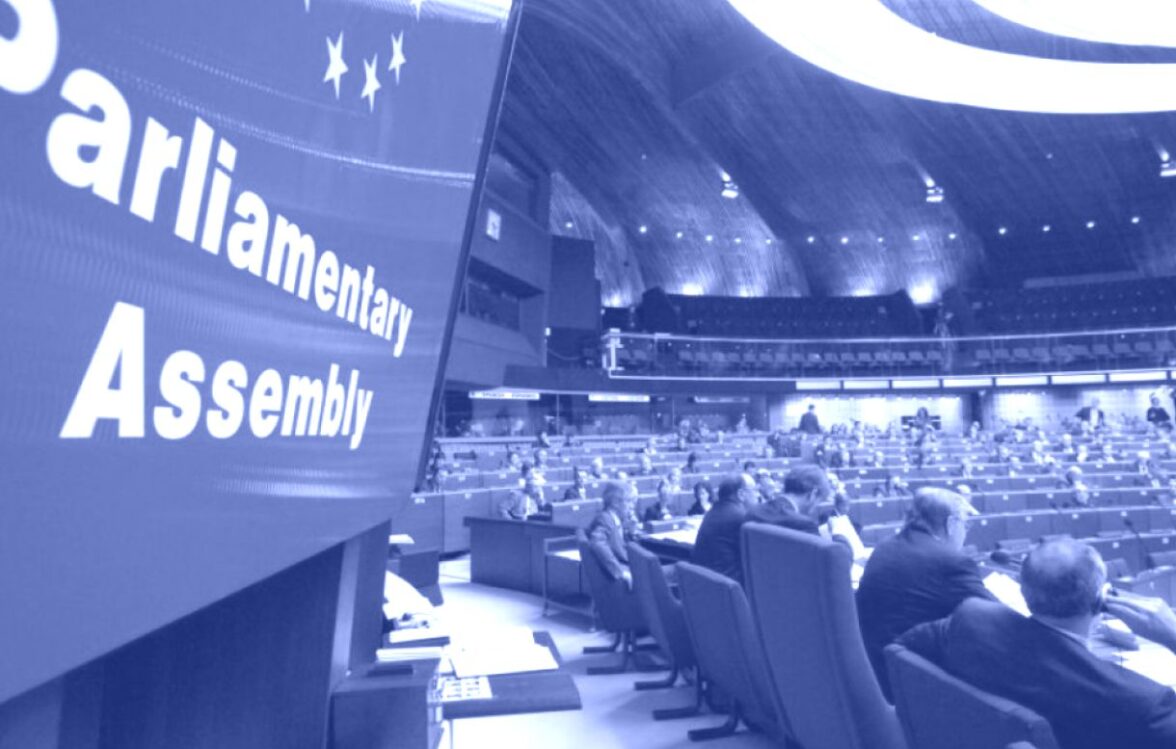
▶ The Parliamentary Assembly of the Council of Europe has adopted a resolution that, for the first time, recognizes the need to account for damages caused by the Russian Federation since 2014, including from the beginning of the occupation of Crimea. The Register of Damage has been extended to cover events since the onset of aggression, enabling affected individuals — including residents of the peninsula — to claim compensation. The resolution also supports the establishment of a special tribunal, the expansion of claim categories, and holding both the Russian Federation and Belarus accountable for war crimes.
Crimes committed by the Russian Federation
▶ As of April 2025, Russia has illegally imprisoned 225 people in occupied Crimea on ethnic, religious, and political grounds, including 134 Crimean Tatars.
▶ The so-called “court” of the occupation administration unlawfully sentenced Crimean Tatar Charaz Akimov to five years in prison. He was accused of “cooperating confidentially with a foreign state” for allegedly discussing the movement of Russian military equipment on social media. The proceedings lasted less than two months, raising serious concerns over a potential war crime, particularly the denial of the right to a fair trial.
▶ The occupation “court” is planning to sentence members of the so-called “second Dzhankoi group” to 17 years in prison. The proposed sentences are 17 years for Osman Abdurazakov (41), Leman Zekeriaev (51), Aider Asanov (31), and Ekrem Krosh (39); and 17.5 years for Khalil Mambetov (69) and Refat Seidametov (55). All are also facing one year of additional restrictions after release: curfew, travel and residence bans, and mandatory biweekly police registration. Elderly individuals continue to receive harsh sentences under Russia’s occupation.
▶ Crimean Tatar human rights defender and political prisoner Server Mustafaiev, who was unlawfully sentenced to 14 years, was transferred to a cell-type facility in Penal Colony No. 1 in Tambov, Russia, for two months. He had previously been placed in solitary confinement for three days. No official reason was given, but the decision may be linked to his religion. A member of the commission reportedly expressed anti-Muslim bias.
▶ Russia may bring new charges against Ukrainian political prisoner Hennadii Lymeshko, a former Armed Forces serviceman scheduled for release after eight years of unlawful imprisonment. He was arrested in 2017 in occupied Crimea on fabricated sabotage charges. After his transfer to a migration centre, all contact was lost, and there are fears of a new fabricated case, possibly related to “extremism,” in violation of the Geneva Conventions.
▶ The health of Crimean Tatar political prisoner Rustem Huhuryk continues to deteriorate, placing his life at risk. He has been denied medical care, and conditions in the Russian prison are inhumane. Earlier reports indicated he lost hearing in one ear due to a lack of proper treatment. Instead of hospitalization, the occupiers plan to transfer him to a pre-trial detention centre.
▶ Crimean Tatar Ansar Osmanov, who was unlawfully sentenced to 20 years in prison, is being transferred from Pre-Trial Detention Centre No. 3 in Novocherkassk, Rostov region, to a Russian prison in Vladimir, nearly 2,000 kilometres from occupied Crimea.
The use of occupied Crimea as a springboard for attacks on Ukraine and the militarization of the peninsula
▶ Activists from the resistance movement ATESH obtained coordinates of a Russian Pantsir-S1 air defense missile and gun system located near Pishchana Bay in occupied Sevastopol. They also documented remnants of the Russian fleet in Streletska Bay, including the tug SB-36, which has reportedly remained stationary since October 2024 and may be damaged, as well as a patrol boat. All data was promptly transferred to relevant units of Ukraine’s Armed Forces.
▶ The occupation administration has closed the Opuk Nature Reserve for military purposes, imposing a so-called “silence regime” for an indefinite period. Access is now controlled by Russian military personnel. Cape Opuk is being actively used as a training ground, including for launching Russian ballistic missiles targeting Ukrainian territory. The occupying forces announced that military exercises involving explosives and live ammunition would be held daily from April 1 to December 31.
▶ In temporarily occupied Bakhchysarai, the occupation administration has opened a so-called “Young Commanders School” — a ten-day program for 120 teenagers from occupied Crimea and Kherson regions. Russian troops are instructing them in tactical training, basic medical skills, weapon handling, and driving. This is part of the broader effort to militarize public and educational spaces in occupied areas.
▶ According to the Air Force of the Armed Forces of Ukraine, Russian occupying forces carried out a series of attacks across Ukrainian territory over the past week. In particular, they launched 262 strike UAVs of the Shahed, Shahed-Geran, and Herbera types, including from the territory of occupied Crimea and the Black Sea waters. The Russian invaders continue their daily assaults on Ukrainian cities.
Since Russia launched a full-scale invasion and spread its armed aggression throughout Ukraine, occupied Crimea has been used by Russia as a military base for spreading aggression in various forms. From the peninsula, the occupiers continue to launch attacks on the territory of Ukraine, including on civilian infrastructure.
The resistance movement of Ukrainian citizens in occupied Crimea
▶ Russia has already prosecuted 1279 people in occupied Crimea for expressing solidarity with Ukraine, who are being subjected to administrative penalties in the form of illegal fines and arrests.
▶ A resident of occupied Crimea was detained by Russian occupation forces for criticizing Russian invaders and expressing support for the Armed Forces of Ukraine on social media. He is accused of “discrediting the Russian Armed Forces” and “petty hooliganism.”
▶ A woman in Crimea was detained after posting a video on social media showing an explosion, fire, and smoke at a civilian infrastructure facility in Ukraine following a Russian strike. The occupation administration charged her with so-called “discrediting the Russian Armed Forces.”
▶ Activists from the Yellow Ribbon resistance movement held another protest in occupied Simferopol, Yalta, and Yevpatoriia, placing patriotic stickers in the cities with messages such as “Crimea is Ukraine” and “Ukraine will be free.”
▶ The Crimean Combat Seagulls resistance group continues to expose personal data of collaborators and Russian war criminals in occupied Crimea.
▶ The resistance movement Zla Mavka continues to publish journals documenting life under occupation. In addition, the activists distributed patriotic stickers on the streets of occupied Simferopol.
The full-scale invasion was marked by a rapid increase in solidarity and resistance actions by residents of occupied Crimea against the Russian occupiers. Residents of occupied territories unite in resistance movements, such as the above-mentioned Yellow Ribbon, Crimean Combat Seagulls, Zla Mavka, and ATESH, or act individually. To suppress the resistance movement of residents in the temporarily occupied territory of Crimea after February 24, 2022, the occupiers actively began to prosecute and bring to administrative responsibility Ukrainian citizens under the article on the so-called “discrediting the Russian army.”
De-occupation of Crimea is integral to ending the war and restoring peace. Ukrainians are doing everything they can to stop the aggressor and protect the entire world from Russia’s criminal actions. This is not a local or regional issue but a threat to the world and international order.