20 May 2025
WEEKLY UPDATE ON THE SITUATION IN OCCUPIED CRIMEA ON MAY 20, 2025
Main news of the week
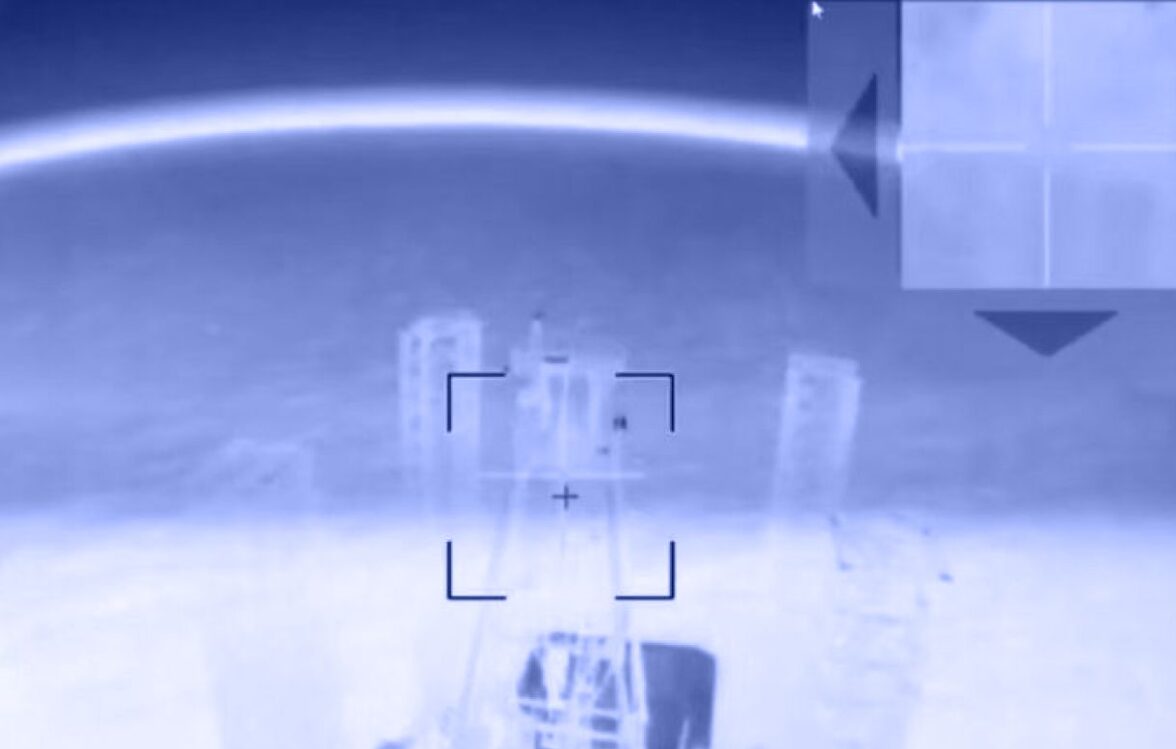
▶ Using naval and aerial drones, Ukraine’s Security Service forces destroyed a Russian radar station and ammunition depots located on gas extraction platforms in the Black Sea.
Crimes committed by the Russian Federation
▶ As of May 2025, Russia has illegally imprisoned 223 people in occupied Crimea on ethnic, religious, and political grounds, including 133 Crimean Tatars.
▶ The health of Ukrainian political prisoner Oleksii Kyselov, who is being unlawfully held in a Russian penal colony in the Murmansk region, continues to deteriorate. He is frequently placed in a punitive isolation cell, including multiple times over the past month for refusing to perform forced labor. Kyselov is under constant pressure, subject to restricted detention conditions, and suffers from joint and bone issues due to harsh treatment and lack of medical care. He was detained on 22 July 2022 in the temporarily occupied Henichesk and later sentenced to 8.5 years in prison on fabricated charges.
▶ The whereabouts of 24-year-old Khatidzhe Buiukhchan, who was unlawfully detained by Russian occupation forces on 7 May, remain unknown. Her family has received no official information about her condition, location, or access to legal assistance. The occupation administration reportedly threatened her mother with “consequences” if the detention was made public.
▶ The occupation “court” upheld the 15-year prison sentence for 58-year-old Ukrainian citizen Oksana Senedzhuk, who was unlawfully convicted of so-called “state treason.” Such proceedings in occupied Crimea violate international law, particularly the Fourth Geneva Convention, which prohibits the occupying power from prosecuting residents of occupied territories on political grounds.
▶ The Russian occupation regime has added Crimean Tatar activist, journalist, and human rights defender Lutfiie Zudiieva to its so-called list of “foreign agents.” In February, occupation forces carried out an illegal search of her home, accusing her of “abusing media freedom” due to publications by Radio Free Europe/Radio Liberty. In March, an occupation “court” issued a ruling against her. These actions represent systematic repression of freedom of expression and journalism and directly contravene Article 19 of the International Covenant on Civil and Political Rights.
▶ Russian occupation forces issued yet another “warning” to human rights defender Abdureshyt Dzhepparov, allegedly as part of “preventive measures” regarding mass gatherings legislation. Activists Server Cholakchyk and Seit-Osman Karaliiev also received similar warnings. Dzhepparov links these actions to preparations for 18 May — the Day of Remembrance of the Victims of the Crimean Tatar Genocide. Such intimidation tactics restrict freedom of assembly and expression, which are protected under international law, including the European Convention on Human Rights.
Militarization of public space and education
▶ In occupied Crimea, the Russian occupation administration is actively integrating military technologies into the education system. At School No. 3 named after Makarenko, a pilot project is underway that trains students with no prior experience in drone operation over a four-day course. This initiative constitutes a form of militarizing education and violates the UN Convention on the Rights of the Child, which prohibits involving children in military activities and propaganda.
▶ In Simferopol, so-called competitions among schoolchildren operating drones are being held under the “Unmanned Technologies” project. According to the occupation administration, at least 192 students from Crimea have completed UAV control training over the past year. Winners are promised “priority access” to a new drone technology “sports school” set to open in autumn 2025. These actions reflect a broader policy of militarizing occupied territories and normalizing warfare among children and adolescents — directly contradicting international humanitarian law and UN resolutions on the protection of civilians in occupied areas.
The use of occupied Crimea as a springboard for attacks on Ukraine and the militarization of the peninsula
▶ Activists of the ATESH resistance movement recorded the removal of property and a buildup of military equipment at the permanent deployment point of Russia’s 810th Separate Marine Brigade in occupied Sevastopol.
▶ Russia has intensified efforts to restore Soviet-era underground fortifications in temporarily occupied Crimea, including the so-called “Object 221” (Alsou-2). According to satellite imagery, photographs, and eyewitness accounts, the facility is once again being used for military purposes: Russian personnel, military equipment, and armed patrols have been observed on site.
▶ According to Ukraine’s Air Force Command, Russian occupation forces carried out a series of attacks across Ukrainian territory over the past week. These included 62 strike UAVs of various types (Shahed, Shahed-Geran, Herbera) and 1 ballistic missile (Iskander-M/KN-23), some of which were launched from occupied Crimea and the Black Sea region.
Since Russia launched a full-scale invasion and spread its armed aggression throughout Ukraine, occupied Crimea has been used by Russia as a military base for spreading aggression in various forms. From the peninsula, the occupiers continue to launch attacks on the territory of Ukraine, including on civilian infrastructure.
▶ Activists from the Yellow Ribbon resistance movement report that students of the Dzhankoi Technical School in occupied Crimea are being used to work in warehouses belonging to the Russian armed forces. These young people are engaged in unofficial labor that, in practice, involves tasks at military facilities. According to available information, this practice has been ongoing for over a year and appears to be a systemic issue.
Since the beginning of the temporary occupation of Crimea, the Russian occupation regime has actively pursued the militarization of education and the imposition of its ideology in both educational institutions and the broader public space. These efforts are aimed at reshaping children’s identities and raising them in the spirit of so-called “Russian patriotism.”
The resistance movement of Ukrainian citizens in occupied Crimea
▶ Russia has already prosecuted 1350 people in occupied Crimea for expressing solidarity with Ukraine, who are being subjected to administrative penalties in the form of illegal fines and arrests.
▶ In May 2024, a resident of occupied Crimea was fined 10,000 rubles by the Russian occupation administration for expressing criticism of Russian invaders on social media.
▶ Activists from the Yellow Ribbon resistance movement report growing pressure by the occupation administration on hotel business owners in temporarily occupied Crimea. Ahead of the tourist season, owners are receiving official letters demanding that at least 30% of available rooms be reserved for the accommodation of Russian military personnel and law enforcement officers. Additionally, the movement conducted another wave of resistance actions, distributing patriotic leaflets in temporarily occupied Simferopol, Sevastopol, and Yevpatoriia. Activists also reported mass phone checks in occupied Simferopol — occupation forces are reportedly stopping people on the street and demanding access to their private messages and photo galleries. Ahead of 18 May — the Day of Remembrance of the Victims of the Genocide of the Crimean Tatar People — activists distributed materials reminding the public of the cyclical nature of Russia’s crimes against Crimean Tatars, which continue to this day.
▶ Activists from the Crimean Combat Seagulls continue to expose the personal data of collaborators and Russian war criminals in occupied Crimea. They also reported strikes on enemy ammunition depots near the occupied city of Dzhankoi.
▶ The resistance movement Zla Mavka continues to publish its diaries, documenting the realities of life under occupation. Activists also placed posters featuring the poetry of Taras Shevchenko in occupied Sevastopol, emphasizing that under conditions of occupation, every line of Ukrainian verse becomes an act of resistance.
The full-scale invasion was marked by a rapid increase in solidarity and resistance actions by residents of occupied Crimea against the Russian occupiers. Residents of occupied territories unite in resistance movements, such as the above-mentioned Yellow Ribbon, Crimean Combat Seagulls, Zla Mavka, and ATESH, or act individually. To suppress the resistance movement of residents in the temporarily occupied territory of Crimea after February 24, 2022, the occupiers actively began to prosecute and bring to administrative responsibility Ukrainian citizens under the article on the so-called “discrediting the Russian army.”
De-occupation of Crimea is integral to ending the war and restoring peace. Ukrainians are doing everything they can to stop the aggressor and protect the entire world from Russia’s criminal actions. This is not a local or regional issue but a threat to the world and international order.